Food Safety
search
Ask Food Safety AI
cart
facebook twitter linkedin instagram youtube
  • Sign In
  • Create Account
  • Sign Out
  • My Account
Food Safety
  • NEWS
    • Latest News
    • White Papers
  • PRODUCTS
  • TOPICS
    • Contamination Control
    • Food Types
    • Management
    • Process Control
    • Regulatory
    • Sanitation
    • Supply Chain
    • Testing and Analysis
  • PODCAST
  • EXCLUSIVES
    • Food Safety Five Newsreel
    • eBooks
    • FSM Distinguished Service Award
    • Interactive Product Spotlights
    • Videos
  • BUYER'S GUIDE
  • MORE
    • NEWSLETTERS >
      • Archive Issues
      • Subscribe to eNews
    • Store
    • Sponsor Insights
    • ASK FSM AI
  • WEBINARS
  • FOOD SAFETY SUMMIT
  • EMAG
    • eMagazine
    • Archive Issues
    • Editorial Advisory Board
    • Contact
    • Advertise
  • SIGN UP!
NewsContamination ControlFood TypeTesting & AnalysisChemical ControlMicrobiological ControlChemical Testing & AnalysisMethodsMicrobiological Testing & AnalysisDairy/Eggs

Combining Genomic Data, AI Analysis Creates a Powerful Food Safety Detection Tool, Study Shows

By Food Safety Magazine Editorial Team
factory worker with tablet next to tanks of liquid dairy

Image credit: aleksandarlittlewolf via Freepik

October 14, 2024

A new research project has demonstrated artificial intelligence’s (AI’s) potential as a powerful tool to detect hazards and enhance dairy food safety.

Leveraging genomic sequencing and AI, researchers from Penn State University, Cornell University, and IBM Research have developed a new approach for the detection of contaminants, unauthorized antibiotics, and other anomalies in milk production. The work was supported by the U.S. Department of Agriculture (USDA) through Penn State.

Published in mSystems, the proof-of-concept study combined shotgun metagenomics data with AI analysis, successfully enabling milk that was treated with antimicrobials mixed into the same tank as clean milk samples. The efficacy of the AI tool was further validated against publicly available, genetically sequenced datasets from bulk milk samples.

Overall, the researchers demonstrated the approach’s ability to detect contaminants and adulterants in untargeted bulk dairy samples. Untargeted methods are important screening methods that can suggest which samples are unsafe and require follow-up investigations.

More specifically, various AI algorithms were tested against 58 bulk tank milk samples to differentiate between clean, baseline samples and samples representing anomalies like milk from an outside farm or milk containing antibiotics. The study characterized raw milk genomes in greater detail than any other project to date, and showed that there is a consistent set of microbes found as stable elements across samples.

Although traditional analysis of microbial sequencing data was not very effective in differentiating between baseline samples and those containing anomalies, the integration of AI facilitated accurate classification and identification of anomalous microbial drivers.

The project used IBM’s open-source AI technology, Automated Explainable AI for Omics, to process the metagenomic data.

Looking for quick answers on food safety topics?
Try Ask FSM, our new smart AI search tool.
Ask FSM →


KEYWORDS: artificial intelligence Cornell University IBM metagenomics penn state university study

Share This Story

Fsm purple logo 200x200

The Food Safety Magazine editorial team comprises Bailee Henderson, Digital Editor ✉ and Adrienne Blume, M.A., Editorial Director.

Recommended Content

JOIN TODAY
to unlock your recommendations.

Already have an account? Sign In

  • people holding baby chicks

    Serovar Differences Matter: Utility of Deep Serotyping in Broiler Production and Processing

    This article discusses the significance of Salmonella in...
    Food Type
    By: Nikki Shariat Ph.D.
  • woman washing hands

    Building a Culture of Hygiene in the Food Processing Plant

    Everyone entering a food processing facility needs to...
    Facilities
    By: Richard F. Stier, M.S.
  • graphical representation of earth over dirt

    Climate Change and Emerging Risks to Food Safety: Building Climate Resilience

    This article examines the multifaceted threats to food...
    Risk Assessment
    By: Maria Cristina Tirado Ph.D., D.V.M. and Shamini Albert Raj M.A.
Manage My Account
  • eMagazine Subscription
  • Subscribe to Newsletters
  • Manage My Preferences
  • Website Registration
  • Subscription Customer Service

More Videos

Sponsored Content

Sponsored Content is a special paid section where industry companies provide high quality, objective, non-commercial content around topics of interest to the Food Safety Magazine audience. All Sponsored Content is supplied by the advertising company and any opinions expressed in this article are those of the author and not necessarily reflect the views of Food Safety Magazine or its parent company, BNP Media. Interested in participating in our Sponsored Content section? Contact your local rep!

close
  • the use of dual-energy X-ray food inspection technology to identify foreign contaminants.
    Sponsored byEagle by METTLER TOLEDO

    Precision Inspection Starts with the Right X-ray Detector

  • This image depicts a worker cleaning stainless steel machinery in a food processing plant
    Sponsored byCintas

    Employee Uniforms: A Frontline Defense Against Food Contamination

  • This image depicts a healthcare professional managing a large volume of paperwork and transitioning to a digital workflow.
    Sponsored bySafetyChain

    The Invisible Plant Tax Starts with Your Records

Popular Stories

packages of beef at retail

Scientists Tackle Food Waste with More Accurate ‘Sell By’ Dates Based on Meat Microbial Activity

This image is a promotional graphic for a resource focused on building a positive food safety culture within manufacturing environments.

eBook | Strengthening Company Culture to Drive Food Safety Performance

Don Prater at the 2026 Food Safety Summit

Donald Prater Becomes New Head of FDA Human Foods Program


Events

May 28, 2026

Advanced Sanitation Strategies for Allergen Risk Reduction in Food Processing

Live: May 28, 2026, at 2:00 pm EDT: From this webinar, attendees will learn why validation and verification are necessary for allergen control, and how analytical tools can support allergen management programs.

June 3, 2026

How to Build a Better Food Safety Training Program

Live: June 3, 2026 at 2:00 pm EDT: Join this webinar to learn how AI is impacting food safety training, and how you can leverage AI in your programs.

June 4, 2026

Building a Stronger Food Safety Program in a Changing GFSI Landscape

Live: June 4, 2026 at 11:00 am EDT: Attend this webinar to understand how GFSI requirements are evolving and what those changes signal for quality programs at food and beverage facilities.

View All

Products

Global Food Safety Microbial Interventions and Molecular Advancements

Global Food Safety Microbial Interventions and Molecular Advancements

See More Products

Related Articles

  • sampling strategies

    Simulation of Sampling Strategies for Food Safety: A New Tool for Improved Sampling Performance

    See More
  • Food groups

    FDA Releases Interactive Tool for Total Diet Study Data, Emphasizes Food Chemical Safety

    See More
  • scoop of white powdered formula spilled across a surface

    Genetics Could Explain Why Cronobacter Thrives in Powdered Infant Formula, AI-Driven Study Shows

    See More

Related Products

See More Products
  • 1118396308.jpg

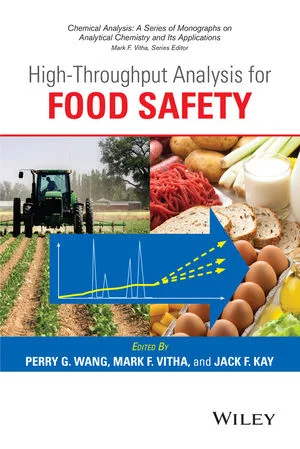
    High Throughput Analysis for Food Safety

  • 1119053595.jpg

    Food Safety for the 21st Century: Managing HACCP and Food Safety throughout the Global Supply Chain, 2E

  • 1119160553.jpg

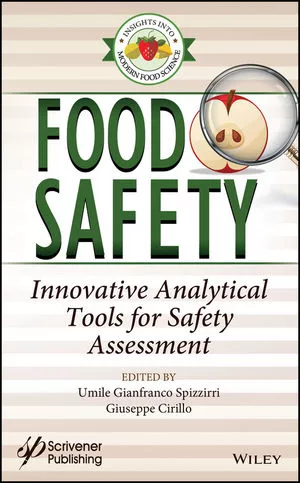
    Food Safety: Innovative Analytical Tools for Safety Assessment

See More Products

Events

View AllSubmit An Event
  • May 12, 2026

    Leveraging AI for Food Safety: From Strategy to Impact

    On Demand: This dynamic workshop brings together leaders from industry, academia, and government to demonstrate how AI can be practically applied in food safety—from data strategy to daily execution.
View AllSubmit An Event

Related Directories

  • Anritsu - Product Inspection & Detection

    Anritsu manufactures product inspection and detection equipment for food and pharma industries. Part of the Product Quality Assurance division of Anritsu Corp., we advance quality control programs with high-performing and reliable solutions. Our X-Ray Systems, Checkweighers, Metal Detectors, Combo Systems, Rejectors, and QuiCCA Software provide a superior ROI and ensure compliance with stringent quality control programs while protecting your brand. Our local branches in the US, Europe, Brazil, and Mexico are equipped with in-house service & parts dept., we deliver, install, and maintain in record time. With over 200,000 installations, we are the brand that is trusted to protect the safety and security of your customers.
×

Never miss the latest news and trends driving the food safety industry

Newsletters | Website | eMagazine

JOIN TODAY!
  • RESOURCES
    • Advertise
    • Contact Us
    • Directories
    • Store
    • Want More
  • SIGN UP TODAY
    • Create Account
    • eMagazine
    • Newsletters
    • Customer Service
    • Manage Preferences
  • SERVICES
    • Marketing Services
    • Reprints
    • Market Research
    • List Rental
    • Survey/Respondent Access
  • STAY CONNECTED
    • LinkedIn
    • Facebook
    • Instagram
    • X (Twitter)
  • PRIVACY
    • PRIVACY POLICY
    • TERMS & CONDITIONS
    • DO NOT SELL MY PERSONAL INFORMATION
    • PRIVACY REQUEST
    • ACCESSIBILITY

Copyright ©2026. All Rights Reserved BNP Media, Inc. and BNP Media II, LLC.

Design, CMS, Hosting & Web Development :: ePublishing