USDA-FSIS Publishes Proposed Regulatory Framework for Salmonella in Raw Poultry

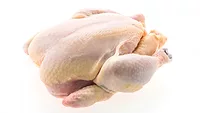
Image credit: Towfiqu barbhuiya via Unsplash
On July 29, 2024, the U.S. Department of Agriculture’s Food Safety and Inspection Service (USDA’s FSIS) published an advance copy of its long-awaited regulatory framework for Salmonella in raw poultry products, setting an enforceable final product standard for the pathogen at certain levels—at which point it is determined to be an “adulterant”—and focusing on five serotypes of public health significance. The framework also requires Salmonella testing and monitoring in facilities.
The ultimate goal of the new regulatory framework is to reduce human cases of salmonellosis attributable to poultry products, because, although FSIS’ current Salmonella verification sampling program has been effective in reducing the proportion of poultry products contaminated with the pathogen, it has not translated into a reduction in foodborne illness. Therefore, in October 2021, FSIS announced its intent to take science-backed actions that move the U.S. closer to the national Healthy People 2030 target of a 25 percent reduction in salmonellosis cases.
A year later, in October 2022, FSIS released its draft regulatory framework, which underwent public comment and subsequent revisions. The agency also considered extensive scientific advice from the National Advisory Committee on Microbiological Criteria for Foods (NACMCF), which helped guide performance standards criteria and provided recommendations for interventions and testing. Additionally, building upon the proposed regulatory framework, in April 2024, FSIS finalized a determination declaring Salmonella an adulterant in raw, breaded and stuffed, not-ready-to-eat chicken products at levels exceeding 1 colony forming unit per gram (CFU/g).
Enforceable Standards
The newly released, revised regulatory framework for Salmonella in poultry “tentatively” determines Salmonella an adulterant in other raw chicken products at a certain level, and when a serotype of concern is present. More specifically, the framework states that raw chicken carcasses, chicken parts, comminuted chicken, and comminuted turkey are adulterated if they contain any type of Salmonella at or above 10 CFU per milliliter (mL) or gram in analytical portion (i.e., mL of rinsate or gram of product) and contain any detectable level of at least one of the Salmonella serotypes of public health significance identified for that commodity.
Serotypes of Public Health Significance per Commodity
The proposed Salmonella serotypes of public health significance identified for raw chicken carcasses, chicken parts, and comminuted chicken are S. Enteritidis, S. Typhimurium, and S. I 4,[5],12:i:-. For raw comminuted turkey, the identified serotypes are S. Hadar, S. Typhimurium, and S. Muenchen. These are the most highly virulent Salmonella serotypes associated with the respective products, based on the findings of FSIS chicken and turkey risk assessments.
However, the Salmonella serotypes of public health significance are likely to evolve over time as the serotypes most commonly linked to human illnesses change. If the final product standards are adopted, FSIS intends to reevaluate the serotypes of public health concern every 3–5 years, or whenever new information becomes available.
Looking for quick answers on food safety topics?
Try Ask FSM, our new smart AI search tool.
Ask FSM →
Sampling and Verification Program
If adopted, the standards provide for a routine sampling and verification testing program for Salmonella in chicken parts, comminuted chicken, and comminuted turkey. FSIS would sample raw final products produced by an establishment and analyze them for Salmonella levels and serotypes to determine whether the final product is adulterated. Under this proposed determination, chicken parts subject to the final product standards would include legs, thighs, breasts, wings, quarters, and halves.
If test results detect Salmonella at a level of 10 CFU/mL(g) or higher and at least one Salmonella serotype of public health significance, FSIS would consider products represented by the sampled lots to be adulterated and would issue a non-compliance record. All products in the lot represented by the sample would be prohibited from entering commerce, and if any product from the lot represented by the product samples entered commerce, FSIS would request that the producing establishment recall the implicated products.
As FSIS implements the final product standards verification sampling program, the agency has tentatively decided to phase out all current Salmonella performance standards for poultry. Thus, when the proposed product verification sampling program is fully implemented, FSIS has tentatively decided that it would no longer use Salmonella sampling results to categorize establishments that produce poultry products and would no longer publish establishments’ performance standards categories on the FSIS website.
Process Control, Monitoring, and Recordkeeping Requirements
All poultry slaughter establishments are required to develop, implement, and maintain written procedures to prevent contamination by enteric pathogens throughout the entire slaughter and dressing operation, and maintain records documenting those procedures. Under the new regulatory framework, FSIS would establish new requirements pertaining to how facilities monitor and document whether their processes for preventing microbial contamination are in control. The proposed revisions are intended to clarify existing regulatory requirements related to process control monitoring in 9 CFR 381.65(g) and (h).
More specifically, establishments would be required to incorporate statistical process control monitoring principles into their microbial monitoring programs (MMPs). The proposed revisions would require that establishments use only validated, fit-for-purpose microbial sampling and analysis procedures; generate and record statistically meaningful microbial monitoring data; set benchmarks by which to evaluate microbial monitoring data; and otherwise define the statistical methods the establishment will use to evaluate the recorded data against the predefined limits.
To offset the costs associated with this proposal, eligible very small and very low volume establishments would have access to laboratory services provided by FSIS at no charge to analyze the establishments’ microbial monitoring samples.
Additionally, FSIS would revise the regulations to ensure that establishments comply with the corrective action provisions required under Hazards Analysis and Critical Control points (HACCP) as they apply to an establishment’s MMP. Specifically, establishments would be required to, at a minimum, implement written corrective actions, including a root cause analysis, when MMP results deviate from the predefined criteria, the other process control monitoring results, or the process control determination made for the entire HACCP system.
FSIS has developed new guidance to help establishments meet the proposed updated sampling and analysis requirements under 9 CFR 381.65(g). The new guidance includes an SPC sampling plan based on paired sampling for aerobic count at the rehang and post-chill locations, with a one-sided process control statistical model that charts and calculates against minimum monitoring criteria at the minimum required frequency. Establishments that incorporate the guidance into their MMPs would not be required to provide FSIS with additional scientific or technical information to support their chosen statistical methods. FSIS also is proposing to make available to all poultry slaughter establishments an electronic spreadsheet file that is pre-programmed to calculate the monitoring measures for the guidance sampling plan, as results are entered.
Finally, FSIS would amend the recordkeeping requirements under 9 CFR 381.65(h) to require that establishments submit their microbial monitoring sampling results to FSIS electronically. FSIS is developing a web portal that will allow external partners to securely upload sampling information and submit it to FSIS electronically, in a machine-readable format. The agency would provide a template that establishments could use to record and submit their monthly results.
Not Required: Testing Incoming Flocks at Slaughter
In the October 2022 draft framework, FSIS considered requiring poultry slaughter establishments to characterize Salmonella as a “hazard reasonably likely to occur at receiving,” mandating incoming flocks to be tested for Salmonella before entering an establishment. FSIS considered the available scientific research, as well as input from NACMCF, and concluded that the literature does not presently support the use of a threshold for test results at the receiving step to reduce or eliminate Salmonella from raw poultry products.
Still, FSIS is focusing on a non-regulatory approach for reducing the Salmonella load on incoming birds. The agency intends to provide updated guidance on pre-harvest interventions and practices for preventing or reducing Salmonella colonization of live birds, and will also continue to explore and develop strategies for industry to address Salmonella contamination risk at receiving.
Comments on the proposed regulatory framework must be received within 60 days after publication in the Federal Register. Comments may be submitted at www.regulations.gov, or by mail sent to: Docket Clerk, USDA-FSIS, 1400 Independence Avenue SW, Mailstop 3758, Washington, D.C. 20250-3700. All items submitted by mail or electronic mail must include the agency name and docket number FSIS-2023-0028.
Update, August 21, 2024: The deadline for comments on the new rule has been extended to November 7, 2024.
Update, September 10, 2024: The co-chairs of the Congressional Chicken Caucus, Representatives Steve Womack (R-AR) and Jim Costa (D-CA), sent a letter to USDA requesting that the comment period for the rule be extended to April 4, 2025.
Update, October 15, 2024: The deadline for comments on the new rule has been extended to January 17, 2025.