Food Safety
search
Ask Food Safety AI
cart
facebook twitter linkedin instagram youtube
  • Sign In
  • Create Account
  • Sign Out
  • My Account
Food Safety
  • NEWS
    • Latest News
    • Sponsored Insights
    • Sponsored White Papers
  • PRODUCTS
  • TOPICS
    • Contamination Control
    • Food Types
    • Management
    • Process Control
    • Regulatory
    • Sanitation
    • Supply Chain
    • Testing and Analysis
  • PODCAST
  • EXCLUSIVES
    • Food Safety Five Newsreel
    • eBooks
    • FSM Distinguished Service Award
    • Interactive Product Spotlights
    • Videos
  • MORE
    • BUYER'S GUIDE
    • NEWSLETTERS >
      • Archive Issues
      • Subscribe to eNews
    • Store
    • ASK FSM AI
  • WEBINARS
  • FOOD SAFETY SUMMIT
  • FSM FEATURES
    • eMag Archives
    • FSM Features Collection
    • Editorial Advisory Board
    • Contact
    • Advertise
  • SIGN UP!
NewsContamination ControlFood TypeRegulatoryMicrobiological ControlProduceFDA

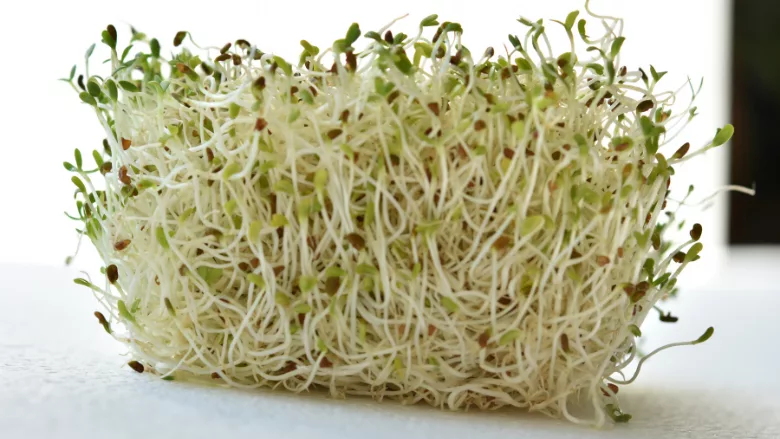
Alfalfa Sprouts Contaminated With Both E. coli, Salmonella Sicken 55 People in 15 States
By Food Safety Magazine Editorial Team
alfalfa sprouted seeds
Image credit: Miroro via Pixabay
August 21, 2026

A multistate outbreak of Shiga toxin-producing Escherichia coli (STEC) and Salmonella infections linked to alfalfa sprouts has sickened 55 people in 15 states.

The implicated products were distributed by Everything Sprouts LLC of Minneapolis, Minnesota.

Outbreak strains include STEC serotypes O26:H11, O103:H25, and O168:H8 and one strain of Salmonella Agona. Some people were infected with more than one outbreak strain.

Of the 55 cases, 46 people were infected with E. coli, seven were infected with Salmonella, and two were infected with both pathogens. A total of four people have been hospitalized, and no deaths have been reported.

Illness onset dates ranged from May 31–August 8, 2026. Of 34 people interviewed by state and local public health officials about foods they ate before becoming ill, 26 (76 percent) reported eating alfalfa sprouts.

Traceback evidence collected from restaurants and grocery stores identified alfalfa sprouts distributed by Everything Sprouts as a source of illnesses in the outbreak.

On August 19, FDA initiated an inspection and sample collection at Everything Sprouts. The agency said its investigation is ongoing to determine the source of contamination and whether additional products or firms are linked to illnesses.

Looking for quick answers on food safety topics?
Try Ask FSM, our new smart AI search tool.
Ask FSM →

FDA has recommended that Everything Sprouts conduct a recall. In the meantime, consumers and retailers have been advised not to eat, serve, or sell alfalfa sprouts marketed under the Calco and Everything Sprouts brands.


Update, August 31, 2026: Everything Sprouts has expanded its recall to include certain lots of Robust Radish Sprout Mix because it has the potential for cross-contamination with Shiga toxin-producing E. coli (STEC) or Salmonella from the recalled alfalfa sprouts.

While epidemiologic and traceback evidence show that alfalfa sprouts grown by Everything Sprouts LLC are one of the sources of illnesses in this outbreak, these sprouts do not explain all the illnesses. FDA’s traceback investigation has identified at least one additional sprout grower who received and used the same lot of alfalfa sprout seeds under investigation in this outbreak from a common seed supplier. The common seed supplier has instructed its customers not to use, grow, sell, transfer, or redistribute the implicated seed lot, and to return or dispose of any remaining seed.

FDA recommended that the common seed supplier voluntarily recall the implicated lot of alfalfa seeds and contact its downstream customers to initiate recalls of sprouts grown from the implicated seed lot, which the supplier has not yet done.

Update, September 16, 2026: The seed supplier of Everything Sprouts agreed to initiate a recall of the alfalfa seed lot linked to this outbreak. This is the same seed lot used to grow alfalfa sprouts recalled by Everything Sprouts. This seed lot was sold directly to sprout growers and wholesale distributors in Puerto Rico and the U.S. It was also shipped internationally to Canada, Mexico, Tahiti, and Venezuela. 


Update, September 24, 2026: Berlin Seeds of Millersburg, Ohio recalled 950 pounds (lbs.) of Alfalfa Sprouting Seeds after being notified by their seed supplier that the seed had the potential to be contaminated with STEC and/or Salmonella. The seed supplier notified Berlin Seeds that seed lot SAL2-24JB was identified through traceback as seed used by another sprout grower whose finished sprouts were part of FDA’s outbreak investigation.  

KEYWORDS: E. coli foodborne illness outbreak investigations Salmonella STEC

Share This Story

Fsm purple logo 200x200

The Food Safety Magazine editorial team comprises Bailee Henderson, Director of Content Strategy and news editor ✉, and Adrienne Blume, M.A., Director of Editorial and Industry Engagement.

Recommended Content

JOIN TODAY
to unlock your recommendations.

Already have an account? Sign In

  • people holding baby chicks

    Serovar Differences Matter: Utility of Deep Serotyping in Broiler Production and Processing

    This article discusses the significance of Salmonella in...
    Food Type
    By: Nikki Shariat Ph.D.
  • woman washing hands

    Building a Culture of Hygiene in the Food Processing Plant

    Everyone entering a food processing facility needs to...
    Management
    By: Richard F. Stier, M.S.
  • graphical representation of earth over dirt

    Climate Change and Emerging Risks to Food Safety: Building Climate Resilience

    This article examines the multifaceted threats to food...
    Contamination Control
    By: Maria Cristina Tirado Ph.D., D.V.M. and Shamini Albert Raj M.A.
Manage My Account
  • eMagazine Subscription
  • Subscribe to Newsletters
  • Manage My Preferences
  • Website Registration
  • Subscription Customer Service

More Videos

Sponsored Content

Sponsored Content is a special paid section where industry companies provide high quality, objective, non-commercial content around topics of interest to the Food Safety Magazine audience. All Sponsored Content is supplied by the advertising company and any opinions expressed in this article are those of the author and not necessarily reflect the views of Food Safety Magazine or its parent company, BNP Media. Interested in participating in our Sponsored Content section? Contact your local rep!

close
  • Top view portrait of two factory workers standing by conveyor belt during quality inspection at food production, copy space
    Sponsored byFlexXray

    Foreign Material By the Numbers: What the 2026 Benchmark Report Reveals

  • a conveyorized industrial metal detector system that appears to resemble a Loma Systems IQ4 Metal Detector setup with an integrated conveyor belt and control panel for food or package inspection.
    Sponsored byMettler Toledo

    Beyond Detection: How to Avoid Physical Contamination in Food Through a Smarter Inspection Strategy

  • The image displays a bottling plant production line, commonly used in the beverage industry for filling and packaging soft drinks.
    Sponsored byBIOIONIX

    Sustainability with ROI: A Beverage Producer Case Study in Water Savings

Popular Stories

Dr. Heidi Overton speaking at Senate hearing

In Senate Hearing, FDA Commissioner Nominee Says Lack of Resources Will Challenge GRAS Reform

The image displays a bottling plant production line, commonly used in the beverage industry for filling and packaging soft drinks.

Sustainability with ROI: A Beverage Producer Case Study in Water Savings

whitish sauce in a bottle

Researchers Examine Microbiological Risks in Sauces and Dressings

allergens ebook

Events

October 6, 2026

Advances in Environmental Monitoring Science and Strategy

Live: October 6, 2026 at 2:00 pm EDT: This webinar will cover how environmental monitoring science and EMP strategies support sanitation verification and the safe production of food.

October 15, 2026

How to Prevent Physical Contamination in Food Production and Strengthen Compliance

Live: October 15, 2026 at 2:00 pm EDT: Attend this webinar to gain insight into how product inspection helps protect your brand, reduce recall risk, and support compliance.

October 29, 2026

FDA Proposes Major GRAS Reform: What It Could Mean for Your Business

Live: October 29, 2026 at 2:00 pm EDT: Attend this webinar to examine potential implications for self-GRAS, Flavor and Extract Manufacturers Association (FEMA) GRAS, and food-contact substances.

View All

Products

Global Food Safety Microbial Interventions and Molecular Advancements

Global Food Safety Microbial Interventions and Molecular Advancements

See More Products

Related Articles

  • cantaloupe slices

    Cantaloupes Contaminated With Salmonella Sicken More Than 100 People in U.S. and Canada, Cause Deaths

    See More
  • alfalfa sprouted seeds

    Salmonella-Tainted Alfalfa Sprouts Sicken 109 People in 11 European Countries, One Death Reported

    See More
  • baby eating bottle

    ByHeart Outbreak Grows: 31 Infants in 15 States Hospitalized for Botulism From Tainted Formula

    See More

Related Products

See More Products
  • 1119237963.jpg

    Food Safety in China: Science, Technology, Management and Regulation

  • 9781138070912.jpg

    Trends in Food Safety and Protection

  • Food-Forensics-3D.jpg

    Food Forensics Handbook Practice, Instrumentation, Case Studies

See More Products

Events

View AllSubmit An Event
  • October 15, 2026

    How to Prevent Physical Contamination in Food Production and Strengthen Compliance

    Live: October 15, 2026 at 2:00 pm EDT: Attend this webinar to gain insight into how product inspection helps protect your brand, reduce recall risk, and support compliance.
View AllSubmit An Event

Related Directories

  • BioSafe Systems

    BioSafe Systems is a leading U.S. manufacturer of peroxyacetic acid (PAA)-based solutions, delivering trusted food safety, water treatment, and processing solutions through clean chemistry and automated equipment. Our proven products help growers and processors control pathogens such as E. coli and Salmonella, reduce microbial risk, and improve efficiency across the fresh produce supply chain.
  • Romer Labs

    Romer Labs is a global leader in innovative diagnostic solutions for food and feed safety. With a focus on mycotoxins, food allergens, GMOs, and microbial contaminants, we strive to meet the ever-changing demands of our customers. Furthermore, we operate a global network of 6 ISO accredited laboratories.
×

Never miss the latest news and trends driving the food safety industry

Newsletters | Website | FSM Features Collection

JOIN TODAY!
  • RESOURCES
    • Advertise
    • Contact Us
    • Directories
    • Store
    • Want More
  • SIGN UP TODAY
    • Create Account
    • eMagazine
    • Newsletters
    • Customer Service
    • Manage Preferences
  • SERVICES
    • Marketing Services
    • Reprints
    • Market Research
    • List Rental
    • Survey/Respondent Access
  • STAY CONNECTED
    • LinkedIn
    • Facebook
    • Instagram
    • X (Twitter)
  • PRIVACY
    • PRIVACY POLICY
    • TERMS & CONDITIONS
    • DO NOT SELL MY PERSONAL INFORMATION
    • PRIVACY REQUEST
    • ACCESSIBILITY

Copyright ©2026. All Rights Reserved BNP Media, Inc. and BNP Media II, LLC.

Design, CMS, Hosting & Web Development :: ePublishing