Pressure-Assisted Thermal Processing Plus Antimicrobials Show Promise for Inactivating Clostridium botulinum in Food
A new study by researchers at Ohio State University and the University of Georgia suggests that combining pressure-assisted thermal processing (PATP) with cationic (i.e., having a net positive electrical charge) antimicrobial compounds may significantly improve the inactivation of Clostridium botulinum in low-acid foods.
The findings were published in Food Control.
The Need for Alternatives to Conventional Heat Treatment
Conventional thermal sterilization requires exposure at temperatures greater than or equal to 121 °C to inactivate bacterial spores and ensure food safety. This severe, prolonged heat can degrade food quality, diminish nutritional value, and impair sensory attributes. Due to these limitations, industry is exploring alternative treatments that improve food safety while maintaining food quality.
PATP, which combines high-pressure and thermal treatment (at temperatures of 90–121 °C), is emerging as a promising solution for inactivating bacterial spores in food matrices, although additional work is needed to address spore regrowth during storage post-PATP treatment. Employing antimicrobial compounds in combination with PATP may provide an effective hurdle strategy for achieving stability of microbial populations during storage.
Study Overview
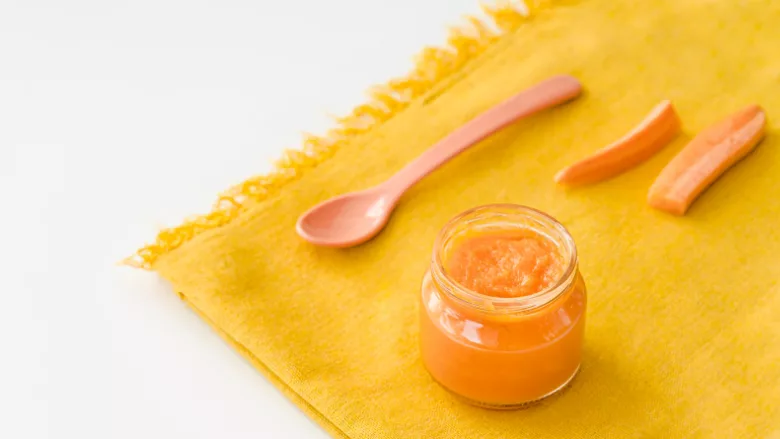
In this context, the researchers evaluated PATP at 600 megapascals (MPa) and 105 °C for 10 minutes, both alone and in combination with the antimicrobials chitosan (10 milligrams per milliliter [mg/mL]), epsilon polylysine (0.2 mg/mL), and lauric arginate (0.2 mg/mL). The researchers used nonpathogenic C. sporogenes PA 3679 as a surrogate for proteolytic Clostridium botulinum due to its similar physiology and resistance to processing. Carrot puree was the food matrix chosen by the researchers for their experiments.
Overall, PATP combined with chitosan, epsilon polylysine, and lauric arginate provided both sporicidal effects during processing and sporostatic effects during storage. The researchers believe this approach could help food processors improve the microbial safety of foods with less severe thermal treatments.
Spore Reductions Greater Than 6.5-log Achieved
The researchers found that PATP alone achieved a 4-log reduction of spores in the carrot puree. However, surviving spores increased by about 1 log during 35 days of storage at 23 °C, suggesting recovery of sublethally injured spores.
Looking for quick answers on food safety topics?
Try Ask FSM, our new smart AI search tool.
Ask FSM →
When chitosan was added, a 6.5-log reduction in spores was achieved. Combining PATP with epsilon polylysine or lauric arginate achieved reductions greater than 6.5-log, lowering spore populations below detectable levels. No spore recovery was observed during the 35-day storage period for any antimicrobial-treated samples.
Nutrients May Play a Role in Spore Regrowth
The study also examined spores suspended in buffer solutions. Pressure treatment alone (600 MPa, 27 °C) produced little effect, while PATP achieved more than a 5-log reduction. Unlike in the carrot puree, no post-treatment recovery occurred in buffer, leading the researchers to conclude that nutrient availability plays an important role in spore repair and outgrowth after processing.
Mechanism Behind PATP Plus Cationic Antimicrobials Sporicidal Effects
To investigate the mechanism behind the antimicrobial effect, the researchers measured zeta potential, an indicator of surface charge. PATP increased the positive charge of the antimicrobial compounds, while spores maintained a negative surface charge.
The authors suggested that electrostatic attraction between positively charged antimicrobials and negatively charged spores may contribute to spore inactivation by promoting interactions with damaged spore structures following PATP.
The researchers proposed that PATP weakens protective spore structures, while cationic antimicrobials further disrupt spore viability and prevent recovery during storage. Although the mechanism remains hypothetical, the authors said the findings support the use of combined pressure-thermal and antimicrobial hurdle strategies to improve microbial safety in low-acid foods.