EFSA Assesses Pathogen Growth in Frozen Meat Under Various Conditions
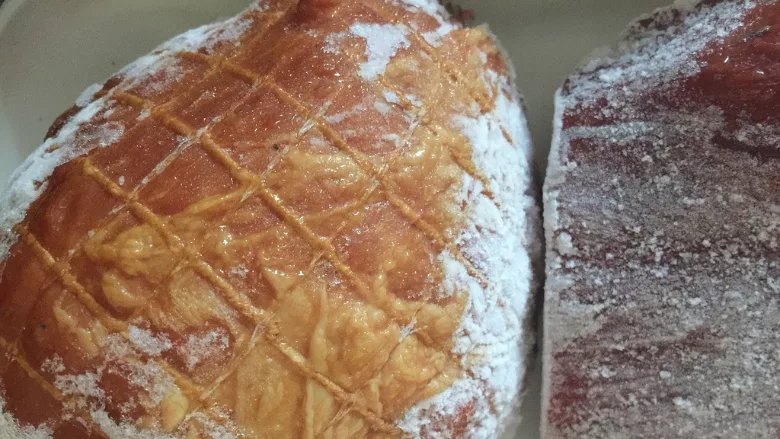
The European Food Safety Authority (EFSA) recently assessed how foodborne pathogens and spoilage bacteria grow in meat during chilling, storage, and defrosting. The opinion was published to provide a scientific basis for possible amendments to existing requirements in EU legislation for food business operators on the freezing of meat.
Specifically, EFSA scientists looked at how storage conditions—such as temperature, vacuum-packaging, and time—affect microbial growth between slaughter and freezing, as well as during subsequent defrosting and storage. The experts compared various meat storage and defrosting scenarios with a reference scenario (meat stored without vacuum packaging at 7 °C for 15 days), observing differences in microbial growth. Applying the concept of equivalence time, mathematical models were used to predict the amount of time meat can be stored before freezing under different conditions until it reaches the same microbial levels as in the reference scenario.
Key findings from the experiments include:
- When storing meat at 7 °C that was vacuum-packed immediately after stabilization, equivalence time before freezing was determined by Salmonella and was reached in 5–6 days of post-slaughter storage.
- When storing meat at 3 °C, equivalence time before freezing was determined by spoilage lactic acid bacteria and was reached in 29–30 days post-slaughter.
- In certain situations, when initial bacterial contamination of meat is high—for example, 5 log10 colony forming units per square centimeter (CFU/cm2)—spoilage may happen (levels of 7 log10 CFU/cm2 ) before reaching these predicted equivalence times (in 15–16 days).
- When defrosting meat at 4° C or 7 °C under the conditions assessed, bacterial growth was absent or limited.
- Further storage of meat at 4°C for seven days after defrosting may lead to additional bacterial growth depending on the storage conditions, suggesting that pre-freezing times in some of the scenarios should be shortened to reach equivalence with the reference scenario.
The assessment focused on meat from cows, sheep, and pigs and evaluated the growth of relevant spoilage microorganisms and pathogens including Salmonella, Shiga-toxin producing Escherichia coli, Listeria monocytogenes, Yersinia enterocolitica, and non-proteolytic Clostridium botulinum.
The full scientific opinion can be read here.
Looking for quick answers on food safety topics?
Try Ask FSM, our new smart AI search tool.
Ask FSM →