Food Safety
search
Ask Food Safety AI
cart
facebook twitter linkedin
  • Sign In
  • Create Account
  • Sign Out
  • My Account
Food Safety
  • NEWS
    • Latest News
    • White Papers
  • PRODUCTS
  • TOPICS
    • Contamination Control
    • Food Types
    • Management
    • Process Control
    • Regulatory
    • Sanitation
    • Supply Chain
    • Testing and Analysis
  • PODCAST
  • EXCLUSIVES
    • Food Safety Five Newsreel
    • eBooks
    • FSM Distinguished Service Award
    • Interactive Product Spotlights
    • Videos
  • BUYER'S GUIDE
  • MORE
    • ENEWSLETTER >
      • Archive Issues
      • Subscribe to eNews
    • Store
    • Sponsor Insights
    • ASK FSM AI
  • WEBINARS
  • FOOD SAFETY SUMMIT
  • EMAG
    • eMagazine
    • Archive Issues
    • Editorial Advisory Board
    • Contact
    • Advertise
  • SIGN UP!
NewsFood TypeManagementRegulatorySupply ChainFood DefenseInternationalMeat/PoultryInternational Standards/HarmonizationImports/Exports

UK Report Calls Illegal Meat Import Crisis ‘Biggest Threat to Food Safety’
By Food Safety Magazine Editorial Team
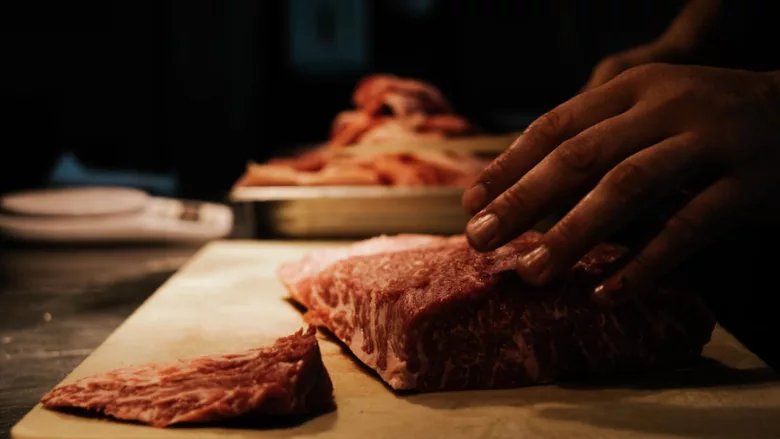
raw meat being cut dark lighting
Image credit: Rachel Claire via Pexels
September 12, 2025

A new report published by the UK Government calls attention to the “illegal meat crisis” spreading disease throughout the country, and demands a coordinated approach to tackling illicit imports.

Compiled by the UK House of Commons Environment, Food, and Rural Affairs Committee, the report is based on an inquiry launched in January 2025, which included a call for evidence, a border checkpoint visit, and discussions with the UK Animal and Plant Health Agency (APHA).

“Alarming amounts of meat and dairy products are now being illegally imported to Great Britain for both personal consumption and sale,” largely through criminal smuggling operations, says the report. “Meat is arriving in unsanitary conditions, often in the back of vans, stashed in plastic bags, suitcases and cardboard boxes.”

The report hypothesizes that the cost-of-living crisis is driving the import and sale of illicit meat and dairy products. Public awareness about the food safety and zoonotic disease risks posed by these illegal products is also low.

The Scale of Great Britain’s Illegally Imported Meat Crisis

The report calls it “unacceptable” that there is no clear data showing the scale and nature of illegal meat entering Great Britain, and urged the UK Department for Environment, Food, and Rural Affairs (Defra) to commission research to determine the scale of the illegal meat crisis.

Although there is no standardized, directly comparable data about illegal meat and dairy imports year-over-year, the British Border Force does record some information related to prohibited products of animal origin (POAO). National figures provided by Border Force for the report show an increase in POAO seizures in recent years, from 2,400 seizures weighing 128 tons in 2022, to 2,600 seizures weighing 235 tons in 2024. Anecdotally, the Food Standards Agency’s National Food Crime Unit (FSA’s NFCU) reported that, since 2020, “there has been a substantial rise in local authority reporting of a broad spectrum of illicit imports” including meat and other products of animal origin.

Illicit meat and dairy products are being distributed online, and via door-to-door sales to businesses and households. These products can be found in markets, shops, takeaways, and hospitality venues where consumers trust that the food they are buying is safe. Oftentimes, illicit foreign meat is misrepresented as being of British origin, with beef and pork the most frequently fraudulent.

Looking for quick answers on food safety topics?
Try Ask FSM, our new smart AI search tool.
Ask FSM →

Public Health Risks of Illicit Meat and Dairy Imports

Microbiological food safety risks (i.e., foodborne pathogens, viruses, and parasites) posed by illegal meat are an important concern. The publication described the current prevalence of illegally imported meat as “the biggest threat to food safety [the UK has] had for a long time.” Illicit meat imports are undocumented, untraceable, and unhygienic.

Import control officers have noted the non-food-safe, unmarked, and “putrid” containers in which illegal meat imports are transported, as well as evident temperature abuse. Moreover, raw meat is often home-slaughtered with evidence of poor evisceration taking place.

Another major public health threat posed by the circulation of illegal meat imports in the UK include the spread of animal diseases, per the publication. Specifically, in 2025, European countries like Germany, Hungary, and Slovakia reported their first cases of foot-and-mouth disease (FMD) in 40–50 years, elevating the risk of FMD virus entering Great Britain. Additionally, African swine fever has been spreading throughout Europe in recent years, hitting Romania particularly hard, and being reported in regions where it had not previously been present, such as Italy and Germany.

Worsening the issue, the risk of APHA facing an outbreak to which it would be unable to effectively respond is “very high,” according to a Defra assessment. This is due to compounding issues, including a severe dearth of official veterinarians, as well as APHA’s usual activities being affected by “almost continual outbreaks” of diseases like avian influenza.

The Need for a Coordinated, Interagency Response

At present, there is no identifiable or effective ownership of the issue of illegal meat imports in the UK. “Responsibility is so fragmented across agencies that outdated, inefficient ways of working have been allowed to persist and the scale of the crisis has been able to escalate to an intolerable degree,” says the report.

Therefore, the report recommends that, by January 2026, Defra should create a strategy for POAO smuggling in collaboration with FSA’s NFCU, Food Standards Scotland’s Food Crime and Incidents Unit (FSS’ FCIU), port health authorities, inland local authorities, and Border Force. The strategy should establish formal information-sharing mechanisms between Defra, local authorities, and port health authorities.

Additionally, a taskforce for illegal imports of animal products should be established by November 2025, led by the UK Minister for Biosecurity, to provide oversight of the strategy’s design and implementation and to drive improvements. This taskforce should include the UK’s Chief Veterinary Officer, APHA representatives, FSA and its NFCU, FSS and its FCIU, Border Force, and representatives from local governments.


KEYWORDS: England food fraud UK

Share This Story

Fsm purple logo 200x200

The Food Safety Magazine editorial team comprises Bailee Henderson, Digital Editor ✉; Adrienne Blume, M.A., Editorial Director; and Stacy Atchison, Publisher.

Recommended Content

JOIN TODAY
to unlock your recommendations.

Already have an account? Sign In

  • people holding baby chicks

    Serovar Differences Matter: Utility of Deep Serotyping in Broiler Production and Processing

    This article discusses the significance of Salmonella in...
    Contamination Control
    By: Nikki Shariat Ph.D.
  • woman washing hands

    Building a Culture of Hygiene in the Food Processing Plant

    Everyone entering a food processing facility needs to...
    Personal Hygiene/Handwashing
    By: Richard F. Stier, M.S.
  • graphical representation of earth over dirt

    Climate Change and Emerging Risks to Food Safety: Building Climate Resilience

    This article examines the multifaceted threats to food...
    International
    By: Maria Cristina Tirado Ph.D., D.V.M. and Shamini Albert Raj M.A.
Manage My Account
  • eMagazine Subscription
  • Subscribe to eNewsletter
  • Manage My Preferences
  • Website Registration
  • Subscription Customer Service

More Videos

Sponsored Content

Sponsored Content is a special paid section where industry companies provide high quality, objective, non-commercial content around topics of interest to the Food Safety Magazine audience. All Sponsored Content is supplied by the advertising company and any opinions expressed in this article are those of the author and not necessarily reflect the views of Food Safety Magazine or its parent company, BNP Media. Interested in participating in our Sponsored Content section? Contact your local rep!

close
  • Salmonella bacteria
    Sponsored byThermoFisher

    Food Microbiology Testing Methods: Salmonella species

  • a diagram explaining indicator organisms
    Sponsored byHygiena

    How Proactive Listeria Testing Helps Prevent Six- and Seven-Figure Recalls

  • woman grocery shopping
    Sponsored byCorbion

    Designing Safety Into Every Bite: Proactive Risk Mitigation for Refrigerated Foods

Popular Stories

baby eating bottle

Infant Botulism Spike Exceeds 100 Cases, Extent of ByHeart's Involvement Unclear

NRTE breaded stuffed chicken

USDA Indefinitely Delays Enforcement of Salmonella as Adulterant in Raw Breaded, Stuffed Chicken

digital map of europe

EU Publishes Food Fraud Tool Mapping Thousands of Cases Since 2016

Events

December 11, 2025

How to Develop and Implement an Effective Food Defense Strategy

Live: December 11, 2025 at 2:00 pm EDT: From this webinar, attendees will learn common areas where companies encounter challenges in their food defense strategies and how to address them.

May 11, 2026

The Food Safety Summit

Stay informed on the latest food safety trends, innovations, emerging challenges, and expert analysis. Leave the Summit with actionable insights ready to drive measurable improvements in your organization. Do not miss this opportunity to learn from experts about contamination control, food safety culture, regulations, sanitation, supply chain traceability, and so much more.

View All

Products

Global Food Safety Microbial Interventions and Molecular Advancements

Global Food Safety Microbial Interventions and Molecular Advancements

See More Products

Related Articles

  • Recall: The Food Industry's Biggest Threat to Profitability

    See More
  • UK map

    FSA Proposes Changes to Food Code Following Report on UK Food Safety Regulatory Challenges Post-Brexit

    See More
  • woman shopping for groceries

    UK Consumers Report High Confidence in National Food Safety, Regulatory Oversight

    See More

Related Products

See More Products
  • 0813808774.jpg

    Improving Import Food Safety

  • 9781138198463.jpg

    Food Safety Management Programs: Applications, Best Practices, and Compliance

  • 1119053595.jpg

    Food Safety for the 21st Century: Managing HACCP and Food Safety throughout the Global Supply Chain, 2E

See More Products

Related Directories

  • We R Food Safety Inc.

    Scalable, affordable and fully customizable software designed by industry experts and backed by a world-class team of consultants and support personnel. Our proprietary software modernizes your food safety systems, provides your staff real-time data and visibility. We have the ability to construct custom reporting providing you information that is important to your business.
×

Never miss the latest news and trends driving the food safety industry

eNewsletter | Website | eMagazine

JOIN TODAY!
  • RESOURCES
    • Advertise
    • Contact Us
    • Directories
    • Store
    • Want More
  • SIGN UP TODAY
    • Create Account
    • eMagazine
    • eNewsletter
    • Customer Service
    • Manage Preferences
  • SERVICES
    • Marketing Services
    • Reprints
    • Market Research
    • List Rental
    • Survey/Respondent Access
  • STAY CONNECTED
    • LinkedIn
    • Facebook
    • Instagram
    • X (Twitter)
  • PRIVACY
    • PRIVACY POLICY
    • TERMS & CONDITIONS
    • DO NOT SELL MY PERSONAL INFORMATION
    • PRIVACY REQUEST
    • ACCESSIBILITY

Copyright ©2025. All Rights Reserved BNP Media.

Design, CMS, Hosting & Web Development :: ePublishing