Food Safety
search
Ask Food Safety AI
cart
facebook twitter linkedin instagram youtube
  • Sign In
  • Create Account
  • Sign Out
  • My Account
Food Safety
  • NEWS
    • Latest News
    • White Papers
  • PRODUCTS
  • TOPICS
    • Contamination Control
    • Food Types
    • Management
    • Process Control
    • Regulatory
    • Sanitation
    • Supply Chain
    • Testing and Analysis
  • PODCAST
  • EXCLUSIVES
    • Food Safety Five Newsreel
    • eBooks
    • FSM Distinguished Service Award
    • Interactive Product Spotlights
    • Videos
  • BUYER'S GUIDE
  • MORE
    • NEWSLETTERS >
      • Archive Issues
      • Subscribe to eNews
    • Store
    • Sponsor Insights
    • ASK FSM AI
  • WEBINARS
  • FOOD SAFETY SUMMIT
  • EMAG
    • eMagazine
    • Archive Issues
    • Editorial Advisory Board
    • Contact
    • Advertise
  • SIGN UP!
ProductsFood TypeManagementTesting & AnalysisFood DefenseChemical Testing & AnalysisMethodsIngredients

BIZTRACKS

Italian Standards Body Offers New Standard for Method of Detecting Honey Adulteration

By Food Safety Magazine Editorial Team
dish of honey, honey wand, and honey pooled on table

Image credit: Freepik

April 11, 2025

In light of the widespread issue of honey fraud and to protect the authenticity of Italian honey, the Italian Standards Body (UNI) has developed a new standard that introduces a new analytical method for detecting honey adulteration.

UNI 11972 describes an adulteration detection method based on Nuclear Magnetic Resonance (NMR), a sophisticated analytical technique that allows the user to “photograph” the chemical composition of honey. When a sample is subjected to NMR analysis, the sugars naturally present in honey can be identified by their characteristic profile, while adulterants can be differentiated based on specific, identifiable signals.

The UNI 11972 standard enables the identification of three types of commonly used adulterants: inulin, a fructofuranoside-based oligosaccharide; invert sugar, a mixture of glucose, fructose, and sucrose derived from the incomplete enzymatic hydrolysis of sucrose; and corn syrup/malt syrup, a mixture of mono-, di-, tri- and tetra-saccharides derived from maltose and corn sugar.

The method introduced in UNI 11972 is able to detect adulteration at 10 percent by weight or greater, guaranteeing high reproducibility.

NMR offers several advantages over other analytical techniques. Specifically, it allows simultaneous analysis of different classes of chemical compounds, guarantees high reproducibility of results, does not require reference databases, and offers the flexibility to expand analyses to new sugar adulterants.

The standard is specifically applicable to acacia, chestnut, and multi-flower honeys, which are three of the most widespread and appreciated varieties on the Italian market.

Looking for quick answers on food safety topics?
Try Ask FSM, our new smart AI search tool.
Ask FSM →


KEYWORDS: Adulteration food fraud honey Italian Standards Body Italy

Share This Story

Fsm purple logo 200x200

The Food Safety Magazine editorial team comprises Bailee Henderson, Digital Editor ✉ and Adrienne Blume, M.A., Editorial Director.

Recommended Content

JOIN TODAY
to unlock your recommendations.

Already have an account? Sign In

  • people holding baby chicks

    Serovar Differences Matter: Utility of Deep Serotyping in Broiler Production and Processing

    This article discusses the significance of Salmonella in...
    Testing & Analysis
    By: Nikki Shariat Ph.D.
  • woman washing hands

    Building a Culture of Hygiene in the Food Processing Plant

    Everyone entering a food processing facility needs to...
    Management
    By: Richard F. Stier, M.S.
  • graphical representation of earth over dirt

    Climate Change and Emerging Risks to Food Safety: Building Climate Resilience

    This article examines the multifaceted threats to food...
    Management
    By: Maria Cristina Tirado Ph.D., D.V.M. and Shamini Albert Raj M.A.
Manage My Account
  • eMagazine Subscription
  • Subscribe to Newsletters
  • Manage My Preferences
  • Website Registration
  • Subscription Customer Service

More Videos

Sponsored Content

Sponsored Content is a special paid section where industry companies provide high quality, objective, non-commercial content around topics of interest to the Food Safety Magazine audience. All Sponsored Content is supplied by the advertising company and any opinions expressed in this article are those of the author and not necessarily reflect the views of Food Safety Magazine or its parent company, BNP Media. Interested in participating in our Sponsored Content section? Contact your local rep!

close
  • NEVIFIT 3 Compartment BPA-FREE
    Sponsored byCorbion

    The Risks of Ready-to-Eat: Five Ways to Protect Today's Prepared Meals

  • a group of workers in a food production facility
    Sponsored bySkillUp by Registrar Corp

    How to Build a Better Training Program: Data and Insights from the Global Food Safety Training Survey

  • the use of dual-energy X-ray food inspection technology to identify foreign contaminants.
    Sponsored byEagle by METTLER TOLEDO

    Precision Inspection Starts with the Right X-ray Detector

Popular Stories

green powder/moringa in wooden mortar

FDA Opens Third Salmonella–Moringa Outbreak Investigation of the Year

FoodSafetyMattersFinal-900x550-(002).jpg

Ep. 218. Dr. Brady Carter: Water Activity, Shelf-Life Validation, and Food Safety Controls

fermented meat

Study is First to Analyze Trends in Foodborne Illness Outbreaks Linked to Non-Dairy Fermented Products

a practical guide to spoilage investigation webinar

Events

June 3, 2026

How to Build a Better Food Safety Training Program

Live: June 3, 2026 at 2:00 pm EDT: Join this webinar to learn how AI is impacting food safety training, and how you can leverage AI in your programs.

June 4, 2026

Building a Stronger Food Safety Program in a Changing GFSI Landscape

Live: June 4, 2026 at 11:00 am EDT: Attend this webinar to understand how GFSI requirements are evolving and what those changes signal for quality programs at food and beverage facilities.

June 10, 2026

A Practical Guide to Spoilage Investigation and Prevention

Live: June 10, 2026 at 11:00 am EDT: Join this webinar to learn how to identify spoilage root causes, reduce risk, and apply data-driven strategies for prevention.

View All

Products

Global Food Safety Microbial Interventions and Molecular Advancements

Global Food Safety Microbial Interventions and Molecular Advancements

See More Products

Related Articles

  • bowl of yogurt with raspberries

    FDA Releases Small Entity Compliance Guide for New Standard for Yogurt

    See More
  • honey wand dripping over honey jar yellow background

    EU to Develop New Traceability Requirements to Tackle Honey Adulteration, Revises Origin Labeling Rules

    See More
  • LCG standards logo

    LGC Standards Offers New PFAS Reference Materials for EPA Method 1633

    See More

Related Products

See More Products
  • 1119053595.jpg

    Food Safety for the 21st Century: Managing HACCP and Food Safety throughout the Global Supply Chain, 2E

  • 1119160553.jpg

    Food Safety: Innovative Analytical Tools for Safety Assessment

  • 1118396308.jpg

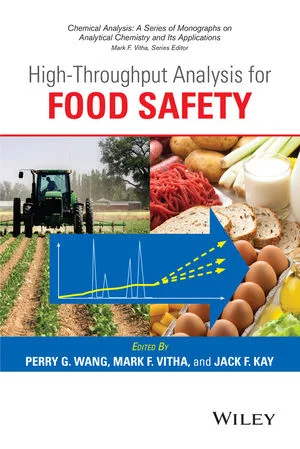
    High Throughput Analysis for Food Safety

See More Products

Related Directories

  • Gold Standard Diagnostics

    Gold Standard Diagnostics develops and markets rapid test kits and analyzers for a wide range of food contaminants including: allergens, pathogens, patulin and mycotoxins, glyphosate and pesticides, VDRs, GMOs and more. Get accurate results in minutes on-site with Gold Standard Diagnostics test kits.
  • TAAG Labs

    Transforming food safety with the first fully interconnected and comprehensive suite of multiplex molecular diagnostics kits, advanced lab services, and AI-powered software. Our game-changing proprietary PCR kits can deliver precise results in just 3 hours, without enrichment. Join us in setting a new standard for speed, sensitivity, and smart diagnostics.
  • Trustwell

    At Trustwell, we’re connecting the dots between food and data so you can have more control over your products along the supply chain. The Trustwell Connect Platform brings together the pioneering achievements of two amazing products – Genesis and FoodLogiQ – to set a new standard for compliance, transparency, and quality in the food industry.
×

Never miss the latest news and trends driving the food safety industry

Newsletters | Website | eMagazine

JOIN TODAY!
  • RESOURCES
    • Advertise
    • Contact Us
    • Directories
    • Store
    • Want More
  • SIGN UP TODAY
    • Create Account
    • eMagazine
    • Newsletters
    • Customer Service
    • Manage Preferences
  • SERVICES
    • Marketing Services
    • Reprints
    • Market Research
    • List Rental
    • Survey/Respondent Access
  • STAY CONNECTED
    • LinkedIn
    • Facebook
    • Instagram
    • X (Twitter)
  • PRIVACY
    • PRIVACY POLICY
    • TERMS & CONDITIONS
    • DO NOT SELL MY PERSONAL INFORMATION
    • PRIVACY REQUEST
    • ACCESSIBILITY

Copyright ©2026. All Rights Reserved BNP Media, Inc. and BNP Media II, LLC.

Design, CMS, Hosting & Web Development :: ePublishing