Food Safety
search
Ask Food Safety AI
cart
facebook twitter linkedin
  • Sign In
  • Create Account
  • Sign Out
  • My Account
Food Safety
  • NEWS
    • Latest News
    • White Papers
  • PRODUCTS
  • TOPICS
    • Contamination Control
    • Food Types
    • Management
    • Process Control
    • Regulatory
    • Sanitation
    • Supply Chain
    • Testing and Analysis
  • PODCAST
  • EXCLUSIVES
    • Food Safety Five Newsreel
    • eBooks
    • FSM Distinguished Service Award
    • Interactive Product Spotlights
    • Videos
  • BUYER'S GUIDE
  • MORE
    • ENEWSLETTER >
      • Archive Issues
      • Subscribe to eNews
    • Store
    • Sponsor Insights
    • ASK FSM AI
  • WEBINARS
  • FOOD SAFETY SUMMIT
  • EMAG
    • eMagazine
    • Archive Issues
    • Editorial Advisory Board
    • Contact
    • Advertise
  • SIGN UP!
NewsContamination ControlFood TypeProcess ControlRegulatoryMicrobiologicalProcess ValidationDairy/EggsFDA

FDA-Backed Study Shows Aging Raw Milk Cheese Does Not Inactivate Avian Flu, but Low pH Helps
By Bailee Henderson
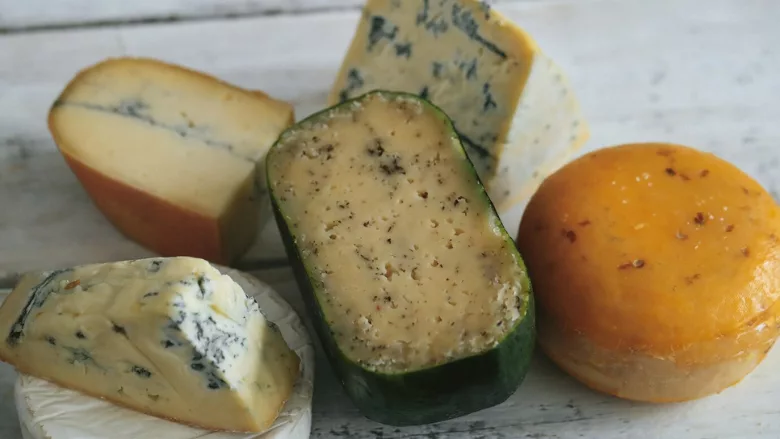
various aged cheese

Image credit: azerbaijan_stockers via Freepik

March 14, 2025

A recent study conducted by Cornell University, funded by the U.S. Food and Drug Administration (FDA) and New York State, has demonstrated that aging raw milk cheese for 60 days or longer is not on its own effective at eliminating the Highly Pathogenic Avian Influenza H5N1 (HPAI H5N1) virus. However, the study does suggest that that either heat-treating raw milk to adequate parameters, or manufacturing cheese at or below a pH of 5.0, could be effective at inactivating HPAI H5N1.

The U.S. Code of Federal Regulations requires that cheeses produced from unpasteurized (raw) milk must undergo a curing process for a minimum of 60 days at temperatures no lower than 1.67 °C (35 °F) to inactivate bacterial pathogens. However, research has not yet determined whether the HPAI H5N1 virus is inactivated through the cheesemaking process and the mandatory aging period. In light of the ongoing HPAI H5N1 outbreak infecting North American dairy cattle, the present study sought to fill this knowledge gap.

A pre-print version of the study is available. It has not yet been peer-reviewed, but has been disseminated by FDA. Authors on the study include Mohammed Nooruzzaman, D.V.M, Ph.D.; Pablo Sebastian Britto de Oliveira, Ph.D. candidate; and Diego G. Diel, D.V.M., Ph.D. from Cornell's College of Veterinary Medicine; as well as Nicole Martin, Ph.D. and Samuel D. Alcaine, Ph.D. from Cornell's College of Agriculture and Life Sciences. 

The researchers first evaluated the stability of HPAI H5N1 in raw milk cheeses during production and aging under varying pH conditions (6.6, 5.8, and 5.0), using a mini-cheese model prepared with virus-spiked raw milk. During the mini-cheese-making process, milk samples were collected immediately after HPAI-spiking, after pH adjustment, and after heating at 34 °C for one hour. Additionally, whey and curd samples were collected at different steps of coagulation and separation, including after heating at 40 °C for 20 or 30 minutes.

Throughout production, lower viral RNA loads were detected in samples from the pH 5.0 cheese group when compared to corresponding samples from the pH 6.6 and 5.8 groups. Viral titers were slightly lower in whey and curd samples from the pH 5.8 compared to the pH 6.6 group, and no infectious virus was detected in whey and curd samples collected from pH 5.0 cheese group, indicating a pH-dependent stability of HPAI H5N1 virus during raw milk cheese production.

Next, the researchers validated their findings by assessing the stability of HPAI H5N1 during cheese aging or curing at 4 °C over a 60-day period, using cheeses produced with commercial raw milk sourced from a farm that experienced an HPAI outbreak in its dairy herd. Cheese samples were collected daily between days 1 and 7, and then periodically on days 14, 21, 35, 42, 49, 56, and 60 of aging. The HPAI H5N1 viral RNA remained stable in raw milk cheeses throughout the entire 60-day aging period.

However, a pH-dependent survival of the HPAI H5N1 was observed. Infectious virus persisted throughout the cheesemaking process and for up to 60 days of aging in the pH 6.6 and 5.8 cheese groups, but at pH 5.0, the virus did not survive the cheesemaking process.

Looking for quick answers on food safety topics?
Try Ask FSM, our new smart AI search tool.
Ask FSM →

The researchers state that their findings highlight the potential public health risks of consuming raw milk cheese, underscoring the need for additional mitigation steps in cheese production to prevent human exposure to infectious virus.

The study was supported by FDA as part of its broader dairy food safety research agenda for HPAI H5N1, which includes other initiatives, like sampling and testing pasteurized dairy products at retail and aged raw cow’s milk cheese at distribution. So far, FDA has found that pasteurization is effective at inactivating HPAI H5N1 in dairy products, based on its retail sampling assignment.

Additionally, alongside the pre-print publication of the Cornell study, FDA shared interim results from its ongoing sampling of 60-day aged raw milk cheese at distribution. As of March 10, 2025, 110 samples of the planned 299 have been collected. Of the 110 samples, 96 were negative for HPAI H5N1 per polymerase chain reaction (PCR) analysis, and 14 are still in progress. Final results are expected later in the spring.


Update, October 10, 2025: The study has been peer-reviewed and published in Nature Medicine.

KEYWORDS: cheese Cornell University HPAI raw milk study

Share This Story

Baileehendersonmay23

Bailee Henderson is the Digital Editor of Food Safety Magazine. She can be reached at hendersonb@bnpmedia.com.

Recommended Content

JOIN TODAY
to unlock your recommendations.

Already have an account? Sign In

  • people holding baby chicks

    Serovar Differences Matter: Utility of Deep Serotyping in Broiler Production and Processing

    This article discusses the significance of Salmonella in...
    Meat/Poultry
    By: Nikki Shariat Ph.D.
  • woman washing hands

    Building a Culture of Hygiene in the Food Processing Plant

    Everyone entering a food processing facility needs to...
    Facilities
    By: Richard F. Stier, M.S.
  • graphical representation of earth over dirt

    Climate Change and Emerging Risks to Food Safety: Building Climate Resilience

    This article examines the multifaceted threats to food...
    Contamination Control
    By: Maria Cristina Tirado Ph.D., D.V.M. and Shamini Albert Raj M.A.
Manage My Account
  • eMagazine Subscription
  • Subscribe to eNewsletter
  • Manage My Preferences
  • Website Registration
  • Subscription Customer Service

More Videos

Sponsored Content

Sponsored Content is a special paid section where industry companies provide high quality, objective, non-commercial content around topics of interest to the Food Safety Magazine audience. All Sponsored Content is supplied by the advertising company and any opinions expressed in this article are those of the author and not necessarily reflect the views of Food Safety Magazine or its parent company, BNP Media. Interested in participating in our Sponsored Content section? Contact your local rep!

close
  • Salmonella bacteria
    Sponsored byThermoFisher

    Food Microbiology Testing Methods: Salmonella species

  • a diagram explaining indicator organisms
    Sponsored byHygiena

    How Proactive Listeria Testing Helps Prevent Six- and Seven-Figure Recalls

  • woman grocery shopping
    Sponsored byCorbion

    Designing Safety Into Every Bite: Proactive Risk Mitigation for Refrigerated Foods

Popular Stories

baby eating bottle

Infant Botulism Spike Exceeds 100 Cases, Extent of ByHeart's Involvement Unclear

NRTE breaded stuffed chicken

USDA Indefinitely Delays Enforcement of Salmonella as Adulterant in Raw Breaded, Stuffed Chicken

digital map of europe

EU Publishes Food Fraud Tool Mapping Thousands of Cases Since 2016

Events

December 11, 2025

How to Develop and Implement an Effective Food Defense Strategy

Live: December 11, 2025 at 2:00 pm EDT: From this webinar, attendees will learn common areas where companies encounter challenges in their food defense strategies and how to address them.

May 11, 2026

The Food Safety Summit

Stay informed on the latest food safety trends, innovations, emerging challenges, and expert analysis. Leave the Summit with actionable insights ready to drive measurable improvements in your organization. Do not miss this opportunity to learn from experts about contamination control, food safety culture, regulations, sanitation, supply chain traceability, and so much more.

View All

Products

Global Food Safety Microbial Interventions and Molecular Advancements

Global Food Safety Microbial Interventions and Molecular Advancements

See More Products

Related Articles

  • variety of dairy products

    Study Shows Avian Flu Does Not Pose Food Safety Risk in Various Pasteurized Dairy Products

    See More
  • young dairy calf

    Study Shows Acidification is Inexpensive, Easy Way to Inactivate Bird Flu in Raw Waste Milk

    See More
  • milk bottles in crate

    CDC: Avoid Consuming Raw Milk, as Risk of Bird Flu Infection is Low but Possible

    See More

Related Products

See More Products
  • 9781498721776.jpg

    Handbook of Food Processing: Food Safety, Quality, and Manufacturing Processes

  • food-safety-making.jpg

    Food Safety: Making Foods Safe and Free From Pathogens

  • Food-Forensics-3D.jpg

    Food Forensics Handbook Practice, Instrumentation, Case Studies

See More Products

Related Directories

  • Page & Pedersen International Ltd.

    P&P makes reliable analytical instruments for food safety and quality testing. Also supplying certiified calibration standards for milk composition analyzers and cryoscopes. LactiWhey for rapid fat & protein results, LactiCheck Analyzers test for fat, protein, solids, lactose (raw and processed milk) (Freezing-Point Cryoscopes) to tesy extraneous water in milk, moisture levels in cheese/yogurt (Halogen Infrared Moisture Analyzer) or see Somatic Cell Counts (automated image cytometry).
  • Ohaus Corp.

    From lab balances up to large capacity industrial floor scales, the OHAUS portfolio has weighing solutions to fit every workplace, as well as essential laboratory equipment including pH, centrifuges, clamps and supports. Whether your applications include sample preparation, advanced formulation, or bulk packaging and checkweighing, OHAUS does it all!
×

Never miss the latest news and trends driving the food safety industry

eNewsletter | Website | eMagazine

JOIN TODAY!
  • RESOURCES
    • Advertise
    • Contact Us
    • Directories
    • Store
    • Want More
  • SIGN UP TODAY
    • Create Account
    • eMagazine
    • eNewsletter
    • Customer Service
    • Manage Preferences
  • SERVICES
    • Marketing Services
    • Reprints
    • Market Research
    • List Rental
    • Survey/Respondent Access
  • STAY CONNECTED
    • LinkedIn
    • Facebook
    • Instagram
    • X (Twitter)
  • PRIVACY
    • PRIVACY POLICY
    • TERMS & CONDITIONS
    • DO NOT SELL MY PERSONAL INFORMATION
    • PRIVACY REQUEST
    • ACCESSIBILITY

Copyright ©2025. All Rights Reserved BNP Media.

Design, CMS, Hosting & Web Development :: ePublishing