FDA Publishes Dairy Food Safety Research Agenda for HPAI H5N1
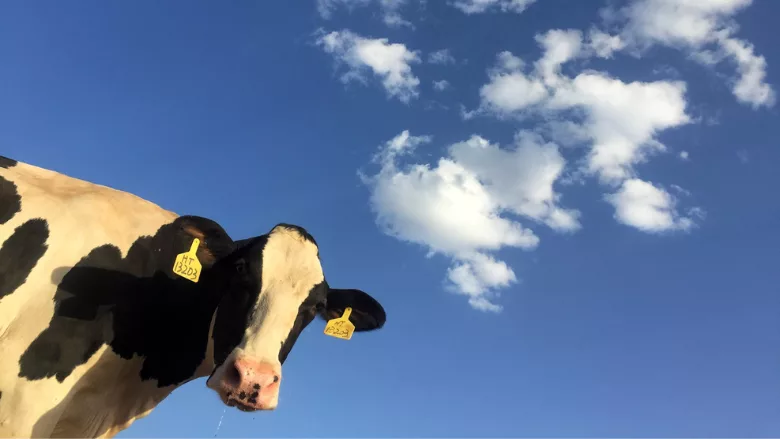
Image credit: Ryan Song via Unsplash
The U.S. Food and Drug Administration (FDA) has published an outline of its research priorities for Highly Pathogenic Avian Influenza (HPAI) H5N1, which was first detected in U.S. dairy cattle in March 2024 and has since been reported in multiple states. Because infection of dairy cattle is a relatively novel presentation of influenza, the agency seeks to address significant research needs to protect human and animal health.
FDA, alongside its federal and state partners, is following a step-by-step approach to its scientific analysis of commercial milk safety during the ongoing HPAI H5N1 outbreak affecting North American dairy cattle. Preliminary results of the agency’s initial assessment of U.S. milk at retail continues to support the safety of the milk supply; however, a number of collective activities are still being undertaken to ensure the continued effectiveness of the federal-state milk safety system.
FDA is following a scientific process to inform its public health decisions related to food safety as outlined in the research agenda. The agency is completing its research and testing in partnership with both the U.S. Department of Agriculture’s (USDA’s) U.S. National Poultry Research Center and USDA’s Animal and Plant Health Inspection Service’s (APHIS’) National Veterinary Services Laboratory. Certain research studies will be completed in partnership with universities. The agenda comprises three objectives:
- Objective 1: Understand characteristics of inactivation methods for H5N1 dairy products
- Objective 2: Determine the safety of retail dairy products
- Objective 3: One Health interventions for HPAI H5N1.
Objective 1 will focus on pasteurization temperature thresholds and durations required to effectively neutralize H5N1 HPAI. Efforts in multiple focus areas related to this objective are ongoing to better understand the efficacy of pasteurization and other inactivation methods:
- Testing Pre-Pasteurization Milk Samples: Testing pooled raw milk samples can be used as a basis to characterize potential virus levels that pasteurization may encounter. FDA is continuing to work with states on additional efforts to sample and build data on pre-pasteurization samples at different points in the milk production and processing system. The agency is also exploring innovative data management solutions (e.g., data trusts) as a potential way to organize and aggregate dynamic data sources in different types of analyses.
- Benchtop Thermal Inactivation Kinetics Studies: Benchtop equipment studies will provide information on an estimation of the time and temperature needed for inactivation of H5N1 HPAI virus in milk and milk products.
- Continuous Flow Pasteurization Studies: Studies using continuous flow pasteurization equipment, reflective of those in commercial use, help confirm pasteurization parameters effective at inactivating H5N1 HPAI virus in milk processes.
- Raw Milk Cheese Aging: The purpose of these studies is to assess the survival of H5N1 HPAI virus in raw milk cheeses under various parameters over the aging process.
To determine the safety of retail dairy products (Objective 2), FDA is sampling and testing milk at retail. Preliminary results from initial sampling gave the agency information how much, if any, viable H5N1 HPAI virus survives commercial processing. A second round of nationally representative sampling is ongoing.
FDA’s second sampling survey is testing approximately 155 dairy products for H5N1 collected at retail locations, including fluid milk and products such as aged raw milk cheese, pasteurized milk and pasteurized cheeses, cream cheese, butter, and ice cream. The samples collected include dairy products processed in states that were not included in the agency’s first phase of retail research. Additional samples are being taken from areas included in the previous survey to help provide a more representative picture based on the level of dairy product production that occurs in certain regions. FDA expects to conduct additional post-pasteurization testing to continue to monitor these products in the future.
Finally, FDA issuing a One Health strategy to mitigate the impact of H5N1 HPAI virus (Objective 3). One Health interventions to prevent, control, or eliminate H5N1 HPAI in animals, milk, and the environment are under development; for example, strategies to decrease the impact of H5N1 HPAI, interventions to prevent or control spread of H5N1 HPAI, and alternative viral inactivation and disposal methods for discarded milk.
Update, July 1, 2024: FDA and USDA have announced results from a first-of-its-kind study using the process typically used by commercial milk processors, which reaffirm that the commercial milk supply is safe. The goal of the study was to further confirm that pasteurization is effective at inactivating HPAI H5N1 virus in fluid milk and other dairy products made from pasteurized milk. The study found that the most commonly used pasteurization time and temperature requirements were effective at inactivating the HPAI H5N1 virus in milk.
Update, August 14, 2024: FDA has released the results of the second retail sampling survey that tested dairy products for HPAI H5N1. The second sampling survey, coordinated with USDA for the analyses, tested 167 dairy products, included pasteurized fluid milk and products made from pasteurized milk, such as pasteurized cheeses, cream cheese, butter, ice cream, and included aged raw milk cheese. The samples collected at retail locations were analyzed between June 18- and July 31, 2024. No viable H5N1 virus was detected in the products. FDA and USDA have submitted the survey results for publication in a peer-reviewed journal. A pre-publication version is available here.
Looking for quick answers on food safety topics?
Try Ask FSM, our new smart AI search tool.
Ask FSM →
Update, September 26, 2024: FDA announced that it is advancing the following applied research:
- Thermal Inactivation Kinetic Studies: In collaboration with Cornell University, the U.S. National Institutes of Health Rocky Mountain Laboratories (NIH-RML), and the University of Georgia, FDA will determine the effects of various time and temperature combinations outside of standard pasteurization parameters and temperature combinations on H5N1 viability in fluid milk that will allow objective risk assessments of various dairy product manufacturing processes.
- Viral Inactivation Studies: In collaboration with Cornell University, FDA will assess H5N1 inactivation under different aged raw milk cheese manufacturing processes.
- H5N1 Viability Testing: FDA has partnered with Cornell University, the University of Georgia, and St. Jude Children’s Research Hospital to provide H5N1 virus viability testing as needed.
- One Health Interventions: In collaboration with Cornell University, FDA will investigate practical disposal measures for raw milk waste. In collaboration with the University of Wisconsin-Madison, FDA will explore the development of genome-edited chickens to reduce susceptibility or provide resistance to H5N1 and other avian viruses.
FDA and its partners expect to share further updates on these research efforts in the coming months.
Update, January 2, 2025: FDA recently began a sampling assignment to collect and test aged raw cow’s milk cheese for HPAI H5N1.
Update, March 14, 2025: FDA has disseminated a pre-print publication of the Cornell University study examining HPAI H5N1 inactivation under different aged raw milk cheese manufacturing processes, as well as interim results from its aged raw milk cheese sampling assignment.