Eat Real Food: New U.S. Dietary Guidelines Name and Shame ‘Highly Processed Foods’
The U.S. Department of Health and Human Services (HHS) and the U.S. Department of Agriculture (USDA) have published the new Dietary Guidelines for Americans 2025–2030 (DGAs). Notable changes from the previous DGAs include an increased recommended daily protein intake, emphasis on the healthfulness of dairy, and sweeping advice to avoid “highly processed” foods as a category, as well as novel consideration of the gut microbiome.
At the January 7 press conference unveiling the new DGAs, U.S. Health Secretary Robert F. Kennedy Jr. (RFK Jr.) summed up the guidelines by saying “My message is clear: Eat real food.”
Eat Real Food: New Food Pyramid, New Messaging
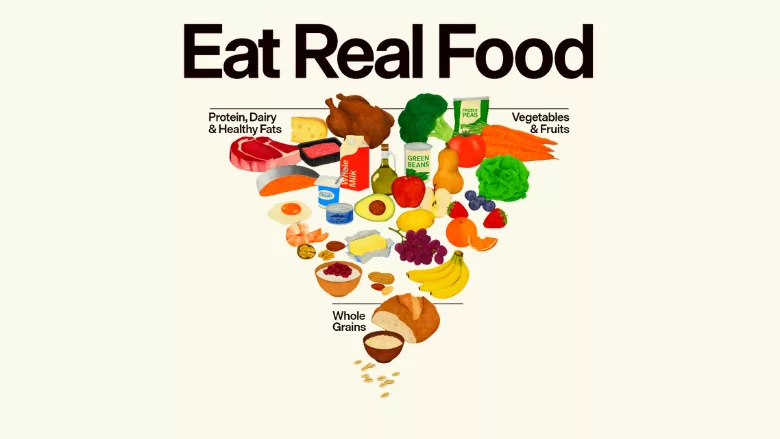
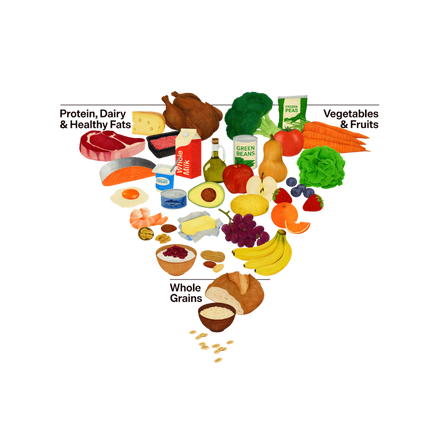
Alongside the new DGAs is a reimagined, inverted food pyramid (Figure 1), at the top of which (the largest part) are “Protein, Dairy, and Healthy Fats,” placed next to “Vegetables and Fruits”—both given equal importance—which narrow down to “Whole Grains” at the bottom (the smallest part). The new pyramid was released on realfood.gov, which reads, “For decades we've been misled by guidance that prioritized highly processed food, and are now facing rates of unprecedented chronic disease… For the first time, we're calling out the dangers of highly processed foods,” before introducing the new pyramid.
Figure 1. The new Food Pyramid, Dietary Guidelines for Americans 2025–2030
The advice for each person to adhere to a daily calorie budget that is reasonable for their physical characteristics and lifestyle, loosely around 2,000 calories per day, remains the same. Also unchanged is the general importance placed on whole grains (two to four servings per day), fruits and vegetables (five servings per day), and wholesome proteins, as well as caution against added sugars and alcohol. Excessive sodium is not recommended, but the new DGAs add the caveat that “sodium and electrolytes are essential for hydration” alongside daily sodium limits, saying that “highly processed foods that are high in sodium should be avoided.”
In addition to the DGAs, other documents provided on realfood.gov cover daily serving recommendations by calorie level and the scientific basis for the new DGAs.
Highly Processed vs. Ultra-Processed
The new DGAs explicitly say that “highly processed” foods such as “packaged, prepared, ready-to-eat (RTE), or other foods that are salty and sweet… that have added sugars and sodium” should be avoided. Instead, nutrient-dense, home-cooked foods should be prioritized.
Looking for quick answers on food safety topics?
Try Ask FSM, our new smart AI search tool.
Ask FSM →
Also stated is advice to limit foods and beverages containing “artificial flavors, petroleum-based dyes, artificial preservatives, and low-calorie non-nutritive sweeteners,” echoing HHS’ and the U.S. Food and Drug Administration (FDA’s) general stance against food additives and chemicals under Secretary Kennedy, who is known for his “Make America Healthy Again” (MAHA) agenda.
The term “highly processed” as it is used in the new DGAs is reminiscent of the controversial and inconsistently defined term “ultra-processed foods” (UPFs). Swapping “UPFs” for “highly processed foods” in the new DGAs seems to circumvent ongoing debate about the definition of UPFs and whether it should be used for official health advice and rulemaking purposes.
The term UPFs is typically associated with the four-category NOVA food classification system, which defines Category 4 UPFs as “industrially manufactured food products made up of several ingredients (formulations) including sugar, oils, fats, and salt and food substances of no or rare culinary use.”
In the U.S., efforts at the federal and state levels to define UPFs and regulate the category are underway. Federally, FDA and USDA are considering public input on the definition of a uniform, recognized definition for UPFs. A joint request for information (RFI) closed in October, which received comments from diverse stakeholders with equally diverse opinions on how—or if—UPFs should be defined, and how the category should be regulated. Critics say the use of the term UPFs villainizes processing without nuance and the regulation of UPFs as a category could have unintended negative consequences.
Gut Health
For the first time, the DGAs mention gut health and microbiome, again warning against highly processed foods and encouraging fruits and vegetables, fermented foods, and high-fiber foods to promote balanced and robust gut flora.
Healthy Fats, Dairy Promoted While Saturated Fats Advice Stays the Same
Interestingly, the new DGAs do not change the recommendation on saturated fats (that they should account for no more than 10 percent of a person’s daily intake), despite FDA Commissioner Marty Makary, M.D. previously stating that the new DGAs would revise the recommendations for this “demonized” nutrient.
The guidelines do, however, encourage Americans to prioritize fat-rich whole foods (e.g., eggs, avocados, seafood, nuts, full-fat dairy) and use healthy added fat sources like olive oil, butter, or beef tallow—a favorite ingredient of the MAHA movement, which Secretary Kennedy touts as a healthy alternative to seed oils, driving its popularity.
Related to healthy fats, the new DGAs place importance on consuming full-fat dairy, recommending three servings per day as part of a 2,000-calorie dietary pattern. This is the same recommendation given for fruits and vegetables in the new DGAs.
Ending the "War on Protein"
The realfood.gov messaging site states the new DGAs “end the war on protein,” increasing the adult recommended daily allowance (RDA) for protein from 0.8 grams per kilogram (g/kg) of bodyweight to 1.2–1.6 g/kg of bodyweight, suggesting a food high in protein be eaten at every meal.
As in the previous DGAs, the consumption of a variety of healthy protein sources including meat, eggs, poultry, dairy, seafood, and plants (e.g., beans, nuts, soy) are encouraged.
The guidelines do recommend avoiding the consumption of “chemical additives,” as well as added sugars and refined carbohydrates or starches, alongside proteins.
Do New Dietary Guidelines Favor Meat and Dairy Industries Against Scientific Evidence?
Some public health stakeholders have raised concerns about the DGAs emphasis on animal protein, butter, and full-fat dairy, questioning the scientific basis behind these claims and whether they were influenced by industry interests or Secretary Kennedy's personal beliefs.
Center for Science in the Public Interest (CSPI) President Peter G. Lurie, M.D. said in a statement, "CSPI appreciates that [the DGAs maintain] the longstanding limits on saturated fat and sodium, and emphasizes fruits, vegetables, whole foods, and water consumption... However, amid this positive advice is harmful guidance to emphasize animal protein, butter, and full-fat dairy, guidance that undermines both the saturated fat limit and the 2025 Dietary Guidelines Advisory Committee’s science-based advice to emphasize plant-based proteins to reduce cardiovascular disease risk. While the meat and dairy industries may be excited about the new food pyramid, the American public should not be; the guidance on protein and fats in this DGA is, at best, confusing, and, at worst, harmful to the one in four Americans who are directly impacted by the DGA through federal nutrition programs. In addition to contradictory guidance, the document spreads blatant misinformation that 'healthy fats' include butter and beef tallow."
CSPI asserts that "the [Health and Agriculture] Secretaries sought out a separate group of nutrition scientists, many with ties to the meat and dairy industries, evading public and transparent processes, to create a new 'scientific' report that props up the meat and dairy industries at the expense of human and environmental health and undermines established processes for setting recommended daily allowances for nutrients, like protein, in service of Secretary Kennedy’s predetermined beliefs. Overall, the new DGA completely rejects more than half of the DGAC’s recommendations, as outlined by the departments’ own scientific justification document."
In response, CSPI and the Center for Biological Diversity have published a 2025–2030 Uncompromised DGA document that "illustrates what the federal dietary guidance should have looked like if [HHS and USDA] had adhered to their mandate to publish an evidence-based DGA reflecting the reviews of the 2025 DGAC."