Launching in early 2026, Provision Risk Scoring translates complex food safety records into clear, actionable insights, enabling continuous monitoring and informed decision-making at all levels of an organization.
The 14th annual Operation OPSON, led by Europol to crack-down on counterfeit and substandard food and beverages circulating the EU, resulted in the seizure of 11.6 million kilograms of food and 1.4 million liters of beverages.
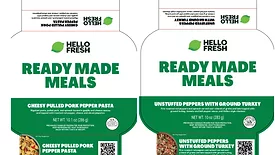
Since June, FreshRealm has been involved in an ongoing, deadly foodborne illness outbreak, as the producer of prepared pasta meals that were made with Listeria monocytogenes-tainted pasta (supplied by Nate’s Fine Foods Inc.) and distributed nationwide under various brand names. Now, FreshRealm has alerted USDA that it detected L. monocytogenes in spinach used to make meals distributed by HelloFresh.
An updated literature review from the Scientific Committee of the Spanish Agency for Food Safety and Nutrition (AESAN) summarizes the effects of climate change on foodborne pathogens, and how strengthening surveillance and investing in control technologies can address the growing risks.
The enhanced StellarScope AM/PA unites micron-scale morphological imaging with Raman spectroscopy, driven by intelligent software control, to allow food industry users to detect, measure, classify, and chemically identify microscopic particles in their products.
Walmart is the latest company to say it will remove synthetic dyes from its private-label food brands, as well as 30 other additives, including certain preservatives, artificial sweeteners, and fat substitutes.
The resources for industry include updated FAQs and information about how FDA plans to implement the pre-harvest agricultural water provisions of the Food Safety Modernization Act (FSMA) Produce Safety Rule.
Developed by an industry consortium led by Western Growers and the Canadian Produce Marketing Association, the Roadmap to Sustainable Fresh Produce Packaging offers pragmatic recommendations for transforming packaging practices, based in the holistic concept of “Functional Sustainability.”
A recent survey of UK consumers by the UK Food Standards Agency (FSA) reveals high levels of public confidence in food safety and regulatory oversight, standing in stark contrast to the lack of faith being reported in surveys of U.S. consumers.