After discovering radioactive isotope Cesium-137 in shipments of shrimp and spices from Indonesia, FDA is exercising for the first time a power granted by Congress under the Food Safety Modernization Act (FSMA) to require food safety certification for imports.
A Latin American–Caribbean consortium, aided by FAO, is working toward establishing Codex Alimentarius-aligned maximum residue limits (MRLs) for regionally important veterinary drug residues, advancing food safety.
The UK Food Standards Agency (FSA) has proposed a ban on Bisphenol A, structurally similar analogues, and its derivatives in food contact materials (FCMs), aligning with recently passed EU regulations.
FDA’s Coordinated Outbreak Response and Evaluation (CORE) Investigation Table, which summarizes ongoing and closed foodborne illness outbreak investigations, has been put on pause. Additionally, HHS is set to furlough 41 percent of its employees.
Kurita America Inc. and Cyclopure are partnering to deliver an advanced and sustainable solution for removing per- and polyfluoroalkyl substances (PFAS) from water, using a completely regenerable material.
Touchless Traceability addresses a longstanding operational challenge for food industry distribution centers: the ability to easily capture and share lot codes and related shipping data for all items shipped to customers.
Commercial Food Sanitation (CFS) Institute North America, housed at the Intralox global headquarters in New Orleans, Louisiana, will be home to trainings, collaboration, and hygienic design support for food industry sanitarians and processors.
Research from the University of Plymouth has demonstrated the ability of nanoplastics to infiltrate the edible radish root, which raises questions about the food safety and public health implications of dietary exposure to plastics.
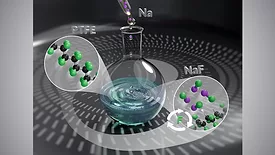
The advancement not only supports the recycling of “forever chemical” polymers—which are used on cookware and food packaging, for example—but also boasts high recovery of fluorine, a finite resource.