Food Safety
search
Ask Food Safety AI
cart
facebook twitter linkedin
  • Sign In
  • Create Account
  • Sign Out
  • My Account
Food Safety
  • NEWS
    • Latest News
    • White Papers
  • PRODUCTS
  • TOPICS
    • Contamination Control
    • Food Types
    • Management
    • Process Control
    • Regulatory
    • Sanitation
    • Supply Chain
    • Testing and Analysis
  • PODCAST
  • EXCLUSIVES
    • Food Safety Five Newsreel
    • eBooks
    • FSM Distinguished Service Award
    • Interactive Product Spotlights
    • Videos
  • BUYER'S GUIDE
  • MORE
    • ENEWSLETTER >
      • Archive Issues
      • Subscribe to eNews
    • Store
    • Sponsor Insights
    • ASK FSM AI
  • WEBINARS
  • FOOD SAFETY SUMMIT
  • EMAG
    • eMagazine
    • Archive Issues
    • Editorial Advisory Board
    • Contact
    • Advertise
  • SIGN UP!
NewsManagementRegulatorySupply ChainInternationalInternational Standards/HarmonizationGrowers/GAPs

FAO Encourages All Countries to Monitor for HPAI H5N1 Spread to Cattle

By Food Safety Magazine Editorial Team
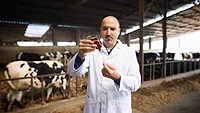
farmer walking with milk container next to dairy cows in stalls

Image credit: jcomp via Freepik

December 23, 2024

In light of the global Highly Pathogenic Avian Influenza H5N1 (HPAI H5N1) outbreak, and considering the virus’ spread from poultry to dairy cows in North America, the Food and Agriculture Organization of the United Nations (FAO) has published recommendations for improving surveillance and detection measures for HPAI H5N1 in cattle.

The ongoing HPAI H5N1 outbreak has affected wild birds and poultry in nearly all regions around the world; however, all eyes are on North America, where, as of December 19, 2024, the virus has been reported in 865 dairy herds in 16 U.S. states. More than 123 million birds across the country and 61 humans, most of whom were exposed to sick cows, have been infected, as well. California has declared a state of emergency to enable more flexible outbreak response. The U.S. Department of Agriculture (USDA) has launched a National Milk Testing Strategy (NMTS) to monitor the virus in milk and dairy herds, and is also routinely testing dairy cows at slaughter for the presence of HPAI H5N1.

Although U.S. dairy herds are already being affected by HPAI H5N1 and the nation subsequently implemented a systematic approach to detecting and monitoring the virus, FAO is encouraging other countries to prepare their own surveillance systems to enhance early detection, so that authorities are ready to mitigate the impacts of spillover from birds to cattle and prevent transmission between cattle herds. FAO’s recently published recommendations also aim to assist low- and middle-income countries in optimizing the use of limited resources to achieve surveillance objectives by leveraging existing surveillance programs.

FAO recommends that all countries maintain passive surveillance for HPAI H5N1 to rapidly detect spread to non-avian species, as well as conducting education and outreach to relevant stakeholders to improve awareness of the emerging threat. Countries may also benefit from other surveillance approaches to leverage routine and opportunistic sampling to evaluate cattle health. Event-based surveillance may also be a helpful tool in early detection.

For at-risk countries, targeted or risk-based surveillance approaches can be used to more closely assess cattle health at the interface with poultry or wild birds, investigate suspected outbreaks in cattle, and demonstrate freedom from infection. At-risk countries are those that produce cattle, have not reported any cases of HPAI H5N1 in their cattle populations, and meet at least one of the following criteria: HPAI cases have been reported in wild birds or poultry, HPAI has been detected in non-avian species, and there is non-negligible likelihood of HPAI introduction and spillover to livestock.

The FAO recommendations also have a broad application to other susceptible farmed mammals.

Looking for quick answers on food safety topics?
Try Ask FSM, our new smart AI search tool.
Ask FSM →


KEYWORDS: biosurveillance FAO HPAI

Share This Story

Fsm purple logo 200x200

The Food Safety Magazine editorial team comprises Bailee Henderson, Digital Editor ✉; Adrienne Blume, M.A., Editorial Director; and Stacy Atchison, Publisher.

Recommended Content

JOIN TODAY
to unlock your recommendations.

Already have an account? Sign In

  • people holding baby chicks

    Serovar Differences Matter: Utility of Deep Serotyping in Broiler Production and Processing

    This article discusses the significance of Salmonella in...
    Microbiological
    By: Nikki Shariat Ph.D.
  • woman washing hands

    Building a Culture of Hygiene in the Food Processing Plant

    Everyone entering a food processing facility needs to...
    Management
    By: Richard F. Stier, M.S.
  • graphical representation of earth over dirt

    Climate Change and Emerging Risks to Food Safety: Building Climate Resilience

    This article examines the multifaceted threats to food...
    Management
    By: Maria Cristina Tirado Ph.D., D.V.M. and Shamini Albert Raj M.A.
Manage My Account
  • eMagazine Subscription
  • Subscribe to eNewsletter
  • Manage My Preferences
  • Website Registration
  • Subscription Customer Service

More Videos

Sponsored Content

Sponsored Content is a special paid section where industry companies provide high quality, objective, non-commercial content around topics of interest to the Food Safety Magazine audience. All Sponsored Content is supplied by the advertising company and any opinions expressed in this article are those of the author and not necessarily reflect the views of Food Safety Magazine or its parent company, BNP Media. Interested in participating in our Sponsored Content section? Contact your local rep!

close
  • Salmonella bacteria
    Sponsored byThermoFisher

    Food Microbiology Testing Methods: Salmonella species

  • a diagram explaining indicator organisms
    Sponsored byHygiena

    How Proactive Listeria Testing Helps Prevent Six- and Seven-Figure Recalls

  • woman grocery shopping
    Sponsored byCorbion

    Designing Safety Into Every Bite: Proactive Risk Mitigation for Refrigerated Foods

Popular Stories

baby eating bottle

Infant Botulism Spike Exceeds 100 Cases, Extent of ByHeart's Involvement Unclear

NRTE breaded stuffed chicken

USDA Indefinitely Delays Enforcement of Salmonella as Adulterant in Raw Breaded, Stuffed Chicken

digital map of europe

EU Publishes Food Fraud Tool Mapping Thousands of Cases Since 2016

Events

December 11, 2025

How to Develop and Implement an Effective Food Defense Strategy

Live: December 11, 2025 at 2:00 pm EDT: From this webinar, attendees will learn common areas where companies encounter challenges in their food defense strategies and how to address them.

May 11, 2026

The Food Safety Summit

Stay informed on the latest food safety trends, innovations, emerging challenges, and expert analysis. Leave the Summit with actionable insights ready to drive measurable improvements in your organization. Do not miss this opportunity to learn from experts about contamination control, food safety culture, regulations, sanitation, supply chain traceability, and so much more.

View All

Products

Global Food Safety Microbial Interventions and Molecular Advancements

Global Food Safety Microbial Interventions and Molecular Advancements

See More Products

Related Articles

  • dairy cattle walking in a line on farm

    Massachusetts is First State to Test All Dairy Herds for HPAI H5N1; No Trace of Virus Detected

    See More
  • Veterinarian at cattle farm holding syringe and bottle preparing for vaccination

    As Outbreak Rages On, USDA to Begin Field Trials for HPAI H5N1 Vaccine in Cattle

    See More
  • whole fresh fish on icy water

    FAO Encourages Fit-for-Purpose Approach to Water Usage in Seafood Production

    See More

Related Products

See More Products
  • 1118396308.jpg

    High Throughput Analysis for Food Safety

  • 1119053595.jpg

    Food Safety for the 21st Century: Managing HACCP and Food Safety throughout the Global Supply Chain, 2E

  • 1119160553.jpg

    Food Safety: Innovative Analytical Tools for Safety Assessment

See More Products

Related Directories

  • NorthStar Automation

    The NorthStar WMS utilizing barcode scanning provides functionality for the food industry: 1.) Full traceability 2.) Lot control 3.) Allergen control 4.) Mock recall 5.) 60+ reports and KPIs 6.) FIFO, FEFO
×

Never miss the latest news and trends driving the food safety industry

eNewsletter | Website | eMagazine

JOIN TODAY!
  • RESOURCES
    • Advertise
    • Contact Us
    • Directories
    • Store
    • Want More
  • SIGN UP TODAY
    • Create Account
    • eMagazine
    • eNewsletter
    • Customer Service
    • Manage Preferences
  • SERVICES
    • Marketing Services
    • Reprints
    • Market Research
    • List Rental
    • Survey/Respondent Access
  • STAY CONNECTED
    • LinkedIn
    • Facebook
    • Instagram
    • X (Twitter)
  • PRIVACY
    • PRIVACY POLICY
    • TERMS & CONDITIONS
    • DO NOT SELL MY PERSONAL INFORMATION
    • PRIVACY REQUEST
    • ACCESSIBILITY

Copyright ©2025. All Rights Reserved BNP Media.

Design, CMS, Hosting & Web Development :: ePublishing