With relation to circular agri-food production models, a recent article authored by Food and Agriculture Organization of the United Nations (FAO) experts has explored the current and emerging risks, data gaps, and opportunities for food safety.
The newly formed Food Industry FSMA 204 Collaboration, comprising eight leading food industry member associations, aims to enhance industrywide awareness of the impending FDA Food Traceability Final Rule/FSMA 204.
Registration is now open for the upcoming Peanut and Tree Nut Processors Association (PTNPA) Convention, to be held January 17–20, 2025 in Scottsdale, Arizona.
The U.S. Food and Drug Administration (FDA) and the U.S. Department of Agriculture (USDA) have granted “Generally Recognized as Safe” (GRAS) status to INNEO, a food processing aid that uses antimicrobial peptides to eliminate Listeria monocytogenes in food.
Consumer Reports and More Union have petitioned the U.S. Department of Agriculture (USDA) to remove Lunchables food kits from the National School Food Lunch Program due to what the groups perceive as relatively high levels of lead and cadmium, as well as the presence of phthalates.
A recent survey of the low-moisture food industry and relevant stakeholders has revealed the sector’s key food safety challenges and research needs related to food safety culture, sanitation, pathogen reduction, and technology adoption.
In this episode of Food Safety Matters, we speak to Brendan Niemira, Ph.D., a Research Microbiologist with the U.S. Department of Agriculture’s Agricultural Research Service (USDA’s ARS), about his work developing cold plasma technology for microbial decontamination in food applications, and its potential to advance food safety.
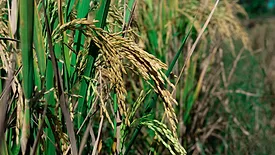
A recent study found that, while alternative farming practices aimed at reducing water usage can lower greenhouse gas emissions and arsenic levels in rice, the same practices may also increase cadmium content in plants. The same study also demonstrated that no-till farming techniques raise the likelihood of mycotoxin contamination in crops.