The bipartisan Food Allergy Safety, Treatment, Education, and Research (FASTER) Act of 2026 would amend FDA's major food allergen labeling requirements to include barley, rye, and oats alongside wheat, in an effort to mitigate "hidden" exposure to gluten for consumers with celiac disease and gluten intolerance.
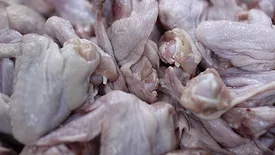
Hydrogen peroxide treatment, followed by catalase enzyme application to remove residual peroxide, significantly reduced Salmonella Typhimurium and Listeria monocytogenes on raw chicken wings while preserving the meat's overall color quality, although more research is needed on the effect on other organoleptic properties.
In this bonus episode of Food Safety Matters, we speak to USDA's Under Secretary for Food Safety, Dr. Mindy Brashears,
and Administrator USDA-FSIS, Dr. Justin Ransom, about the future of food safety oversight at the agency, its emerging Salmonella strategy, evolving approach to Listeria control, the creation of a new scientific advisory panel, and the use of data, AI, and other technologies for inspection and risk identification.
The Senate confirmed Erica Schwartz, M.D., J.D., M.P.H. as the new Director of CDC on August 5, making her the agency's first permanent leader in nearly a year. Dr. Schwartz previously served as Deputy Surgeon General during the first Trump administration and as Chief Medical Officer for the U.S. Coast Guard.
WECO's MXV-Bulk X-ray inspection system identifies and rejects a variety of product defects that show no obvious external signs including empty nut shells, insect damage, and internal mold. It also removes foreign material including stones, glass, ceramics, and embedded metal.
A new scientific review examines blue light-mediated photosensitization for antimicrobial intervention across various food sectors. The review notes the technology's promise as a nonthermal antimicrobial intervention for food safety and emphasizes the need for further studies to support scale-up across industry.
Two topics of increasing regulatory scrutiny—the "Generally Recognized as Safe" (GRAS) rule and a federal definition of ultra-processed food (UPFs)—have seen some movement at the U.S. Government's Office of Management and Budget, signaling progress on the Trump administration's food policy agenda.
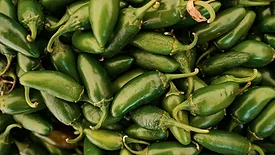
The fast-casual Mexican-style restaurant chain has pulled the jalapeños from its restaurants and replaced them with product from different growers, out of "an abundance of caution."
A new industry resource helps food processors compare X-ray inspection providers using technical capabilities, service offerings, and long-term value metrics.


.webp?height=168&t=1691503719&width=275 "FoodSafetyMattersFinal-900x550-(002).jpg")