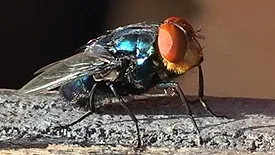
While New World screwworm (NWS) itself does not pose a food safety risk in edible meat or poultry products, residues from veterinary drugs used to treat and prevent infestations of NWS are potential chemical hazards.
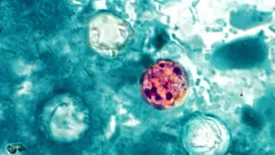
Michigan and Ohio recently updated their case counts in a massive Cyclosporacayetanensis outbreak, bringing state-reported totals for all 50 states to at least 21,775 cases. Michigan also reported two deaths tied to the outbreak.
USDA's Food Safety and Inspection Service (USDA-FSIS) has issued a revised directive outlining financial management procedures for state cooperative inspection programs. The directive replaced fiscal guidance that had been in effect since March 2004.
The Global Food Safety Initiative (GFSI) has appointed Elizabeth Andoh-Kesson as Director, marking the next phase of the organization's leadership following her tenure as Interim Director.
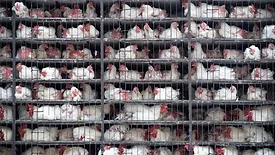
Transport cages are recognized as a potential source of cross-contamination in poultry slaughterhouses. The optimal washing water temperature and detergent concentration completely eliminated detectable Salmonella while greatly reducing indicator organisms. The identified parameters may improve food safety and operational efficiency.
Intended for professional sanitarians, food safety leaders, hygienic design specialists, and managers working in low-moisture food manufacturing, the event will take place October 26–27, 2026 in Beloit, Wisconsin.
The findings suggest that pathogen persistence on plastic food contact surfaces is governed by the combined effects of material composition, engineered surface topography, and microbial ecology rather than any single factor.
FDA has announced the fiscal year (FY) 2027 user fee rates for importers approved to participate in the Voluntary Qualified Importer Program (VQIP) and accreditation and certification bodies interested in participating in the Accredited Third-Party Certification Program (TPP).
The Childhood Diabetes Reduction Act of 2025 would require health warning labels for certain foods and beverages, prohibit marketing of specified products to children, and expand federal nutrition research and education related to ultra-processed foods.
Ten Latin American countries are developing national initiatives to strengthen food safety systems by integrating risk analysis into public policy and regulatory decision-making, through a regional project led by UN organizations and assisted by the University of Minnesota.

.webp?height=168&t=1661887788&width=275 "USDA FSIS logo")