The researchers concluded that integrating multiple sampling matrices and detection methods could improve understanding of Campylobacter occurrence in commercial broiler production and support preharvest surveillance.
This episode of Food Safety Five covers new research on the impact of spray application on sanitizer efficacy, ROI of WGS for foodborne pathogen surveillance, effect of common food additives on gut health and implications for safety assessment, and contribution of industrial poultry farming to global Campylobacter spread.
This article explores how rapid detection technologies are transforming environmental monitoring programs for L. monocytogenes in dairy plants. It also discusses how faster detection supports quicker sanitation verification, improved risk-based monitoring, and more effective decision-making during contamination events.
Together with the Thermo Scientific Vanquish Duo UHPLC System and new Isotope Discoverer Software, the instruments comprise an integrated workflow for molecular-level isotope ratio analysis. Potential applications include food and beverage authenticity by tracing the sources and pathways of contaminants.
In-house quality control teams and third-party laboratories can use the GENE-UP PROBIOTIC SPECIES ID assay to identify 18 commonly used probiotic species in 90 minutes or less.
Supporting routine laboratory testing, the GENESYS G5 series features an expanded software ecosystem with optional application-specific packages, including guided workflows and preconfigured methods intended to reduce setup time and improve consistency.
The platform was developed to address limitations of earlier DNA barcoding methods by using species-targeted genomic approaches, authenticated reference materials, and analytical systems designed specifically for commercial botanical products.
ByHeart-commissioned research shows the currently accepted “gold standard” for Clostridium botulinum detection in powdered formula, SRC enumeration, may fail to catch contamination. It is used by many formula brands, including Nara Organics, another company linked to an infant botulism outbreak. Following this finding, third-party IEH Labs developed a novel detection method.
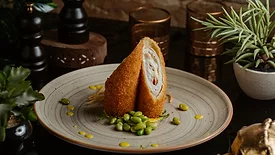
As the agency continues to delay enforcement of Salmonella verification testing for not-ready-to-eat, breaded and stuffed chicken products, Consumer Reports is asking for evidence to support USDA-FSIS’ assertion that currently available test methods are not suitable, which contradicts the agency’s previous stance.
Although the levels of gluten in analyzed samples fell below EU limits, the results from conventional ELISA tests differed from those of a new, more sensitive method. Combining established rapid testing methods with advanced mass spectrometry techniques could potentially improve future detection capabilities.
 RSS
RSS