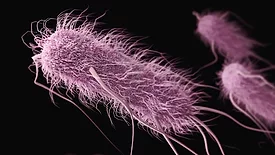

A UK-based study, led by Quadram Institute researchers, underscores the limitations of traditional enumeration methods for foodborne pathogen surveillance and highlights the need for whole genome sequencing (WGS) to better assess the food safety risk posed by commensal or opportunistic Escherichia coli lineages.
A letter sent to FDA urges the agency to immediately withdraw its approval of Carbadox, a carcinogenic swine feed additive. FDA’s proposal to withdraw Carbadox approvals has been pending for two years, during which time there has not been an approved method for detecting Carbadox residue in pork.
Bio-Rad Laboratories Inc. has announced that its iQ-Check Enterobacteriaceae Kit has received MicroVal certification for the real-time PCR detection of Enterobacteriaceae in infant formula, infant cereal with and without probiotics, and related ingredients.
LGC Standards has expanded its portfolio of Dr. Ehrenstorfer PFAS testing solutions with new 13C-labeled reference materials developed for EPA Method 1633.
Polycyclic aromatic hydrocarbons (PAHs) are carcinogenic compounds formed during cooking. A new Seoul Tech
study has demonstrated the effectiveness of a streamlined analytical method to detect PAHs, which holds distinct advantages over conventional techniques.
A new study led by the University of South Australia offers a promising real-time mycotoxin detection method for the food industry that is based in artificial intelligence (AI) technology, and overcomes some of the limitations of traditional detection methods.
Researchers in China have developed a new onsite rapid test, based in fluorescence RNA-targeted isothermal amplification assay (SAT) technology, that can quickly detect and identify Cronobacter species in powdered infant formula. It offers significantly greater sensitivity and much more rapid results than polymerase chain reaction (PCR), without producing false positives.
USDA-FSIS and AOAC International have signed a Memorandum of Understanding (MOU) regarding the development, validation, and recognition of methods used by FSIS labs and regulated establishments for the verification of Hazard Analysis and Critical Control Points (HACCP) -based food safety systems.
USDA Food Safety and Inspection Service (USDA-FSIS) laboratories now use an improved enrichment method for Campylobacter in poultry meat samples, which reduced enrichment incubation time by half, and shaved a day off of reporting times for results.