Food Safety
search
Ask Food Safety AI
cart
facebook twitter linkedin instagram youtube
  • Sign In
  • Create Account
  • Sign Out
  • My Account
Food Safety
  • NEWS
    • Latest News
    • White Papers
  • PRODUCTS
  • TOPICS
    • Contamination Control
    • Food Types
    • Management
    • Process Control
    • Regulatory
    • Sanitation
    • Supply Chain
    • Testing and Analysis
  • PODCAST
  • EXCLUSIVES
    • Food Safety Five Newsreel
    • eBooks
    • FSM Distinguished Service Award
    • Interactive Product Spotlights
    • Videos
  • BUYER'S GUIDE
  • MORE
    • NEWSLETTERS >
      • Archive Issues
      • Subscribe to eNews
    • Store
    • Sponsor Insights
    • ASK FSM AI
  • WEBINARS
  • FOOD SAFETY SUMMIT
  • EMAG
    • eMagazine
    • Archive Issues
    • Editorial Advisory Board
    • Contact
    • Advertise
  • SIGN UP!
NewsContamination ControlFood TypeTesting & AnalysisChemical ControlMethodsMicrobiological Testing & AnalysisProduce

Researchers Developing Tests for Hepatitis A Virus that Overcome False Positives

By Food Safety Magazine Editorial Team
frozen raspberries
Image credit: Freepik
December 19, 2025

In two research projects funded by the Center for Produce Safety (CPS), scientists are investigating novel ways to improve detection methods for hepatitis A virus (HAV) in food, increasing their sensitivity, reducing false positives, and making them faster and more affordable.

At present, the usefulness of standard virus detection methods for indicating the actual food safety risk presented by HAV is limited, because these tests often produce positive results based on the presence of inactivated virus RNA fragments that do not cause illness.

Getting Around Non-Infectious Virus Fragments with Chemical Pre-Treatments

Addressing this limitation in real time qualitative polymerase chain reaction (RT-qPCR) detection methods, a team of researchers led by Lee-Ann Jaykus, Ph.D., Emerita, North Carolina University (NCSU) are exploring chemical sample pre-treatments that will prevent HAV tests from detecting inactivated RNA. Joining Dr. Jaykus as co-investigators are NCSU’s Benjamin Chapman, Ph.D. and Lynette Johnson, Ph.D.

The first technique uses enzymes to digest RNA fragments so that they cannot be detected via RT-qPCR. The second technique deploys chemical compounds that can enter capsids, which is a protein shell protecting virus genetic material, and bind to RNA to prevent PCR amplification, which is when copies of specific genetic material are made, enabling their detection and study.

After these pre-treatments are optimized, Dr. Jaykus and her team will test them against the only laboratory-cultivatable HAV strain, which will be inactivated using chemical and heat treatments, producing virus suspensions with different ratios of infectious to non-infectious RNA fragments. Next, they will compare the results of RT-qPCR coupled with their optimized pre-treatments against the results of cell culture infectivity assays, applied to suspensions of fully infectious, partially inactivated, or fully inactivated HAV. Finally, the researchers will test the efficacy of the top-performing pre-treatments in an experiment using soft fruits inoculated with varying proportions of infectious and non-infectious HAV, which will be processed according to the ISO standard.

Using CRISPR-Cas for Simple Rapid Tests

In a second CPS-funded project, Jose Santos García Alvarado, Ph.D. of Universidad Autónoma de Nuevo León in Mexico is leading work to develop another enzyme pre-treatment that destroys non-infectious fragments while retaining the infectious capsid. Joining Dr. García as Co-Investigators is Universidad Autónoma de Nuevo León’s Norma L. Heredia, Ph.D. Their experiments focus on frozen berries, a significant vehicle of HAV foodborne illness, and irrigation water, an important produce contamination risk factor.

His team is looking at using the same enzyme pre-treatment in two different assays: one that uses the ISO-standardized RT-qPCR method, and one that replaces the RT-qPCR amplification step with CRISPR-Cas technology, similar to what was used to develop rapid at-home COVID tests during the pandemic.

Looking for quick answers on food safety topics?
Try Ask FSM, our new smart AI search tool.
Ask FSM →

Unlike RT-qPCR, CRISPR-Cas does not require prohibitively expensive laboratory equipment or specialized technicians, Dr. García explained. Additionally, CRISPR-Cas can produce results in as few as 36 minutes—much shorter than the two-hour turnaround time required for RT-qPCR.

Dr. García’s team is currently working with laboratories at the University of Delaware and Emory University—with the help of Kalmia Kniel, Ph.D. and Juan León, Ph.D., respectively—to validate the new techniques. They also intend to develop a user manual for the assays, and they hope to acquire an industry partner to commercialize the HAV rapid test.


KEYWORDS: assay Center for Produce Safety detection Hepatitis A PCR study virus

Share This Story

Fsm purple logo 200x200

The Food Safety Magazine editorial team comprises Bailee Henderson, Digital Editor ✉ and Adrienne Blume, M.A., Editorial Director.

Recommended Content

JOIN TODAY
to unlock your recommendations.

Already have an account? Sign In

  • people holding baby chicks

    Serovar Differences Matter: Utility of Deep Serotyping in Broiler Production and Processing

    This article discusses the significance of Salmonella in...
    Testing & Analysis
    By: Nikki Shariat Ph.D.
  • woman washing hands

    Building a Culture of Hygiene in the Food Processing Plant

    Everyone entering a food processing facility needs to...
    Training
    By: Richard F. Stier, M.S.
  • graphical representation of earth over dirt

    Climate Change and Emerging Risks to Food Safety: Building Climate Resilience

    This article examines the multifaceted threats to food...
    Best Practices
    By: Maria Cristina Tirado Ph.D., D.V.M. and Shamini Albert Raj M.A.
Manage My Account
  • eMagazine Subscription
  • Subscribe to Newsletters
  • Manage My Preferences
  • Website Registration
  • Subscription Customer Service

More Videos

Sponsored Content

Sponsored Content is a special paid section where industry companies provide high quality, objective, non-commercial content around topics of interest to the Food Safety Magazine audience. All Sponsored Content is supplied by the advertising company and any opinions expressed in this article are those of the author and not necessarily reflect the views of Food Safety Magazine or its parent company, BNP Media. Interested in participating in our Sponsored Content section? Contact your local rep!

close
  • NEVIFIT 3 Compartment BPA-FREE
    Sponsored byCorbion

    The Risks of Ready-to-Eat: Five Ways to Protect Today's Prepared Meals

  • a group of workers in a food production facility
    Sponsored bySkillUp by Registrar Corp

    How to Build a Better Training Program: Data and Insights from the Global Food Safety Training Survey

  • the use of dual-energy X-ray food inspection technology to identify foreign contaminants.
    Sponsored byEagle by METTLER TOLEDO

    Precision Inspection Starts with the Right X-ray Detector

Popular Stories

green powder/moringa in wooden mortar

FDA Opens Third Salmonella–Moringa Outbreak Investigation of the Year

FoodSafetyMattersFinal-900x550-(002).jpg

Ep. 218. Dr. Brady Carter: Water Activity, Shelf-Life Validation, and Food Safety Controls

fermented meat

Study is First to Analyze Trends in Foodborne Illness Outbreaks Linked to Non-Dairy Fermented Products

a practical guide to spoilage investigation webinar

Events

June 4, 2026

Building a Stronger Food Safety Program in a Changing GFSI Landscape

Live: June 4, 2026 at 11:00 am EDT: Attend this webinar to understand how GFSI requirements are evolving and what those changes signal for quality programs at food and beverage facilities.

June 10, 2026

A Practical Guide to Spoilage Investigation and Prevention

Live: June 10, 2026 at 11:00 am EDT: Join this webinar to learn how to identify spoilage root causes, reduce risk, and apply data-driven strategies for prevention.

June 16, 2026

Sustainable Food Contact Materials: Where Regulation Meets Analytical Testing

Live: June 16, 2026 at 11:00 am EDT: This webinar explores how sustainability regulations are changing food contact material requirements, including packaging compliance, unintended substances, and per- and polyfluoroalkyl substances.

View All

Products

Global Food Safety Microbial Interventions and Molecular Advancements

Global Food Safety Microbial Interventions and Molecular Advancements

See More Products

Related Articles

  • strawberries, blueberries, and lettuce up close

    Scientists Seek to Develop Improved Tests for Norovirus, Hepatitis A on Berries, Leafy Greens

    See More
  • Public Health Alert Concerning Hepatitis A Virus Contamination of Kroger Brand Frozen Blackberries

    FDA alerts consumers to Hepatitis A virus contamination of Kroger brand frozen blackberries

    See More
  • fresh raspberries and blueberries on white background

    FDA Publishes Prevention Strategy for Hepatitis A, Norovirus in Berries

    See More

Related Products

See More Products
  • 1119053595.jpg

    Food Safety for the 21st Century: Managing HACCP and Food Safety throughout the Global Supply Chain, 2E

  • 1118396308.jpg

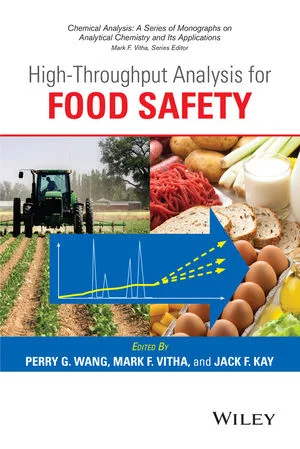
    High Throughput Analysis for Food Safety

  • 1119160553.jpg

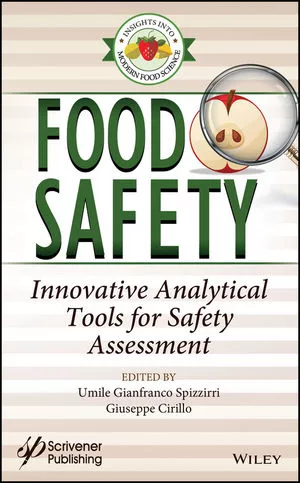
    Food Safety: Innovative Analytical Tools for Safety Assessment

See More Products
×

Never miss the latest news and trends driving the food safety industry

Newsletters | Website | eMagazine

JOIN TODAY!
  • RESOURCES
    • Advertise
    • Contact Us
    • Directories
    • Store
    • Want More
  • SIGN UP TODAY
    • Create Account
    • eMagazine
    • Newsletters
    • Customer Service
    • Manage Preferences
  • SERVICES
    • Marketing Services
    • Reprints
    • Market Research
    • List Rental
    • Survey/Respondent Access
  • STAY CONNECTED
    • LinkedIn
    • Facebook
    • Instagram
    • X (Twitter)
  • PRIVACY
    • PRIVACY POLICY
    • TERMS & CONDITIONS
    • DO NOT SELL MY PERSONAL INFORMATION
    • PRIVACY REQUEST
    • ACCESSIBILITY

Copyright ©2026. All Rights Reserved BNP Media, Inc. and BNP Media II, LLC.

Design, CMS, Hosting & Web Development :: ePublishing