Two research projects are investigating several novel techniques for detecting hepatitis A virus that eliminate false positives produced by inactivated, non-infectious RNA fragments—an issue that limits the usefulness of existing methods for indicating actual food safety risk.
German Federal researchers have developed a rapid, onsite detection system for PFAS in water samples. Its cost-effectiveness and ease-of-use make it a potentially scalable solution for authorities and industry to monitor and remediate “forever chemical” contamination.
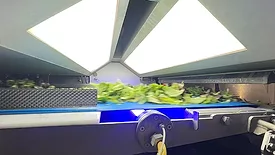
The new COMPASS optical sorter from Key Technology combines high-performance foreign material contamination detection and removal with gentle, hygienic product handling to help processors enhance food safety and operational efficiency.
This episode of Food Safety Five discusses two recent scientific studies that are advancing the food industry’s understanding of and ability to address Listeria monocytogenes, including new findings about the pathogen’s behavior in biofilms and a developing rapid detection method.
A new study by USDA researchers has shown that long-read whole genome sequencing (WGS) could detect Salmonella attachment to food-contact surfaces earlier than traditional culture-based methods, allowing for sanitation interventions to be applied before the maturation of robust and difficult-to-remove biofilms.
The new XP-Design Assay Salmonella Serotyping Solution from Bio-Rad enables rapid detection and precise characterization of Salmonella in food and environmental samples.
Funded by the Center for Produce Safety, a University of Georgia researcher is leveraging cutting-edge technology to improve the standard method for detection of viruses on foods, and then will use the method to study infectious norovirus persistence on berries.
A 'fine' job: Foreign-material contamination can have a devastating effect on meat and poultry merchandising, but newer and more sophisticated technologies are enhancing food safety.