The researchers concluded that no single alternative currently fulfills all of the antimicrobial and technological functions provided by conventional nitrites and nitrates. Instead, they identified hurdle technology as the most promising approach.
The researchers determined that probabilistic modeling could help food businesses capitalize on existing scientific data to map processing and formulation conditions for controlling non-proteolytic C. botulinum in refrigerated, processed foods of extended durability.
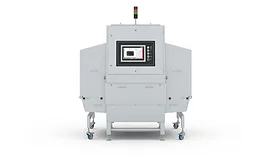
The Icon X-ray and Checkweigher Combination System features algorithmic foreign material detection, real-time product flow monitoring, IA+ filtering technology, configurable reject systems, a passive X-ray cooling generator, and data management and system oversight capabilities.
A new scientific review examines blue light-mediated photosensitization for antimicrobial intervention across various food sectors. The review notes the technology's promise as a nonthermal antimicrobial intervention for food safety and emphasizes the need for further studies to support scale-up across industry.
The system provides 1,000 millimeters of inspection coverage and supports belt speeds of up to 76 meters per minute. An optional integrated barcode reader enables inspection of mixed cases and supports multilane production environments.
The label claim “STABILIZED” would indicate that a ready-to-eat (RTE) product had been formulated or processed to inhibit Listeria monocytogenes growth. The researchers advocate for formulation and process changes as listeriosis rates climb in Europe and stricter EU Listeria regulations come into effect.
This episode of Food Safety Five covers a novel detection method for Clostridium botulinum and a potential new processing approach to mitigate contamination, as well as growing discussion around how C. botulinum should be handled in infant formula manufacturing, spurred by recent botulism outbreaks.
The Center for Produce Safety (CPS)-funded study also found that some produce items may naturally inhibit Listeria monocytogenes growth and that peracetic acid may sometimes promote Listeria growth during storage.
Studies funded by the Center for Produce Safety (CPS) are investigating ways to improve produce packinghouse brush sanitation, including the use of antimicrobial light and choosing the best time to replace brushes.
 RSS
RSS