Drawing upon insights shared by UK food safety professionals, a report produced by the Food Safety Research Network (FSRN)/Quadram Institute identifies emerging defenses against microbiological risks in food production environments, including science-backed approaches, advanced technologies, and culture-based initiatives.
The FAO/WHO Joint Expert Meeting on Microbiological Risk Assessment (JEMRA) has published a report on prevention and intervention measures for foodborne virus–commodity pairs of concern.
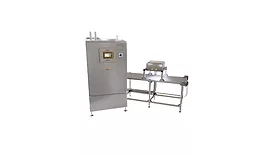
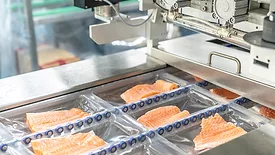
The pulsed light disinfection system is engineered for food processing and packaging environments, with a range of applications from direct irradiation of foodstuffs to package disinfection.
The resource explores industry-specific challenges, key quality control functions, the best inspection solution for different applications and insertion points, and the role of inspection data.
Through the One Health lens, a scientific review summarized current knowledge on Salmonella biofilms, the importance of non-antibiotic interventions given the rise of antimicrobial resistance (AMR), emerging alternative strategies with potential for real-world use, and challenges and needs moving forward.
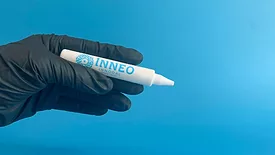
INNEO is a peptide-based antimicrobial processing aid. USDA’s No Objection Letter enables U.S. meat and poultry processors to use INNEO both as a surface treatment and directly within the food matrix of comminuted products.
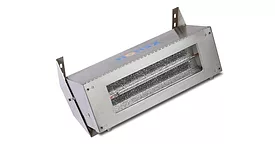
The Compact Integrated Xenon Lamp (CIXL) from XENON Corporation is a fully integrated, plug-and-play system that delivers pulsed light—a technology that provides food processors with a non-chemical method for pathogen control on food contact materials and food packaging.
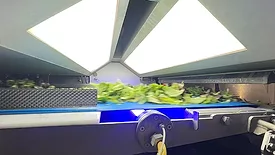
The new COMPASS optical sorter from Key Technology combines high-performance foreign material contamination detection and removal with gentle, hygienic product handling to help processors enhance food safety and operational efficiency.
Mettler Toledo Product Inspection Group has introduced its new X3 Series of bulk flow X-ray inspection systems for physical contamination detection. Typical applications include fruits and vegetables, nuts, pulses, confectionery, and cereals.
The December 3 live webinar will focus on challenges associated with bone contamination in meat and poultry applications, describe the benefits of dual-energy X-ray inspection, and feature a live demonstration of X-ray inspection technology.
 RSS
RSS