Coalition Urges RFK Jr. to Fix Infant Formula Oversight Problems that Allowed Infant Botulism Outbreak
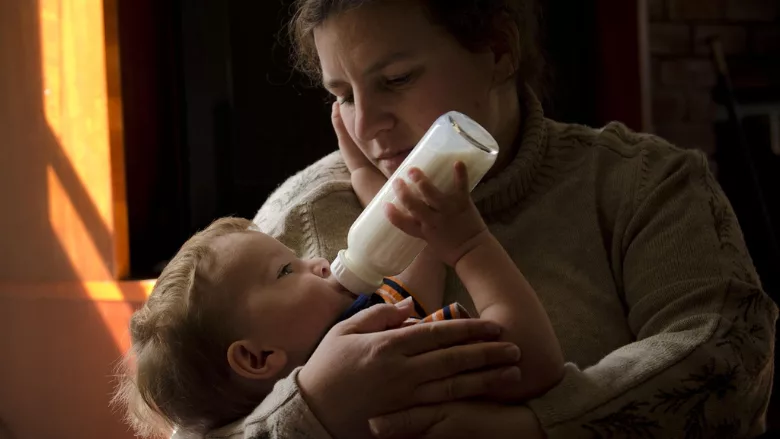
The Safe Food Coalition, comprising seven food safety and consumer protection groups, has written a letter to top U.S. federal public health officials urging their agencies to take immediate action to protect infant formula, in light of the ongoing infant botulism outbreak linked to ByHeart-brand formula.
The letter was written to U.S. Food and Drug Administration (FDA) Commissioner Marty Makary, M.D., U.S. Centers for Disease Control and Prevention (CDC) Acting Director Jim O’Niell, and U.S. Health Secretary Robert F. Kennedy, Jr. It was signed by the Center for Food Safety, the Center for Science in the Public Interest, the Consumer Federation of America, Consumer Reports, the Government Accountability Project, the Institute for Food Safety and Nutrition Security, George Washington University, and STOP Foodborne Illness.
As of December 3, 2025, a total of 39 infants nationwide with exposure to ByHeart Whole Nutrition Infant Formula have been hospitalized for botulism. Testing found Clostridium botulinum in opened product taken from the family of a sick child’s home, as well as the pervasive presence of C. botulinum in unopened, finished product at a ByHeart production facility.
Alarmingly, FDA inspection reports of ByHeart production facilities revealed a history of food safety failures, including mold, dead insects, and leaking roof issues at its Reading, Pennsylvania facility (now closed), as well as rodent activity, rusty surfaces, and Cronobacter sakazakii-positive environmental swabs at the company’s Fullerton, Iowa plant.
Moreover, weeks after all ByHeart formula products were recalled, FDA reported that major retailers including Walmart and Target are continuing to sell the product. According to the letter, a lengthy process was reportedly needed before FDA would agree to release the names of affected retailers to state regulators.
This ongoing outbreak has “exposed dangerous deficiencies in the inspection and regulatory systems” that should ensure infant formula safety, asserts the letter. The authors ask FDA and CDC to swiftly take several concrete actions to correct these deficiencies:
- Strengthening inspection: Fill FDA inspector vacancies, which are currently at 40 percent; reinstate FDA’s inspector training; increase inspection of infant formula facilities; and fully fund inspections, including state inspections.
- Strengthening regulation: Declare C. botulinum in infant formula to be a hazard requiring preventive controls and updating the agencies’ regulatory approach to the pathogen, including under FDA’s Preventive Controls Rule; developing best practice guidance on avoiding C. botulinum in infant formula based on a root cause analysis of the ByHeart outbreak; conducting a sampling assignment for C. botulinum in infant formula; and issuing recommendations to industry on appropriate indicator organisms for testing.
- Facilitating timely recalls by promptly sharing information with state enforcement agencies.
- Fully funding food safety work conducted by CDC’s National Center for Emerging and Zoonotic Infectious Diseases (NCEZID) within the Division of Foodborne, Waterborne, and Environmental Diseases (DFWED), including vital foodborne illness surveillance activities like FoodNet, which was greatly scaled back in 2025.
- Requesting new authority from Congress to establish adequate authority and funding to create effective infant formula protections; for example, through bills such as the Federal State and Food Safety Information Act (which would allow FDA to share timely information with the states to conduct recall checks), the Protect Infant Formula from Contamination Act (which would require companies to report positive test results in infant formula to FDA), the Improving Newborns’ Food and Nutrition Safety Act (which would require additional product and environmental testing for formula, mandate reporting of product positives, facilitate remote records access, and provide additional recall authority), and the Baby Food Safety Act of 2024 (which would require environmental monitoring in facilities producing formula and baby food).
These changes are urgent and long overdue, according to the letter, as FDA has been promising to improve oversight to ensure infant formula safety since the infant formula shortage of 2022. The shortage was precipitated by two infant deaths caused by Cronobacter sakazakii infection, which led to recalls and the closure of a major U.S. infant formula production facility. Although FDA has since created an Office of Critical Foods, and CDC made Cronobacter a nationally notifiable disease, “consumer protections against contaminated infant formula remain woefully inadequate, with infant formula production and packaging facilities typically inspected at most once a year,” says the letter.
The current infant botulism outbreak has occurred despite “incremental changes” made by FDA and CDC under the previous administration, and despite the Trump Administration’s and Secretary Kennedy’s Operation Stork Speed efforts to prioritize infant formula and baby food safety. Most recently, the Reagan-Udall Foundation for FDA released a report in support of Operation Stork Speed.
Update, December 16, 2025: As of December 10, a total of 51 infants with suspected or confirmed infant botulism and confirmed exposure to ByHeart Whole Nutrition infant formula (various lots) have been reported across 19 states. All 51 infants were hospitalized; no deaths have been reported.
On December 15, FDA issued an open letter to all food industry stakeholders describing firms’ legal obligations in the case of a food safety incident and outlining best practices for effective recalls. Separately, FDA sent warning letters to four major retailers—Target, Walmart, Kroger, and Albertsons—for failing to remove recalled ByHeart infant formula from store shelves.
Looking for quick answers on food safety topics?
Try Ask FSM, our new smart AI search tool.
Ask FSM →