Food Safety
search
Ask Food Safety AI
cart
facebook twitter linkedin
  • Sign In
  • Create Account
  • Sign Out
  • My Account
Food Safety
  • NEWS
    • Latest News
    • White Papers
  • PRODUCTS
  • TOPICS
    • Contamination Control
    • Food Types
    • Management
    • Process Control
    • Regulatory
    • Sanitation
    • Supply Chain
    • Testing and Analysis
  • PODCAST
  • EXCLUSIVES
    • Food Safety Five Newsreel
    • eBooks
    • FSM Distinguished Service Award
    • Interactive Product Spotlights
    • Videos
  • BUYER'S GUIDE
  • MORE
    • ENEWSLETTER >
      • Archive Issues
      • Subscribe to eNews
    • Store
    • Sponsor Insights
    • ASK FSM AI
  • WEBINARS
  • FOOD SAFETY SUMMIT
  • EMAG
    • eMagazine
    • Archive Issues
    • Editorial Advisory Board
    • Contact
    • Advertise
  • SIGN UP!
NewsContamination ControlFood TypeRegulatoryChemicalReady-to-eatFDA

FDA Launches ‘Operation Stork Speed’ to Improve Infant Formula Safety, Including Contaminant Testing

By Bailee Henderson
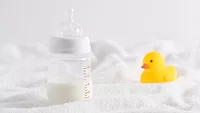
baby bottle on a pink blanket

Image credit: fabrikasimf via Freepik

March 18, 2025

The U.S. Food and Drug Administration (FDA) is launching “Operation Stork Speed,” which is an effort to better ensure the ongoing quality, safety, nutritional adequacy, and resilience of the U.S. infant formula supply.

Advocacy group Consumer Reports says that FDA announced Operation Stork Speed one day after it shared with the agency the results of independent testing showing some infant formula samples to contain potentially harmful levels of certain contaminants. Although Consumer Reports expressed approval about the new FDA initiative, the group is also calling upon the U.S. Department of Health and Human Services (HHS) to ensure FDA is adequately resourced to deliver on its promises.

Operation Stork Speed will include actions such as:

  • Beginning the first comprehensive update and review of infant formula nutrients by FDA since 1998, starting with the issuance of a Request for Information in the coming months
  • Increasing testing for heavy metals and other contaminants in infant formula and foods commonly consumed by young children
  • Extending the personal importation policy, which allows U.S. citizens to personally bring or ship into the country certain foreign products that are not for sale on the domestic market
  • Encouraging companies to work with FDA on any questions regarding increased transparency and clear labeling
  • Communicating regularly with consumers and industry stakeholders as significant developments occur to ensure transparency, including information regarding nutrients and health outcomes
  • Collaborating with the U.S. National Institutes of Health (NIH) and other scientific bodies to address priority scientific research gaps regarding short- and long-term health outcomes associated with formula feeding in infancy and childhood.

FDA is also encouraging companies to develop new infant formulas and clarify opportunities to help inform consumers about formula ingredients. The announcement of Operation Stork Speed follows FDA’s publication of a long-term strategy to increase the resiliency of the U.S. infant formula market, released in January.

HHS Secretary Robert F. Kennedy Jr. (RFK Jr.) says Operation Stork Speed is in alignment with his “Make America Healthy Again” agenda.

Consumer Reports Raises Concern About Contaminants in Some Infant Formulas, Questions Whether FDA is Adequately Resourced to Deliver on Operation Stork Speed

Consumer Reports lauded the stated objectives of Operation Stork Speed, noting that the agency announced the new initiative just one day after the group shared with FDA the results of its own investigation of contaminants in infant formula.

“We look forward to seeing the details of how they intend to implement the plan, and we hope FDA is provided adequate resources and staffing to actually follow through with these promises,” said Consumer Reports Director of Food Policy Brian Ronholm. Following the announcement of Operation Stork Speed, Consumer Reports launched a petition calling on HHS and Secretary Kennedy to ensure that FDA has the staffing and resources necessary to keep harmful contaminants out of infant formula.

As part of its Toxic-Free Kids’ Food campaign, Consumer Reports tested 41 different powdered infant formulas, including well-known formulas like Enfamil and Similac, new startups, popular store brands, and imported formula brands, to discern whether they contained toxic heavy metals and other contaminants. Although the majority of samples tested did not raise any red flags, certain formulas contained toxic heavy metals arsenic and lead, per- and polyfluoroalkyl substances (PFAS), bisphenol A (BPA), and acrylamide.

Looking for quick answers on food safety topics?
Try Ask FSM, our new smart AI search tool.
Ask FSM →

More specifically, the highest levels of inorganic arsenic were found in Abbott Nutrition’s EleCara Hypoallergenic formula at 19.7 parts-per-billion (ppb), followed by Similac Alimentum (also manufactured by Abbott) at 15.1 ppb. By comparison, the U.S. Environmental Protection Agency (EPA) limits inorganic arsenic in municipal drinking water to 10 ppb. While most of the formulas Consumer Reports tested contained arsenic at non-concerning levels, eight formulas exceeded and two formulas came close to meeting Consumer Report’s “hazard quotient,” determined by Consumer Reports to be the level at which no adverse health effects would be expected to occur (based on a three-month-old infant of average size eating an average amount each day).

Additionally, Consumer Reports found lead at some level in 34 out of the 41 formulas tested, ranging from 1.2–4.2 ppb, with the highest level found in Enfamil Nutramigen at 4.2 ppb, followed by Neocate Hypoallergenic formula at 4.1 ppb. None of the formulas tested had levels that exceeded the Maximum Allowable Dose Level (MADL) set by California, the metric chosen by Consumer Reports as its standard for ensuring child safety. However, 18 of the formulas had lead levels at 50–100 percent of the MADL.

Consumer Reports also tested the formulas for per- and polyfluoroalkyl substances (PFAS). Many of the PFAS found in the samples were lesser-understood PFAS compounds—as opposed to “legacy PFAS” chemicals, for which the health risks are understood and for which EPA has established maximum limits in drinking water. Perfluorooctane sulfonate (PFOS), a legacy PFAS, was found in several formulas, however.

Finally, BPA and acrylamide (a likely carcinogen) were found in one formula, Enfamil’s Nutramigen, which is a commonly recommended alternative to cow’s milk formula for babies sensitive to milk protein.


KEYWORDS: Consumer Reports infant formula MAHA

Share This Story

Baileehendersonmay23

Bailee Henderson is the Digital Editor of Food Safety Magazine. She can be reached at hendersonb@bnpmedia.com.

Recommended Content

JOIN TODAY
to unlock your recommendations.

Already have an account? Sign In

  • people holding baby chicks

    Serovar Differences Matter: Utility of Deep Serotyping in Broiler Production and Processing

    This article discusses the significance of Salmonella in...
    Food Type
    By: Nikki Shariat Ph.D.
  • woman washing hands

    Building a Culture of Hygiene in the Food Processing Plant

    Everyone entering a food processing facility needs to...
    Sanitation
    By: Richard F. Stier, M.S.
  • graphical representation of earth over dirt

    Climate Change and Emerging Risks to Food Safety: Building Climate Resilience

    This article examines the multifaceted threats to food...
    International
    By: Maria Cristina Tirado Ph.D., D.V.M. and Shamini Albert Raj M.A.
Manage My Account
  • eMagazine Subscription
  • Subscribe to eNewsletter
  • Manage My Preferences
  • Website Registration
  • Subscription Customer Service

More Videos

Sponsored Content

Sponsored Content is a special paid section where industry companies provide high quality, objective, non-commercial content around topics of interest to the Food Safety Magazine audience. All Sponsored Content is supplied by the advertising company and any opinions expressed in this article are those of the author and not necessarily reflect the views of Food Safety Magazine or its parent company, BNP Media. Interested in participating in our Sponsored Content section? Contact your local rep!

close
  • Salmonella bacteria
    Sponsored byThermoFisher

    Food Microbiology Testing Methods: Salmonella species

  • a diagram explaining indicator organisms
    Sponsored byHygiena

    How Proactive Listeria Testing Helps Prevent Six- and Seven-Figure Recalls

  • woman grocery shopping
    Sponsored byCorbion

    Designing Safety Into Every Bite: Proactive Risk Mitigation for Refrigerated Foods

Popular Stories

NRTE breaded stuffed chicken

USDA Indefinitely Delays Enforcement of Salmonella as Adulterant in Raw Breaded, Stuffed Chicken

non-conforming product

How to Handle Non-Conforming Product

spoonfuls of food ingredients

FDA’s Developing Rule to Tighten GRAS Oversight Moves to White House

Events

December 11, 2025

How to Develop and Implement an Effective Food Defense Strategy

Live: December 11, 2025 at 2:00 pm EDT: From this webinar, attendees will learn common areas where companies encounter challenges in their food defense strategies and how to address them.

May 11, 2026

The Food Safety Summit

Stay informed on the latest food safety trends, innovations, emerging challenges, and expert analysis. Leave the Summit with actionable insights ready to drive measurable improvements in your organization. Do not miss this opportunity to learn from experts about contamination control, food safety culture, regulations, sanitation, supply chain traceability, and so much more.

View All

Products

Global Food Safety Microbial Interventions and Molecular Advancements

Global Food Safety Microbial Interventions and Molecular Advancements

See More Products

Related Articles

  • infant formula powder bottle

    Regan-Udall Report Supports FDA Infant Formula Safety Efforts

    See More
  • two women feeding bottle of formula to infant

    Bill That Would Improve FDA’s Ability to Protect U.S. Infant Formula Supply Reintroduced

    See More
  • half full baby bottle next to rubber duckie on white surface

    Federal Report Gives FDA Nine Recommendations to Improve Infant Formula Oversight

    See More

Related Products

See More Products
  • 1119053595.jpg

    Food Safety for the 21st Century: Managing HACCP and Food Safety throughout the Global Supply Chain, 2E

  • 1119160553.jpg

    Food Safety: Innovative Analytical Tools for Safety Assessment

  • 1119237963.jpg

    Food Safety in China: Science, Technology, Management and Regulation

See More Products

Related Directories

  • SafetyChain Software

    SafetyChain is a digital plant management platform trusted by more than 2,500 food and beverage manufacturing facilities to improve plant-wide performance. It unifies production and quality teams with data and insights, tools, and delivers real-time operational visibility and control by eliminating paper and point solutions.
×

Never miss the latest news and trends driving the food safety industry

eNewsletter | Website | eMagazine

JOIN TODAY!
  • RESOURCES
    • Advertise
    • Contact Us
    • Directories
    • Store
    • Want More
  • SIGN UP TODAY
    • Create Account
    • eMagazine
    • eNewsletter
    • Customer Service
    • Manage Preferences
  • SERVICES
    • Marketing Services
    • Reprints
    • Market Research
    • List Rental
    • Survey/Respondent Access
  • STAY CONNECTED
    • LinkedIn
    • Facebook
    • Instagram
    • X (Twitter)
  • PRIVACY
    • PRIVACY POLICY
    • TERMS & CONDITIONS
    • DO NOT SELL MY PERSONAL INFORMATION
    • PRIVACY REQUEST
    • ACCESSIBILITY

Copyright ©2025. All Rights Reserved BNP Media.

Design, CMS, Hosting & Web Development :: ePublishing