Florida Launches Food Contaminant Testing Program with Report on Metals in Infant Formula
Florida is launching a state program to test for contaminants in food products. Its first report, focused on infant formulas, raises concerns about the presence of toxic heavy metals.
Healthy Florida First—a MAHA Initiative
Florida First Lady Casey DeSantis recently announced the Healthy Florida First initiative, which will include surveillance of food products for the presence of contaminants.
The announcement follows Governor Ron DeSantis’ budget proposal for Fiscal Year 2026–2027, which was unveiled in December and includes $5 million to expand product testing for contaminants like heavy metals, bacteria, pesticides, and microplastics. According to Gov. DeSantis, the investment supports the “Make America Healthy Again” (MAHA) agenda.
Gov. DeSantis said Florida is working with U.S. Health Secretary Robert F. Kennedy Jr. to give families on the Special Supplemental Nutrition Program for Women, Infants, and Children (WIC) access to a wider selection of infant formulas if they want to switch products based on the findings of the Healthy Florida First testing.
Although infant formula is not regulated by the state, Gov. DeSantis’ office said the results of the Healthy Florida First tests are intended to “give parents clear, accessible information and ensure accountability in products marketed to infants.”
Healthy Florida First aligns with “Operation Stork Speed,” an initiative announced by Secretary Kennedy in March 2025 to improve the safety and security of the U.S. infant formula supply. One of the stated objectives of this initiative is to test for heavy metals and other contaminants in infant formula and foods commonly consumed by young children.
Florida Finds Heavy Metals in Infant Formula
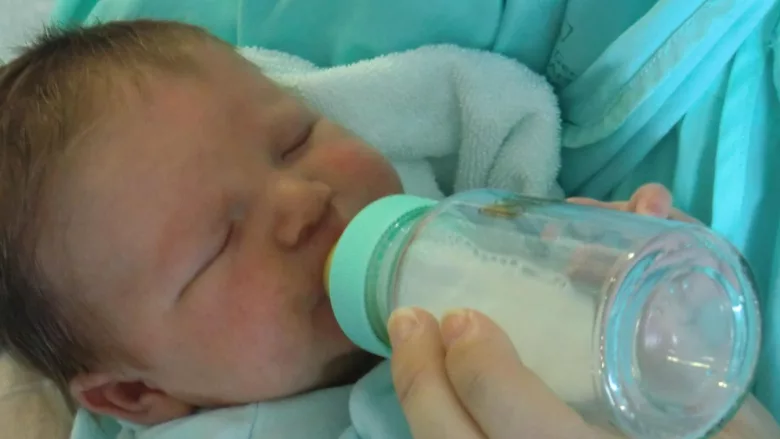
The Florida Department of Health tested 24 infant formula products sold widely across the state and discovered elevated levels of toxic heavy metals in samples from 16 brands.
Looking for quick answers on food safety topics?
Try Ask FSM, our new smart AI search tool.
Ask FSM →
The results from the sampling and testing assignment were published on the Healthy Florida First website (exposingfoodtoxins.com). The website identifies brands that contained levels of arsenic, cadmium, lead, mercury, or pesticides exceeding the “maximum daily limit” set by the U.S. Food and Drug Administration (FDA) or the U.S. Environmental Protection Agency (EPA). Product samples that tested positive for elevated levels of contaminants include:
- Bobbie Organic Infant Formula: Mercury (average 4.33 parts per billion [ppb])
- Enfamil AR Powder: Mercury (3.13 ppb)
- Enfamil Gentlease Powder: Mercury (4.05 ppb)
- Enfamil Gentlease NeuroPro Ready to Use: Arsenic (2.03 ppb), Mercury (1.62 ppb)
- Enfamil Infant Concentrate: Mercury (2.27 ppb)
- Enfamil Infant NeuroPro Ready to Use: Cadmium (1.32 ppb), Mercury (4.39 ppb), Lead (13.47 ppb)
- Enfamil Infant Powder: Arsenic (1.49 ppb), Mercury (3.3 ppb)
- Enfamil Prosobee: Arsenic (7.53 ppb), Cadmium (5.08 ppb), Mercury (4.64 ppb)
- Similac Advance Concentrate Liquid: Mercury (4.82 ppb)
- Similac Advance Powder: Mercury (2.16 ppb)
- Similac Sensitive Powder: Mercury (2.34 ppb)
- Similac Soy Isomil Ready to Feed: Mercury (1.62 ppb)
- Similar Soy Isomil Concentrated Liquid: Mercury (2.1 ppb)
- Similac Soy Isomil Powder: Arsenic (6.86 ppb), Cadmium (6.85 ppb), Mercury (3.39 ppb), Lead (7.38 ppb)
- Similac Total Comfort Powder: Arsenic, Mercury.
Federal Limits for Metals in Infant Formula Do Not Exist
In the U.S., there are no federal limits for lead, arsenic, cadmium, or mercury in infant formula. Under the “Closer to Zero” initiative, FDA has set action levels for inorganic arsenic in apple juice and lead in processed food intended for babies and young children. The agency has also proposed or is considering other action levels for lead, cadmium, arsenic, and mercury in juices and foods for babies and children. However, the “Closer to Zero” action levels do not apply to infant formula.
EPA has set legal safe drinking water standards for cadmium, inorganic mercury, arsenic, and lead. FDA also established maximum allowable limits for these toxic heavy metals in bottled water.
Although there are no toxic heavy metal limits set by FDA or EPA specific to infant formula, the “maximum allowable limits” referenced by the Healthy Florida First tests may refer to EPA drinking water limits.
Update, February 9, 2026: Toxicologists say the Healthy Florida First reports' lack of transparency around the methodology and risk assessment make the findings difficult for experts to interpret and raises question about the relevance to consumer health. Read more here.