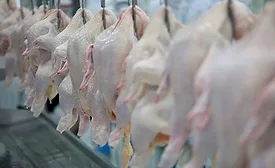
An analysis of multinational WGS surveillance data suggests that multidrug-resistant lineage of Campylobacter coli has circulated across human, animal, food, and environmental sources in Europe for years, highlighting the need for coordinated One Health genomic surveillance.
At the highest tested dose, every isolate, even those exhibiting antimicrobial resistance (AMR), underwent at least a 2-log reduction in viable cells. Modeling suggested that such a reduction could decrease public health risk of infection by up to 90 percent.
Positive environmental samples were found on a farm and at a Taylor Farms of Mexico processing facility, which supplied the implicated lettuce distributed by Taylor Fresh Foods. The root cause of contamination was not found, however. FDA also announced ten actions to prevent future cyclosporiasis outbreaks.
MicroTally’s MicroCap sampler grabs microorganisms from product surfaces as finished product passes through the weigh station. The device can operate unattended for up to two hours.
The Sensor4Food research project will develop five photonic sensing technologies intended to identify pathogenic contamination, animal disease, and meat quality issues at critical points in poultry production, possibly supporting a digital “poultry passport” to link information about poultry production, transport, welfare, and processing.
As consumer interest in raw milk grows, questions persist about its safety and purported nutritional and health benefits. Examining the evidence can help producers, consumers, and regulators distinguish established risks from emerging science and unsupported claims.
During the screening of lactic acid bacteria on limes grown near poultry farms, scientists in Brazil discovered the presence of two emerging pathogens with traits that raise concerns for food safety, human clinical outcomes, and One Health.
Food Standards Scotland (FSS) has outlined its plans to reduce foodborne illness over the next three years, prioritizing Campylobacter, Listeria monocytogenes, and Shiga toxin-producing Escherichia coli, as well as its related research objectives.
Based on a review of foodborne illness outbreaks linked to sauces and other literature, University of Georgia’s Center for Food Safety researchers underscored pathogenic bacteria as the primary public health concern, while also highlighting spoilage microorganisms and the comparatively understudied risk posed by foodborne parasites.
A new study characterized mycotoxin-related RASFF food safety notifications by mycotoxin type, product category, country of origin, risk level, and notification type. The researchers also contextualized notification trends dating back to 2012.
 RSS
RSS