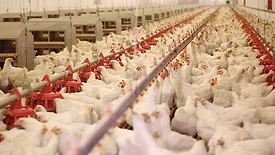
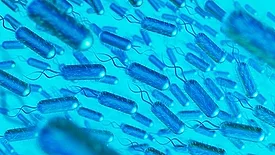
Oxford University researchers found that the expansion of dense, industrial chicken farming created conditions that enabled Campylobacter strains to spread, mix, and acquire traits that could improve their survival in poultry production environments.
The resource provides recommendations and examples for implementing FSMA Preventive Controls for Human Foods Rule requirements to control known or reasonably foreseeable biological hazards in fresh-cut produce.
The report examines spore-forming, botulinum toxin-producing clostridia that pose persistent challenges for food production, including C. botulinum, C. perfringens, and C. difficile. It reviews disease burden, outbreak risks, prevention strategies, detection methods, and significant epidemiological data gaps.
A new study found high levels of multidrug resistance and biofilm formation among Enterococcus spp. isolated from retail meat, market workers, and consumers. Genetic similarities among E. faecalis and E. faecium isolates from different sources suggested potential cross-transmission at the food–human
interface, although the researchers emphasized that direct transmission was not established.
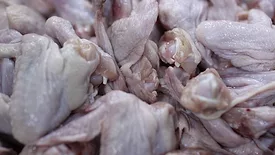
Hydrogen peroxide treatment, followed by catalase enzyme application to remove residual peroxide, significantly reduced Salmonella Typhimurium and Listeria monocytogenes on raw chicken wings while preserving the meat's overall color quality, although more research is needed on the effect on other organoleptic properties.
A new scientific review examines blue light-mediated photosensitization for antimicrobial intervention across various food sectors. The review notes the technology's promise as a nonthermal antimicrobial intervention for food safety and emphasizes the need for further studies to support scale-up across industry.
The fast-casual Mexican-style restaurant chain has pulled the jalapeños from its restaurants and replaced them with product from different growers, out of "an abundance of caution."
Transport cages are recognized as a potential source of cross-contamination in poultry slaughterhouses. The optimal washing water temperature and detergent concentration completely eliminated detectable Salmonella while greatly reducing indicator organisms. The identified parameters may improve food safety and operational efficiency.
Spoilage microorganisms present an important and complex challenge for food manufacturers, affecting production processes, product quality, retailer relationships, consumer satisfaction, food loss and waste, and ultimately, the bottom line.
UKHSA said the relatively stable number of STEC notifications in 2025 marked a departure from the steady annual increases observed since 2021, when larger outbreaks contributed substantially to case counts.
 RSS