Study Shows Promise of Hydrogen Peroxide Treatment for Poultry Decontamination
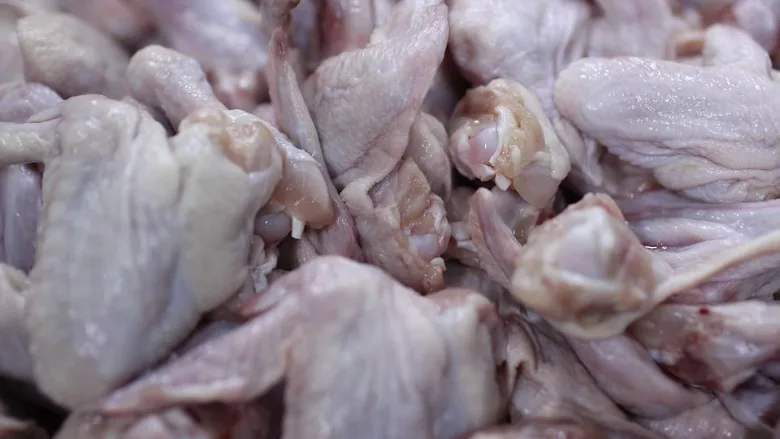
A new study led by researchers at Harran University has demonstrated that hydrogen peroxide treatment, followed by catalase enzyme application to remove residual peroxide, significantly reduced Salmonella Typhimurium and Listeria monocytogenes on raw chicken wings while preserving the meat's overall color quality. The findings were published in ACS Omega.
The researchers investigated hydrogen peroxide concentrations ranging from 5–250 parts per million (ppm) and contact times between five and 90 seconds to determine their effects on the two foodborne pathogens. Following antimicrobial treatment, catalase enzyme solutions—derived from either commercial catalase or poultry liver extract—were used to eliminate residual hydrogen peroxide before quality assessments.
Higher Concentrations and Longer Contact Times Improved Pathogen Reduction
The study found that antimicrobial efficacy increased as both hydrogen peroxide concentration and exposure time increased.
For S. Typhimurium, the greatest reductions were achieved with 250 ppm hydrogen peroxide, which produced approximately a 3-log colony forming units per milliliter (CFU/mL) reduction after 30 seconds of treatment. At 100 ppm, reductions reached approximately 2.3 log CFU/mL after 60–90 seconds, while lower concentrations produced more modest reductions.
L. monocytogenes was more susceptible to treatment than S. Typhimurium. At 50 ppm and 100 ppm hydrogen peroxide, bacterial counts fell below the detection limit after 90 seconds. At the highest concentration tested, 250 ppm, L. monocytogenes dropped below detectable levels after only 30 seconds of exposure.
The researchers attributed the greater resistance of S. Typhimurium in part to the organism's stronger adhesion to poultry tissue, which may shield cells from antimicrobial action.
Lower pH May Have Enhanced Antimicrobial Activity
The researchers reported that increasing hydrogen peroxide concentrations also lowered solution pH, from approximately 4.5 at 5 ppm to 3.6 at 250 ppm. They suggested this increasing acidity may have contributed to greater bacterial inactivation alongside the oxidative antimicrobial activity of hydrogen peroxide.
Looking for quick answers on food safety topics?
Try Ask FSM, our new smart AI search tool.
Ask FSM →
The authors noted that hydrogen peroxide damages bacterial DNA, proteins, lipids, and cell membranes through oxidative mechanisms, ultimately leading to microbial inactivation.
Catalase Successfully Removed Residual Hydrogen Peroxide
After decontamination, both commercial catalase and crude poultry liver extract effectively degraded residual hydrogen peroxide to below the limit of detection across all treatment conditions.
The researchers suggested that crude poultry liver extract could provide a cost-effective, sustainable processing aid by upcycling slaughterhouse byproducts while delivering peroxide-removal performance comparable to commercial catalase preparations.
Minimal Effects on Color
Although instrumental color measurements detected statistically significant changes in some color parameters, the researchers reported that the overall appearance of the chicken wings remained within the range of natural color variation for poultry meat.
The authors acknowledged that no sensory evaluation was conducted and recommended future studies assessing odor, texture, flavor, and consumer acceptance.
Molecular Analysis Supported Experimental Findings
In addition to microbiological testing, the researchers performed molecular docking analyses to evaluate potential interactions between hydrogen peroxide and selected bacterial proteins.
The computational analysis suggested that hydrogen peroxide demonstrated stronger theoretical binding affinity to the selected target proteins than hypochlorite, a disinfectant commonly used in poultry processing. However, the authors emphasized that hydrogen peroxide's primary antimicrobial activity results from oxidative damage rather than specific protein binding, and that the molecular docking results should be viewed as supportive, exploratory findings.
Potential Alternative to Chlorine-Based Interventions
The researchers concluded that hydrogen peroxide treatment followed by catalase neutralization could represent a promising antimicrobial intervention for poultry processing, particularly when applied near the end of the production line before packaging. They suggested the approach could serve as an alternative to chlorine-based disinfectants while maintaining product quality.
The authors also cautioned that repeated industrial use of sublethal hydrogen peroxide concentrations could theoretically select for more oxidative stress-tolerant bacterial populations over time. Although adaptive resistance was not investigated in the study, they recommended future research examining long-term industrial applications and evaluating rotational or multi-hurdle intervention strategies to minimize this risk.