Food Safety
search
Ask Food Safety AI
cart
facebook twitter linkedin instagram youtube
  • Sign In
  • Create Account
  • Sign Out
  • My Account
Food Safety
  • NEWS
    • Latest News
    • Sponsored Insights
    • Sponsored White Papers
  • PRODUCTS
  • TOPICS
    • Contamination Control
    • Food Types
    • Management
    • Process Control
    • Regulatory
    • Sanitation
    • Supply Chain
    • Testing and Analysis
  • PODCAST
  • EXCLUSIVES
    • Food Safety Five Newsreel
    • eBooks
    • FSM Distinguished Service Award
    • Interactive Product Spotlights
    • Videos
  • BUYER'S GUIDE
  • MORE
    • NEWSLETTERS >
      • Archive Issues
      • Subscribe to eNews
    • Store
    • ASK FSM AI
  • WEBINARS
  • FOOD SAFETY SUMMIT
  • EMAG
    • eMagazine
    • Archive Issues
    • Editorial Advisory Board
    • Contact
    • Advertise
  • SIGN UP!
NewsMicrobiological ControlIntervention Controls

Scientific Review Evaluates Blue Light-Mediated Photosensitization Across Food Applications

By Food Safety Magazine Editorial Team
Pathogens against a blue light background
Image credit: magnific via Magnific
August 5, 2026

A new scientific review published in Food Control examines blue light-mediated photosensitization for antimicrobial intervention across various food sectors, including studies involving fruits, vegetables, beverages, meat, seafood, and poultry. It also places findings from earlier studies on antimicrobial blue light use in a broader context.

The review authors assessed mechanisms of microbial inactivation, antimicrobial efficacy under different treatment parameters (e.g., light intensity, exposure duration, matrix composition), the role of endogenous and externally added photosensitizers, effects on food quality and nutritional properties, and the practical challenges associated with applying the technology in commercial food processing.

The review examined blue light-mediated photosensitization combining visible blue light in the 400–470 nanometer (nm) range with endogenous or externally added photosensitizers, which generates reactive oxygen species when illuminated. Numerous studies have demonstrated that the approach can effectively reduce a variety of foodborne pathogens while avoiding the high temperatures associated with conventional thermal treatments. Specifically, the review compared endogenous and exogenous photosensitization mechanisms and their applications in complex food matrices.

The authors emphasized that antimicrobial performance varies considerably depending on several factors, including light wavelength and intensity, treatment duration, the type and concentration of photosensitizer, and the characteristics of the food matrix. The review also discussed the importance of balancing microbial inactivation with the preservation of food quality.

Although several studies reported minimal effects on sensory attributes and nutritional quality under optimized conditions, excessive light exposure or unsuitable treatment parameters can affect color, texture, flavor retention, and other quality characteristics. The authors noted that processing conditions must be tailored to individual food products.

In addition to efficacy, the authors identified several barriers to broader commercial adoption. These barriers included the need for standardized treatment protocols, additional validation under industrial processing conditions, optimization for different food matrices, and evaluation of long-term quality impacts.

The researchers concluded that blue light-mediated photosensitization is a promising nonthermal antimicrobial technology for improving food safety; however, further optimization and additional studies are needed to support broader implementation across industry.

Looking for quick answers on food safety topics?
Try Ask FSM, our new smart AI search tool.
Ask FSM →

Placing Previous Research Into Broader Context

The review places recent application-specific research into a broader scientific context. For example, a previous study showed that blue light combined with four plant-derived compounds—curcumin, berberine, quercetin, and capsaicin—reduced Listeria monocytogenes on smoked salmon and inhibited biofilm formation. Another recent study investigated antimicrobial blue light as part of sanitation protocols for produce packinghouse brushes, evaluating treatment parameters and equipment characteristics that may influence antimicrobial efficacy.

While those studies presented application-specific research evaluating blue light under defined conditions and food matrices, the new review evaluated the accumulated body of evidence across multiple food categories, microbial targets, and photosensitizer systems. It also identified recurring factors that influence antimicrobial performance and highlighted the research, validation, and standardization needed before blue light-mediated photosensitization can be widely adopted.

The new review was conducted by researchers from Parul University in India, King Faisal University in Saudi Arabia, Suranaree University of Technology in Thailand, and Washington State University in the U.S.


KEYWORDS: antimicrobial blue light study

Share This Story

Fsm purple logo 200x200

The Food Safety Magazine editorial team comprises Bailee Henderson, Director of Content Strategy and news editor ✉, and Adrienne Blume, M.A., Director of Editorial and Industry Engagement.

Recommended Content

JOIN TODAY
to unlock your recommendations.

Already have an account? Sign In

  • people holding baby chicks

    Serovar Differences Matter: Utility of Deep Serotyping in Broiler Production and Processing

    This article discusses the significance of Salmonella in...
    Methods
    By: Nikki Shariat Ph.D.
  • woman washing hands

    Building a Culture of Hygiene in the Food Processing Plant

    Everyone entering a food processing facility needs to...
    Food Prep/Handling
    By: Richard F. Stier, M.S.
  • graphical representation of earth over dirt

    Climate Change and Emerging Risks to Food Safety: Building Climate Resilience

    This article examines the multifaceted threats to food...
    Contamination Control
    By: Maria Cristina Tirado Ph.D., D.V.M. and Shamini Albert Raj M.A.
Manage My Account
  • eMagazine Subscription
  • Subscribe to Newsletters
  • Manage My Preferences
  • Website Registration
  • Subscription Customer Service

More Videos

Sponsored Content

Sponsored Content is a special paid section where industry companies provide high quality, objective, non-commercial content around topics of interest to the Food Safety Magazine audience. All Sponsored Content is supplied by the advertising company and any opinions expressed in this article are those of the author and not necessarily reflect the views of Food Safety Magazine or its parent company, BNP Media. Interested in participating in our Sponsored Content section? Contact your local rep!

close
  • Man In Warehouse
    Sponsored byRentokil

    Mitigating Hidden Rodent Risks in Food Facilities

  • an industrial manufacturing or processing facility
    Sponsored bybioMérieux

    Get Ahead of Spoilage in Food Manufacturing with Metagenomics for Preventive Monitoring

  • an automated industrial production line used in a modern food factory
    Sponsored byIFC

    A Formula for Food Processing Pest Management

Popular Stories

dozen white eggs

Nearly 100 Sick in Multistate Salmonella Outbreak, Millions of Eggs Recalled

Business people shaking hands with FDA logo overlay

FDA to Centralize Administrative Functions, Generalize Inspectors

cartoon bacteria petri dish

Researchers Identify Plastic Food Contact Material Properties, Background Microbes that Influence Listeria Biofilm Persistence

building a skilled workforce ebook

Events

August 6, 2026

Beyond Sanitation: Understanding the Hidden System Conditions That Allow Pathogens to Persist

Live: August 6, 2026 at 2:00 pm EDT: Attend this webinar to learn strategies for strengthening environmental control programs through a layered approach to pathogen management.

August 11, 2026

Beyond Sanitization: Reducing Contamination Risk Without Raising Operating Cost

Live: August 11, 2026 at 2:00 pm EDT: Attend this webinar to learn why ambient air is the largest and most overlooked contamination zone in food processing, and what it costs you between scheduled cleans.

August 25, 2026

Don’t Wing It: Bird Control for Food Processing Facilities

Live: August 25, 2026 at 2:00 pm EDT: This webinar will cover why managing bird activity should be a priority for your business, the complexities involved in effective bird control, and proactive strategies to help protect your facility.

View All

Products

Global Food Safety Microbial Interventions and Molecular Advancements

Global Food Safety Microbial Interventions and Molecular Advancements

See More Products

Related Articles

  • Thermo Scientific’s FlashSmart Elemental Analyzer Enables Comprehensive Analysis for Food Applications

    See More
  • Image of someone utilizing AI on their laptop computer

    FDA Announces Completion of First AI-Assisted Scientific Review Pilot and Agency-Wide AI Rollout Timeline

    See More
  • Shedding Light on Food Safety: Applications of Pulsed Light Processing

    See More

Related Products

See More Products
  • 9781138198463.jpg

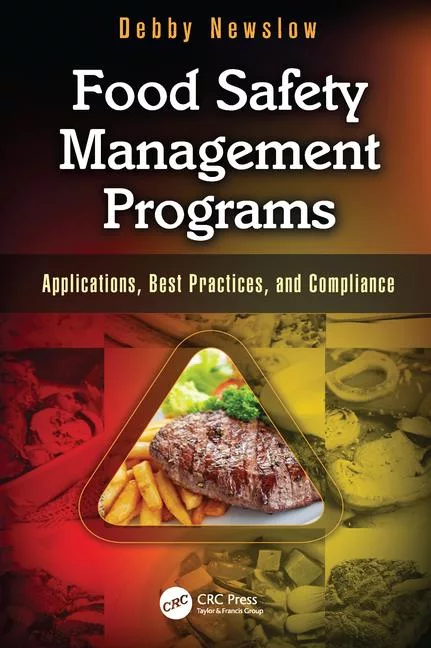
    Food Safety Management Programs: Applications, Best Practices, and Compliance

  • 9781498721776.jpg

    Handbook of Food Processing: Food Safety, Quality, and Manufacturing Processes

  • 1119053595.jpg

    Food Safety for the 21st Century: Managing HACCP and Food Safety throughout the Global Supply Chain, 2E

See More Products

Related Directories

  • Light Progress

    Light Progress UV-C applications for air, water, and surface disinfection have been saving energy, improving health, and increasing production quality since 1987.
  • Thermo Fisher Scientific

    For over 70 years, Thermo Fisher Scientific has been helping customers improve the safety and quality of their packaged and unpackaged food products. Thermo Scientific™ metal detectors, X-ray inspection systems and checkweighers are configurable to virtually any application. Discover solutions to help protect consumers and your brand.
  • Weber Scientific

    Weber Scientific is a leading manufacturer and distributor of laboratory supplies and equipment to the food and beverage processing industries. Since 1959 we have specialized in supplying the quality control needs of product testing, both raw and finished, and for overall processing and facility quality assurance. At Weber, we make the acquisition of testing supplies as easy and affordable as possible. Our team of dedicated sales professionals are ready to assist all your needs.
×

Never miss the latest news and trends driving the food safety industry

Newsletters | Website | eMagazine

JOIN TODAY!
  • RESOURCES
    • Advertise
    • Contact Us
    • Directories
    • Store
    • Want More
  • SIGN UP TODAY
    • Create Account
    • eMagazine
    • Newsletters
    • Customer Service
    • Manage Preferences
  • SERVICES
    • Marketing Services
    • Reprints
    • Market Research
    • List Rental
    • Survey/Respondent Access
  • STAY CONNECTED
    • LinkedIn
    • Facebook
    • Instagram
    • X (Twitter)
  • PRIVACY
    • PRIVACY POLICY
    • TERMS & CONDITIONS
    • DO NOT SELL MY PERSONAL INFORMATION
    • PRIVACY REQUEST
    • ACCESSIBILITY

Copyright ©2026. All Rights Reserved BNP Media, Inc. and BNP Media II, LLC.

Design, CMS, Hosting & Web Development :: ePublishing