Food Safety
search
Ask Food Safety AI
cart
facebook twitter linkedin instagram youtube
  • Sign In
  • Create Account
  • Sign Out
  • My Account
Food Safety
  • NEWS
    • Latest News
    • Sponsored Insights
    • Sponsored White Papers
  • PRODUCTS
  • TOPICS
    • Contamination Control
    • Food Types
    • Management
    • Process Control
    • Regulatory
    • Sanitation
    • Supply Chain
    • Testing and Analysis
  • PODCAST
  • EXCLUSIVES
    • Food Safety Five Newsreel
    • eBooks
    • FSM Distinguished Service Award
    • Interactive Product Spotlights
    • Videos
  • BUYER'S GUIDE
  • MORE
    • NEWSLETTERS >
      • Archive Issues
      • Subscribe to eNews
    • Store
    • ASK FSM AI
  • WEBINARS
  • FOOD SAFETY SUMMIT
  • EMAG
    • eMagazine
    • Archive Issues
    • Editorial Advisory Board
    • Contact
    • Advertise
  • SIGN UP!
NewsManagementInternational

FAO, Wageningen Researchers Review Broad Range of AI Food Safety Applications

By Food Safety Magazine Editorial Team
The image depicts "AI," which stands for Artificial Intelligence
Image credit: Vertigo3d/E+ via Getty Images
August 17, 2026

Need to Know

  • AI's potential food safety applications include pathogen and chemical hazard detection, food fraud and authenticity, outbreak surveillance, risk forecasting, and regulatory decision-making
  • Microbiological hazard detection represented the largest area of research, followed by chemical hazards
  • Barriers to wider adoption remain, such as data quantity, quality, and accessibility; confidentiality; and transparency.

Artificial intelligence (AI) is increasingly being applied across food safety, with potential uses ranging from pathogen and chemical hazard detection to food fraud identification, outbreak surveillance, risk forecasting, and regulatory decision-making, according to a new systematic review authored by researchers from Wageningen Food Safety Research (WFSR) and the Food and Agriculture Organization of the United Nations (FAO).

Published in npj Science of Food, the review included 161 peer-reviewed publications applying AI methods to food safety-related research questions, covering literature published through April 1, 2024. The literature showed rapid growth in food safety-related AI research. The number of publications increased from one in 2012 to 46 in 2023. Although classical machine learning remained most common, the proportion of studies using deep learning increased from 22 percent in 2019 to 43 percent in 2023.

AI Applications for Microbiological and Chemical Hazards

Microbiological hazards represented the largest research area identified by the review, accounting for 56 of the 161 included papers, or 35 percent. Of those studies, 33 (59 percent) applied AI to improve the accuracy, speed, cost, or efficiency of laboratory testing. Applications included the detection or quantification of pathogens such as Salmonella, Escherichia coli, and Listeria using data generated through whole genome sequencing (WGS), microscopy, molecular methods, colony counts, and optical spectroscopy.

Another 11 microbiological hazard studies examined AI for forecasting future risks, while 12 investigated risk factors or pathogen etiology. For example, one study used machine learning and Salmonella genome sequences from ground chicken to predict disease outcomes, while another found that physicochemical water quality and weather data combined with random forest algorithms could be used to predict E. coli levels in agricultural water.

Chemical hazards were addressed by 40 studies (25 percent). Half focused on improving laboratory testing, including applications targeting pesticides, veterinary drug residues, mycotoxins, and heavy metals. The researchers noted a trend toward pairing machine learning with onsite, nondestructive, lower-cost instrumentation intended to approximate results from more expensive and labor-intensive laboratory analytical methods.

Food Fraud, Outbreak Surveillance, and Regulatory Applications

A total of 27 studies (17 percent) examined AI for food fraud or authenticity. Most used analytical technologies such as near-infrared and fluorescence spectroscopy, electronic noses, and electronic tongues. Some research also explored regulatory applications, including an automated alarm system that analyzed nearly 100 million electronic invoices to identify potentially problematic edible oil manufacturers.

Additionally, nine studies focused on foodborne disease outbreaks and surveillance. These included applications using combined datasets to identify outbreak risk factors, forecast outbreaks, and improve inspection prioritization. One study analyzed anonymized internet search and smartphone location data to identify potential sources of foodborne illness in real time, with the approach improving identification of potentially problematic establishments by more than threefold compared with traditional methods.

Looking for quick answers on food safety topics?
Try Ask FSM, our new smart AI search tool.
Ask FSM →

Another 29 studies addressed broader food safety applications, including early warning systems, food spoilage, inspection reports, recalls, and border inspections. In one example, a machine learning-based border inspection model flagged imported food cases with noncompliance rates up to three times greater than those identified through random sampling.

Data Quality, Transparency Present Challenges for Food Safety AI

Despite the range of potential applications, the researchers identified significant barriers to wider and more reliable use of AI in food safety.

Food safety datasets are often incomplete or highly imbalanced because most analytical samples have low contamination levels, while relatively few exceed maximum limits. Such imbalances can result in models that accurately identify low-risk cases but perform poorly at recognizing the comparatively rare, higher-risk cases that are particularly important to food safety decision-making.

The authors also highlighted missing metadata and limited data accessibility as obstacles. Information such as sample origins, sampling locations, and sampling conditions can be essential for tracing contamination, identifying risk factors, and forecasting hazards. The researchers called for standardized data collection consistent with FAIR principles, meaning data should be Findable, Accessible, Interoperable, and Reusable.

At the same time, food safety data can contain private, commercially sensitive, or regulatory information that makes open sharing difficult. The researchers identified federated learning, in which models interact with decentralized datasets without requiring the underlying sensitive information to be centralized, as one potential approach to overcoming this challenge.

Transparency is another concern, particularly for deep learning models whose decision-making can be difficult to interpret. The researchers pointed to explainable AI (XAI), which seeks to identify the parameters driving AI-generated decisions, as an increasingly important tool for detecting bias and supporting transparency and accountability in food safety applications.

Data Lacking on the Use of AI by Food Producers

The review also identified a notable gap in the scientific literature: relatively few peer-reviewed studies examined AI applications within food production, processing, and manufacturing businesses. The authors suggested this could partly reflect industry's use of whitepapers rather than scientific journals to communicate findings, as well as proprietary and commercial considerations that discourage publication of AI-related work.

The lack of data on industrial AI use may not imply that AI is not being applied in these settings, however. In the “Food Safety Insights” column from the June/July 2026 issue of Food Safety Magazine, an industry survey revealed that AI has already moved into food safety programs; sometimes quietly, even when companies insist AI not be used.

Future Needs and Moving Forward

The study authors concluded that AI holds substantial potential for food safety, but its reliability and practical value will depend on overcoming challenges involving data quality and availability, privacy, governance, and model interpretability. FAO has also previously stressed the importance of robust governance and responsible AI adoption for food safety.

WFSR has announced plans to organize the first AI for Food Safety (AIFS) conference in 2027 with international AI and food safety researchers, providing a forum to discuss emerging applications, research, and challenges associated with the technology.


KEYWORDS: artificial intelligence FAO study Wageningen University

Share This Story

Fsm purple logo 200x200

The Food Safety Magazine editorial team comprises Bailee Henderson, Director of Content Strategy and news editor ✉, and Adrienne Blume, M.A., Director of Editorial and Industry Engagement.

Recommended Content

JOIN TODAY
to unlock your recommendations.

Already have an account? Sign In

  • people holding baby chicks

    Serovar Differences Matter: Utility of Deep Serotyping in Broiler Production and Processing

    This article discusses the significance of Salmonella in...
    Meat/Poultry
    By: Nikki Shariat Ph.D.
  • woman washing hands

    Building a Culture of Hygiene in the Food Processing Plant

    Everyone entering a food processing facility needs to...
    Management
    By: Richard F. Stier, M.S.
  • graphical representation of earth over dirt

    Climate Change and Emerging Risks to Food Safety: Building Climate Resilience

    This article examines the multifaceted threats to food...
    Risk Assessment
    By: Maria Cristina Tirado Ph.D., D.V.M. and Shamini Albert Raj M.A.
Manage My Account
  • eMagazine Subscription
  • Subscribe to Newsletters
  • Manage My Preferences
  • Website Registration
  • Subscription Customer Service

More Videos

Sponsored Content

Sponsored Content is a special paid section where industry companies provide high quality, objective, non-commercial content around topics of interest to the Food Safety Magazine audience. All Sponsored Content is supplied by the advertising company and any opinions expressed in this article are those of the author and not necessarily reflect the views of Food Safety Magazine or its parent company, BNP Media. Interested in participating in our Sponsored Content section? Contact your local rep!

close
  • Man In Warehouse
    Sponsored byRentokil

    Mitigating Hidden Rodent Risks in Food Facilities

  • an industrial manufacturing or processing facility
    Sponsored bybioMérieux

    Get Ahead of Spoilage in Food Manufacturing with Metagenomics for Preventive Monitoring

  • an automated industrial production line used in a modern food factory
    Sponsored byIFC

    A Formula for Food Processing Pest Management

Popular Stories

Cyclospora cayetanensis oocysts

FDA Begins Inspection at Taylor Farms Mexico as Official Cyclospora Outbreak Case Count Nears 10,000

pouring yellow canned beverage

FDA Proposes Mandatory GRAS Notifications for Ingredients Introduced to U.S. Food Supply

vending machine filled with chips and candy

FDA, USDA Submit ‘Ultra-Processed Foods’ Definition for Final Review

building a skilled workforce ebook

Events

August 25, 2026

Don’t Wing It: Bird Control for Food Processing Facilities

Live: August 25, 2026 at 2:00 pm EDT: This webinar will cover why managing bird activity should be a priority for your business, the complexities involved in effective bird control, and proactive strategies to help protect your facility.

September 1, 2026

Seafood Under the Microscope: FDA HACCP, Pathogen Risk, and Modern Testing Strategies

Live: September 1, 2026 at 2:00 pm EDT: Attend this webinar to learn how environmental monitoring, rapid pathogen detection, and risk-based testing strengthen seafood safety programs.

September 2, 2026

From Crisis to Control: A Listeria Elimination Journey in Food Manufacturing

Live: September 2, 2026 at 2:00 pm EDT: This webinar shares a real-world case study of a food processing facility that solved a persistent Listeria challenge after standard protocols fell short.

View All

Products

Global Food Safety Microbial Interventions and Molecular Advancements

Global Food Safety Microbial Interventions and Molecular Advancements

See More Products

Related Articles

  • Shedding Light on Food Safety: Applications of Pulsed Light Processing

    See More
  • white mushrooms against dark background

    USDA Explores Food Safety Applications of Antimicrobial Mushrooms

    See More

Related Products

See More Products
  • 9781138198463.jpg

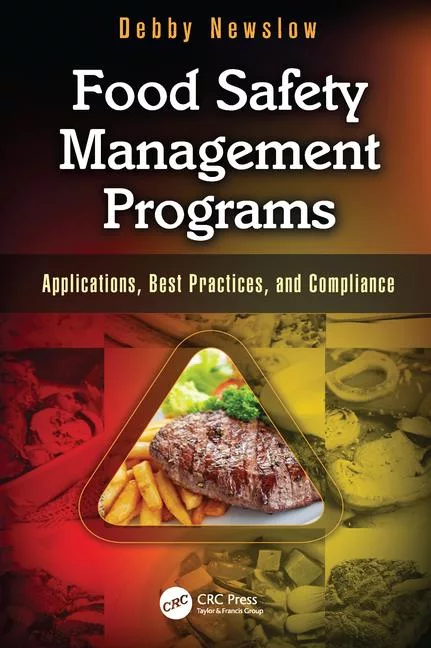
    Food Safety Management Programs: Applications, Best Practices, and Compliance

  • 1119053595.jpg

    Food Safety for the 21st Century: Managing HACCP and Food Safety throughout the Global Supply Chain, 2E

  • 9781498721776.jpg

    Handbook of Food Processing: Food Safety, Quality, and Manufacturing Processes

See More Products

Events

View AllSubmit An Event
  • May 12, 2026

    Leveraging AI for Food Safety: From Strategy to Impact

    On Demand: This dynamic workshop brings together leaders from industry, academia, and government to demonstrate how AI can be practically applied in food safety—from data strategy to daily execution.
View AllSubmit An Event

Related Directories

  • Saldesia 'Goddess of Food Safety'

    Saldesia is a distributor of Food Safety products and solutions. We are focused on supplying the Quality, Production, Safety and Sanitation departments. Product lines include Color Coded, Metal Detectable, Antimicrobial Flooring & Mats, Workwear, Footwear, Spray Nozzles, and more!
  • Institute for Food Safety and Health (IFSH) - Illinois Tech

    IFSH is a one-of-a-kind applied food science research consortium comprised of the Illinois Tech, the U.S. FDA, and the food industry. In collaboration with the FDA, we provide stakeholders with the opportunity to develop and exchange knowledge, experience, and expertise in the areas of food safety, food defense, and nutrition.
  • Food Safety News

    Food Safety News advances public health by delivering timely, accurate, and comprehensive coverage of foodborne illness outbreaks, recalls, and regulatory developments that impact the safety of our global food supply.
×

Never miss the latest news and trends driving the food safety industry

Newsletters | Website | eMagazine

JOIN TODAY!
  • RESOURCES
    • Advertise
    • Contact Us
    • Directories
    • Store
    • Want More
  • SIGN UP TODAY
    • Create Account
    • eMagazine
    • Newsletters
    • Customer Service
    • Manage Preferences
  • SERVICES
    • Marketing Services
    • Reprints
    • Market Research
    • List Rental
    • Survey/Respondent Access
  • STAY CONNECTED
    • LinkedIn
    • Facebook
    • Instagram
    • X (Twitter)
  • PRIVACY
    • PRIVACY POLICY
    • TERMS & CONDITIONS
    • DO NOT SELL MY PERSONAL INFORMATION
    • PRIVACY REQUEST
    • ACCESSIBILITY

Copyright ©2026. All Rights Reserved BNP Media, Inc. and BNP Media II, LLC.

Design, CMS, Hosting & Web Development :: ePublishing