Food Safety
search
Ask Food Safety AI
cart
facebook twitter linkedin instagram youtube
  • Sign In
  • Create Account
  • Sign Out
  • My Account
Food Safety
  • NEWS
    • Latest News
    • White Papers
  • PRODUCTS
  • TOPICS
    • Contamination Control
    • Food Types
    • Management
    • Process Control
    • Regulatory
    • Sanitation
    • Supply Chain
    • Testing and Analysis
  • PODCAST
  • EXCLUSIVES
    • Food Safety Five Newsreel
    • eBooks
    • FSM Distinguished Service Award
    • Interactive Product Spotlights
    • Videos
  • BUYER'S GUIDE
  • MORE
    • NEWSLETTERS >
      • Archive Issues
      • Subscribe to eNews
    • Store
    • Sponsor Insights
    • ASK FSM AI
  • WEBINARS
  • FOOD SAFETY SUMMIT
  • EMAG
    • eMagazine
    • Archive Issues
    • Editorial Advisory Board
    • Contact
    • Advertise
  • SIGN UP!
NewsManagementTesting & AnalysisFood DefenseMethods

Researchers Analyze Garlic Microbiome to Detect Food Fraud with 90 Percent Accuracy
By Food Safety Magazine Editorial Team
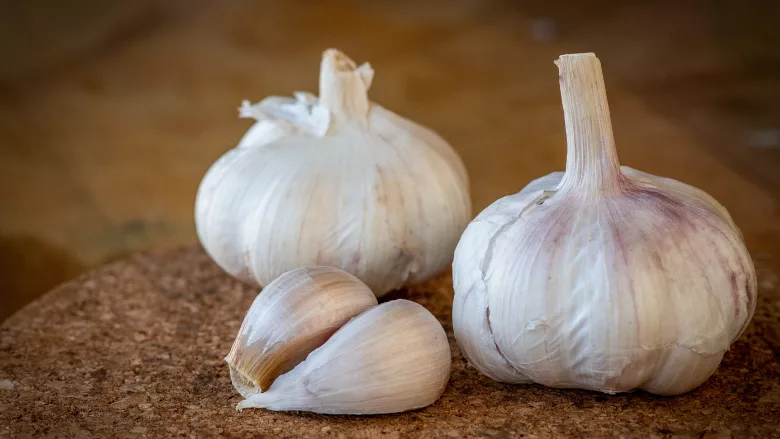
garlic bulbs and cloves
Image credit: wirestock via Freepik
March 19, 2026

Researchers at the University of Georgia (UGA) have developed a method combining microbiome data with artificial intelligence (AI) to determine the geographic origin of garlic, potentially offering a cost-effective approach to detecting food fraud.

The research, led by Xiangyu Deng, Ph.D., UGA Center for Food Safety Professor, began with an examination of the microbiota present on the surface of garlic bulbs. The researchers found that garlic carries a distinct bacterial signature reflective of the soil in which it was grown, enabling geographic identification based on microbial composition.

Garlic Fraud and Economic Drivers

Garlic has been identified as a target for food fraud due to trade protections and price differentials. The U.S. imposes a 376 percent tariff on garlic imported from China, incentivizing some suppliers to engage in trans-shipment, a practice in which products are routed through third countries and mislabeled to avoid tariffs.

Globally, food fraud has been estimated to result in annual economic losses of up to $15 billion.

Microbiome and Machine Learning Approach

The UGA researchers analyzed bacteria present on garlic by washing samples in a sterile solution and sequencing the microbial DNA. These microbial profiles were then input into a machine learning model trained to associate specific bacterial communities with geographic regions.

According to the researchers, the model correctly identified the origin of garlic samples approximately 90 percent of the time.

Because garlic grows underground and is not typically washed prior to distribution, it retains microbial characteristics of the surrounding soil, a concept commonly referred to as terroir.

Looking for quick answers on food safety topics?
Try Ask FSM, our new smart AI search tool.
Ask FSM →

Implications for Food Fraud Detection

The researchers noted that altering the microbial composition of garlic without compromising product quality would be difficult, making microbiome-based authentication a potentially robust tool against fraud.

The method was described as faster and more cost-effective than traditional analytical techniques and may support enforcement efforts by agencies such as U.S. Customs and Border Protection in verifying product origin claims.

Existing methods for determining garlic origin typically rely on detecting chemical or elemental markers, which require specialized equipment and extensive sample preparation.

Ongoing Research

Dr. Deng said the research team plans to continue exploring applications of microbiome analysis in food authentication.

He noted that, compared to established tools such as whole genome sequencing (WGS), practical applications for food microbiome analysis remain less defined, and additional work is needed to identify scalable use cases.


KEYWORDS: artificial intelligence food fraud machine learning microbiome study University of Georgia

Share This Story

Fsm purple logo 200x200

The Food Safety Magazine editorial team comprises Bailee Henderson, Digital Editor ✉ and Adrienne Blume, M.A., Editorial Director.

Recommended Content

JOIN TODAY
to unlock your recommendations.

Already have an account? Sign In

  • people holding baby chicks

    Serovar Differences Matter: Utility of Deep Serotyping in Broiler Production and Processing

    This article discusses the significance of Salmonella in...
    Methods
    By: Nikki Shariat Ph.D.
  • woman washing hands

    Building a Culture of Hygiene in the Food Processing Plant

    Everyone entering a food processing facility needs to...
    Food Prep/Handling
    By: Richard F. Stier, M.S.
  • graphical representation of earth over dirt

    Climate Change and Emerging Risks to Food Safety: Building Climate Resilience

    This article examines the multifaceted threats to food...
    Management
    By: Maria Cristina Tirado Ph.D., D.V.M. and Shamini Albert Raj M.A.
Manage My Account
  • eMagazine Subscription
  • Subscribe to Newsletters
  • Manage My Preferences
  • Website Registration
  • Subscription Customer Service

More Videos

Sponsored Content

Sponsored Content is a special paid section where industry companies provide high quality, objective, non-commercial content around topics of interest to the Food Safety Magazine audience. All Sponsored Content is supplied by the advertising company and any opinions expressed in this article are those of the author and not necessarily reflect the views of Food Safety Magazine or its parent company, BNP Media. Interested in participating in our Sponsored Content section? Contact your local rep!

close
  • The image shows a variety of fresh produce packaged in plastic trays and wrap.
    Sponsored byWaters Corporation

    PFAS-Free Food Packaging by August 2026

  • This image displays a multi-stage water filtration system designed to remove contaminants from drinking water.
    Sponsored byWaterdrop Filter

    The 4.0 ppt Era: Future-Proofing Your Food Supply Chain Against "Forever Chemicals"

  • The image displays a bottling plant production line, commonly used in the beverage industry for filling and packaging soft drinks.
    Sponsored byBIOIONIX

    Sustainability with ROI: A Beverage Producer Case Study in Water Savings

Popular Stories

recalled Pâté en Croûte products from France

Fatal Listeriosis Outbreak in France Linked to RTE Meats

ensuring ready-to-eat food safety eBook

eBook | Ensuring Ready-to-Eat Food Safety from Processing to Retail

RAW FARM-brand raw cheddar cheese product

Multistate E. coli Outbreak Likely Caused by Raw Cheese, but Manufacturer Refuses to Recall

Events

March 26, 2026

Continuous Pathogen Control: Enhancing Sanitation and Environmental Monitoring in Food Processing

Live: March 26, 2026, at 2:00 pm EST: This session explores the role of continuous airborne pathogen control technology in supporting sanitation and environmental monitoring programs within food processing environments.

March 31, 2026

Regulatory Risk, Ingredient Safety, and GRAS: What Companies Need to Act on Now

Live: March 31, 2026, at 11:00 am EDT: From this webinar, attendees will recognize patterns in food policy affecting dietary guidelines, UPFs, state legislative actions, and expected GRAS reform.

April 8, 2026

Foreign Material Contamination: Why In-Line Reinspection Isn't Enough

Live: April 8, 2026, at 11:00 am EDT: From this webinar, attendees will learn why reinspecting with in-line equipment is not sufficient when it comes to potential foreign material contamination.

View All

Products

Global Food Safety Microbial Interventions and Molecular Advancements

Global Food Safety Microbial Interventions and Molecular Advancements

See More Products

Related Articles

  • glass of milk and glass bottles of milk arranged against a pink background still life

    Novel Test Detects Bacteria in Milk with 98 Percent Accuracy Using AI, Sensor Technology

    See More
  • 3D art of U.S. outline filled in with flag hovering over surface with blue and red paint splatter

    Researchers Analyze Industry Responses to Emerging Patchwork of State-by-State Food Laws

    See More
  • person holding their hands cupped under water running from pipe outdoors into bucket

    Researchers Develop Nanocage-Based Filter That Removes 90 Percent of PFAS From Groundwater

    See More

Related Products

See More Products
  • 1119053595.jpg

    Food Safety for the 21st Century: Managing HACCP and Food Safety throughout the Global Supply Chain, 2E

  • 9781498721776.jpg

    Handbook of Food Processing: Food Safety, Quality, and Manufacturing Processes

  • 1118474600.jpg

    Practical Food Safety: Contemporary Issues and Future Directions

See More Products

Related Directories

  • Anritsu - Product Inspection & Detection

    Anritsu manufactures product inspection and detection equipment for food and pharma industries. Part of the Product Quality Assurance division of Anritsu Corp., we advance quality control programs with high-performing and reliable solutions. Our X-Ray Systems, Checkweighers, Metal Detectors, Combo Systems, Rejectors, and QuiCCA Software provide a superior ROI and ensure compliance with stringent quality control programs while protecting your brand. Our local branches in the US, Europe, Brazil, and Mexico are equipped with in-house service & parts dept., we deliver, install, and maintain in record time. With over 200,000 installations, we are the brand that is trusted to protect the safety and security of your customers.
×

Never miss the latest news and trends driving the food safety industry

Newsletters | Website | eMagazine

JOIN TODAY!
  • RESOURCES
    • Advertise
    • Contact Us
    • Directories
    • Store
    • Want More
  • SIGN UP TODAY
    • Create Account
    • eMagazine
    • Newsletters
    • Customer Service
    • Manage Preferences
  • SERVICES
    • Marketing Services
    • Reprints
    • Market Research
    • List Rental
    • Survey/Respondent Access
  • STAY CONNECTED
    • LinkedIn
    • Facebook
    • Instagram
    • X (Twitter)
  • PRIVACY
    • PRIVACY POLICY
    • TERMS & CONDITIONS
    • DO NOT SELL MY PERSONAL INFORMATION
    • PRIVACY REQUEST
    • ACCESSIBILITY

Copyright ©2026. All Rights Reserved BNP Media, Inc. and BNP Media II, LLC.

Design, CMS, Hosting & Web Development :: ePublishing