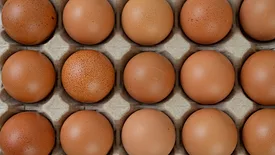
A multistate salmonellosis outbreak linked to eggs produced by California-based Country Eggs LLC has ended with 105 illnesses, 19 hospitalizations, and no deaths reported.
A new study has demonstrated that antimicrobial peptides derived from Lactobacillus rhamnosus can effectively reduce Salmonella in chickens under industry-relevant conditions. Adoption of the novel intervention could potentially help mitigate the growing public health threat that is antimicrobial resistance (AMR).
This episode of Food Safety Five discusses hoses as reservoirs for biofilms in food processing facilities, the presence of Listeria monocytogenes and Campylobacter on retail beef and chicken, a new Salmonella serovar database, and microplastics release from food contact materials.
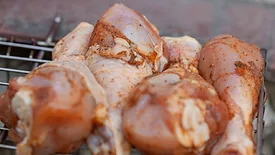
Despite increased regulatory efforts, Salmonella outbreaks linked to chicken remain a significant public health threat in the U.S., reaffirms a new study by CDC and USDA-FSIS researchers. The majority of outbreaks involved chicken parts and five serotypes of concern.
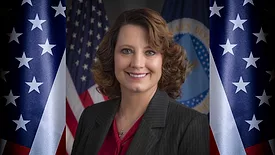
During an October 29 Senate confirmation hearing, Dr. Mindy Brashears, the presidential nominee for USDA Under Secretary for Food Safety, has provided insight into what her priorities will be if she is confirmed for the position—with Salmonella topping her list, followed by Listeria.
An analysis conducted by Cornell University researchers sought to better understand the genomic characteristics associated with an important reoccurring, emerging, and persistent (REP) Salmonella strain, S. Infantis REPJFX01, to help inform targeted interventions.
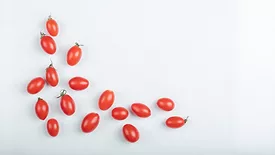
ECDC has provided an update on a multi-year, multi-national outbreak of Salmonella Strathcona linked to tomatoes from Sicily, Italy, which has grown to 437 confirmed cases in 17 European countries, plus the UK, the U.S., and Canada.
The Cornell College of Agriculture and Life Sciences (CALS) Food Safety Laboratory has developed the Salmonella Serovar Wiki—a web resource for global food safety professionals to rapidly access information about a given Salmonella serovar.
This episode of Food Safety Five discusses a UK proposed ban on Bisphenol A (BPA) in food contact materials, as well as two studies with global relevance: a successful clinical trial for a novel Salmonella vaccine and research demonstrating how nanoplastics enter the edible parts of crops.
A 2024 European foodborne illness outbreak caused by a rare Salmonella serotype, linked to leafy greens grown near a buffalo farm, exposed gaps in biosecurity, surveillance, and data transparency across the agri-food system.