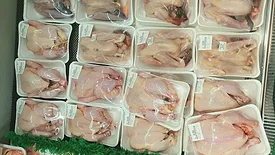
In this bonus episode of Food Safety Matters, we speak to Elanco Poultry Account Manager Vic Fox about the components and importance of a holistic integrated Salmonella control program in modern poultry operations, and how Elanco supports poultry producers with a multidisciplinary approach.
To better understand the characteristics and contributing factors of Salmonella outbreaks linked to fish and fishery products, researchers from FDA and CDC reviewed multistate foodborne illness outbreak investigation records from 2012–2021.
A study of Salmonella isolated from retail poultry meat has demonstrated a concerning presence of antimicrobial resistance (AMR) genes with the ability to transfer between bacteria.
A Salmonella outbreak linked to cage-free and organic eggs supplied by California-based August Egg Company has come to a close with 134 infections, 38 hospitalizations, and one death across ten states. All recalled eggs are now expired and should no longer be available in stores, per FDA.
Per Trace One’s analysis of FDA National Antimicrobial Resistance Monitoring System (NARMS) data, the U.S. states with the highest levels of Salmonella and Campylobacter contamination in retail meat are Georgia, South Carolina, and Tennessee.
In England, cases of both Campylobacter and Salmonella infection increased by 17.1 percent from 2023 to 2024—the highest rates seen in a decade—according to the latest UK Health Security Agency (UKHSA) annual data.
As of May 30, 45 people across 18 states have been infected, compared to 26 people across 15 states who had been infected with the outbreak strain of Salmonella as of May 19.
For those foodborne illnesses where a specific food item was identified, vegetables represented the single largest food category in terms of reported illness cases, followed by composite meals, seafood, and buffet food.
Traditionally, food safety laboratories have performed separate tests for each pathogen, which boosts costs and delays results. Hygiena’s Salmonella plus Cronobacter Detection LyoKit eliminates this inefficiency by detecting both pathogens in a single test.
.webp?height=168&t=1691503719&width=275 "FoodSafetyMattersFinal-900x550-(002).jpg")