A U.S. appeals court has ruled that USDA must amend the Bioengineered Food Disclosure Standard to close the loophole that exempts certain “ultra-processed” foods (UPFs) from displaying label disclosures for genetically modified (GM) ingredients. Additionally, the court ruled that QR code-only disclosures are unlawful without explicit on-label statements.
At its December 2025 Board Meeting, the UK Food Standards Agency (FSA) recommended that the agency support Codex proposals on precautionary allergen labeling (PAL) and seek UK alignment with Codex PAL recommendations.
Vitsab International AB has introduced Freshtag, a color-changing smart label that monitors time and temperature conditions for perishable foods along the supply chain.
The Reagan-Udall Foundation has published a report that captures key insights from stakeholder discussions on ways to improve U.S. infant formula safety and regulation, which were held to support FDA’s “Operation Stork Speed” efforts.
The Canadian Food Inspection Agency (CFIA) has enacted regulatory amendments with the goal of reducing red tape regarding labeling, traceability, and imports
for fresh fruit/vegetable producers and the poultry/egg industries—specifically, hatcheries.
Senate Bill 68 (SB 68), titled, the Allergen Disclosure for Dining Experiences Act (ADDE), will apply to chain restaurants with 20 or more locations by January 1, 2026.
Imagine a seemingly minor labeling error causing a nationwide recall, costing a food manufacturer millions, and damaging consumer trust. Undeclared allergens, incorrect nutritional information, and illegible date codes are just a few packaging mistakes that can trigger costly and reputation-damaging events.
A study has found that the majority of shark meat sold in the U.S. is mislabeled, and can oftentimes be the meat of endangered species that are dangerously high in mercury, like hammerhead.
A French analysis of anaphylaxis cases revealed eight foods causing a notable number of allergic reactions, which are not included on the EU list of major food allergens requiring mandatory labeling. The researchers recommend four of these hidden allergens for inclusion on the list.
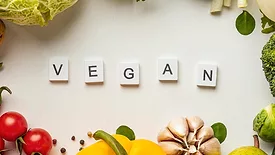
Intended to prevent misleading or inconsistent labeling of plant-based foods, the national vegan-certified labeling scheme is voluntary and is in line with ISO standards.