How Automation Enhances Food Packaging Compliance and Reduces Risk
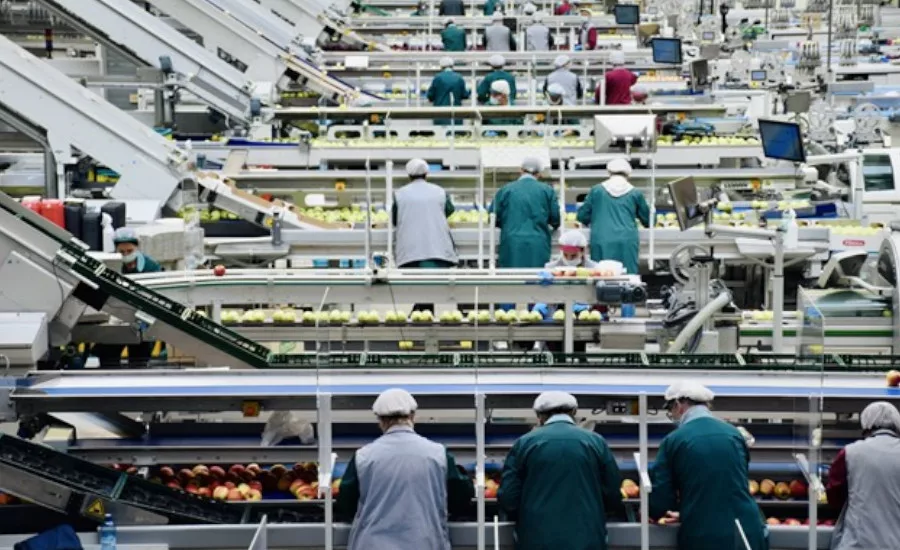
Imagine a seemingly minor labeling error causing a nationwide recall, costing a food manufacturer millions, and damaging consumer trust. Undeclared allergens, incorrect nutritional information, and illegible date codes are just a few packaging mistakes that can trigger costly and reputation-damaging events.
In today's highly regulated food industry, automation may be the key to enhancing food packaging compliance, thereby reducing the risk of recalls and helping manufacturers meet evolving regulatory demands.
Compliance Risks in Food Packaging
One label mistake can trigger a recall or penalty. The U.S. Food and Drug Administration (FDA) continues to warn that undeclared allergens remain a leading cause of food recalls,1 and recent allergen-focused warning letters show how quickly small errors can escalate. You need systems that verify, document, and respond in the same moment the risk appears.
The rules keep evolving. FDA announced its intention to extend the Food Traceability Final Rule compliance date by 30 months and then proposed a new deadline of July 20, 2028, without lowering expectations for recordkeeping or speed of traceback. The U.S. Department of Agriculture's Food Safety and Inspection Service (USDA-FSIS) also refreshed label approval guidance2 to help meat, poultry, and egg labels stay truthful.
Automation helps producers meet these food packaging regulations without slowing throughput. It brings machines, sensors, software, and controls into one rhythm.
How Does Automation Help With Regulatory Compliance in Food Packaging?
Technology can help slow audits or prevent trigger holds. The best automation solutions for compliance in food packaging turn those moments into clear, repeatable routines that the team can prove.
1. Label Accuracy and Instant Traceability
Looking for quick answers on food safety topics?
Try Ask FSM, our new smart AI search tool.
Ask FSM →
Vision systems read allergens, ingredients, barcodes, date codes, and languages at line speed—ensuring compliance with the Fair Packaging and Labeling Act by verifying the presence of required information on every package. Track-and-trace capabilities link every case to a lot and time stamp, and provide the detailed records needed to meet the requirements of the Food Traceability Rule (FSMA 204).
Ensuring clean containers is crucial for accurate date codes and proper label adhesion. To achieve this, manufacturers often use depalletizers to unload and accumulate containers, followed by twist rinse cages or ionized air to remove dust and debris. Companies like Ska Fabricating offer depalletizers, rinse cages, and ionized-air units specifically designed for canning and bottling lines, helping create a clean coding and labeling surface.
2. Consistent Quality Control
Automated inspection watches every item in the production line to ensure that all products meet quality standards and comply with good manufacturing practice (GMP) requirements. Cameras check caps, seams, and graphics, while checkweighers confirm fill targets, reducing the risk of non-compliant products reaching consumers.
3. Real-Time Data Collection and Reporting
Digital records log setpoints, rejects, holds, and releases as you run, providing a comprehensive audit trail that demonstrates compliance with GMP and other regulatory requirements. This way, you can export clean, time-stamped data on request.
4. Freeing Up the Workforce by Reducing Human Error
Long shifts and fast changeovers invite mistakes. Move the heavy, repetitive work to machines so that people can focus on checks that matter. A depalletizer, for instance, lifts cases off pallets—accumulation holds containers so the line stays steady instead of stop-and-go. Operators stop chasing jams and spend time on label, code, and seam checks.
Simple controls also guide each run. Fewer touches mean fewer mislabels, and a small crew can run more SKUs with consistent results.
5. Automated Cleaning and Sanitation
Automation runs cleaning and sanitation the same way every time to ensure consistent adherence to GMP requirements. Cleaning skids and ionized-air or vacuum rinsers follow recipe-based cycles between runs, while sensors verify time, flow, temperature, and pressure. All of these provide documented proof of compliance.
Why Having the Right Food Packaging Automation Tools Matters
The best automation solutions for compliance in food packaging enforce rules during operation and provide proof afterward. Systems check labels and codes in real time, track lots, log holds and releases, and then lock equipment if a step falls outside specification. You answer audits faster because the records already exist.
It also keeps material compliance tight. FDA assumes a food contact substance could hold 100 percent of its intended market3 when it estimates exposure, building a safety margin and raising the bar for documentation.
Automated workflows maintain approved material lists, capture supplier declarations, require change approvals, and store time-stamped records that can be retrieved on demand.
Regulatory Checkpoints You Should Not Ignore
Start with the basics you can prove. For consumer commodities, the Fair Packaging and Labeling Act requires three items on every covered package4—clear product identity, the responsible firm's name and place of business, and net quantity in metric and inch/pound units.
Use label templates, vision checks, and print verification to confirm those fields on every SKU and link them to lots in your e-records to speed audits and reduce hold risk.
Success Stories in Food Packaging Automation
Carolina Foods' new plant in Pineville wasn't just named "Plant of the Year" by Food Engineering for its shiny new equipment. It was recognized because the company built a system where automation drove everything. Carolina Foods boosted throughput and quality by implementing precise automation for long production runs5 and streamlining its audit process. Modern controls and data made compliance a natural byproduct of efficient operations.
Rain Pure Mountain Spring Water in Georgia also significantly increased throughput by implementing Ska Fabricating's cobot palletization and other packaging automation improvements. This automation allowed the company to optimize its packaging line operations and reallocate labor to other critical business areas.
Marumi Foods in Japan faced a similar challenge—inconsistent case packing that led to labeling errors and traceability gaps. The solution? A vertical, articulated robot. This wasn't just about replacing manual labor—it was about precision. By automating the case packing process,6 Marumi stabilized the steps, improved packing accuracy at high speeds, and ensured correct labels, intact cases, and cleaner traceability from start to finish.
Overcoming Barriers
Most plants move to automation in steps, not leaps. They start where risk and rework hit hardest, prove the gain, and then let the results fund the next upgrade. They track defects avoided, hours saved, and waste reduced so that each project builds a clear business case.
It's best to keep the experience simple for teams. Guided human-machine interfaces, required sign-offs, and automatic recordkeeping shorten training and give auditors clean proof. Use gear that shares basic signals with coders, vision, and your data hub so that every run ends with one complete record.
Build Everyday Proof of Control with Automation
In regulated packaging, proof beats promises. Automation turns control from a one-time audit task into a daily habit. Labels stay accurate, containers reach the filler clean, and every lot leaves a data trail you can trust. When drift appears, the system shows it in real time so that teams will act. Over time, that rhythm reshapes culture and risk—you stop chasing compliance at the end of the line and carry it through each step.
References
1 U.S. Food and Drug Administration (FDA). "The Current Food Allergen Landscape." Current as of May 5, 2021. https://www.fda.gov/food/conversations-experts-food-topics/current-food-allergen-landscape.
2 U.S. Department of Agriculture, Food Safety and Inspection Service (USDA-FSIS). "FSIS Guideline for Label Approval." March 2024. https://www.fsis.usda.gov/guidelines/2024-0001.
3 FDA. "Understanding How the FDA Regulates Substances that Come into Contact with Food." Current as of May 8, 2025. https://www.fda.gov/food/food-packaging-other-substances-come-contact-food-information-consumers/understanding-how-fda-regulates-substances-come-contact-food.
4 Federal Trade Commission (FTC). "Fair Packaging and Labeling Act: Regulations Under Section 4 of the Fair Packaging and Labeling Act." https://www.ftc.gov/legal-library/browse/rules/fair-packaging-labeling-act-regulations-under-section-4-fair-packaging-labeling-act.
5 Thompson-Richard, Alyse. "Sweet Success: How Carolina Foods Drives Growth with Automation." April 7, 2025. https://www.foodengineeringmag.com/articles/102950-sweet-success-how-carolina-foods-drives-growth-with-automation.
6 Kawasaki Robotics. "Case Study 'Marumi Foods Co., Ltd.'s Frozen Food Boxing-Boxing-Automating Boxing.'" https://kawasakirobotics.com/in/case-studies/case_marumifoods/.