Experts Recommend Four Hidden Food Allergens for Mandatory Labeling in EU
New research published in Clinical and Experimental Allergy1 has identified food allergens that are frequently implicated in food-induced anaphylaxis but are not regulated as major allergens in the EU, and recommended four foods to be considered for inclusion in EU mandatory labeling legislation.
At present, the European Regulation list for the mandatory labeling of foods (MLF list) includes 14 allergenic foods. This list, which is based solely on the frequency of allergic reactions, has not been updated since 2011.
Acknowledging a potential need to update the EU list of major food allergens subject to mandatory labeling, allergy experts from notable French hospitals who participate in the Allergy-Vigilance Network (AVN) analyzed food-induced anaphylaxis cases reported to AVN from 2002–2023. AVN collects data on cases of anaphylaxis submitted by members from French-speaking countries (mainly France, Belgium, and Luxembourg).
The researchers focused on “emerging food allergens” (EFAs), defined as allergenic foods responsible for at least 1 percent of anaphylaxis cases reported to AVN, and not included on the MLF list.
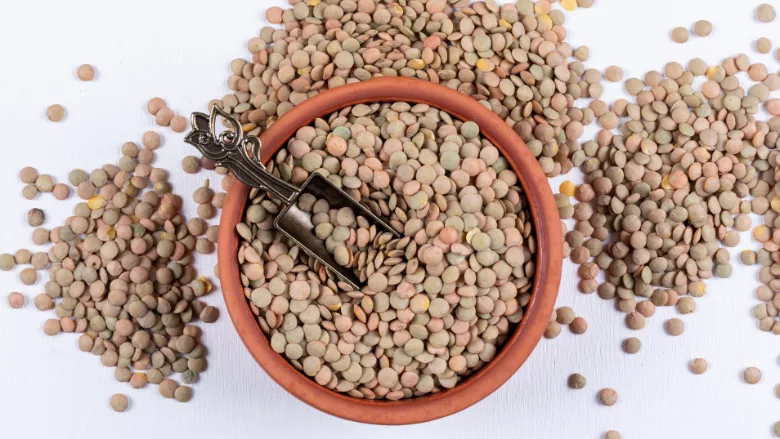
Of the 2,999 FIA cases recorded by AVN from 2002–2023, 413 (13.8 percent) were caused by eight EFAs. Specifically, goat/sheep milk caused 84 FIA cases or 2.8 percent, followed by buckwheat (71 cases or 2.4 percent), peas/lentils (55 cases or 1.8 percent), red meat via alpha-gal (50 cases or 1 percent), pine nuts (49 cases or 1.6 percent), kiwi (44 cases or 1.5 percent), beehive products (30 cases or 1 percent), and apples (30 cases or 1 percent).
The frequency of FIA cases caused by all eight of the EFAs was found to be higher than that of two allergens on the MLF list—mustard (causing 11 cases or 0.4 percent) and sulphites (five cases or 0.2 percent). Some EFAs ranked even higher—goat/sheep milk caused more FIA cases than seven of the MLF list allergens; buckwheat ranked above five MLF list allergens; and peas/lentils, alpha-gal, and pine nuts ranked above three MLF list allergens.
Based on their findings and considering the characteristics of EFAs and associated anaphylaxis cases (i.e., FIA severity and recurrence, EFA occurrence as a hidden allergen), the researchers recommend that at least four of the eight noted EFAs be considered for inclusion in the European MLF list: goat/sheep milk, buckwheat, peas/lentils, and pine nuts.
Per the researchers, the need for mandatory labeling does not seem as relevant for the other four EFAs. Due to the severity of associated FIAs, a case for alpha-gal mandatory labeling could be made—but it would be difficult to execute. Additionally, with few exceptions, foods containing alpha-gal (i.e., meat) are well known and easy to identify. This is also the case for kiwi, beehive products, and apple, which, in the FIA cases reviewed in the study, were consumed in their original form, without hidden presence.
Reference
- Sabouraud-Leclerc, D., Mariotte, D., et. al. "Food Anaphylaxis: Eight Food Allergens Without Mandatory Labelling Highlighted by the French Allergy-Vigilance Network." Clinical and Experimental Allergy 55 no. 8 (2025). https://doi.org/10.1111/cea.70130
Looking for quick answers on food safety topics?
Try Ask FSM, our new smart AI search tool.
Ask FSM →