Food Safety
search
Ask Food Safety AI
cart
facebook twitter linkedin
  • Sign In
  • Create Account
  • Sign Out
  • My Account
Food Safety
  • NEWS
    • Latest News
    • White Papers
  • PRODUCTS
  • TOPICS
    • Contamination Control
    • Food Types
    • Management
    • Process Control
    • Regulatory
    • Sanitation
    • Supply Chain
    • Testing and Analysis
  • PODCAST
  • EXCLUSIVES
    • Food Safety Five Newsreel
    • eBooks
    • FSM Distinguished Service Award
    • Interactive Product Spotlights
    • Videos
  • BUYER'S GUIDE
  • MORE
    • ENEWSLETTER >
      • Archive Issues
      • Subscribe to eNews
    • Store
    • Sponsor Insights
    • ASK FSM AI
  • WEBINARS
  • FOOD SAFETY SUMMIT
  • EMAG
    • eMagazine
    • Archive Issues
    • Editorial Advisory Board
    • Contact
    • Advertise
  • SIGN UP!
NewsContamination ControlFood TypeSupply ChainChemicalProduceGrowers/GAPs

Researchers Developing Tool to Help Farmers Reduce Reliance on Crop Protection Chemicals
By Food Safety Magazine Editorial Team
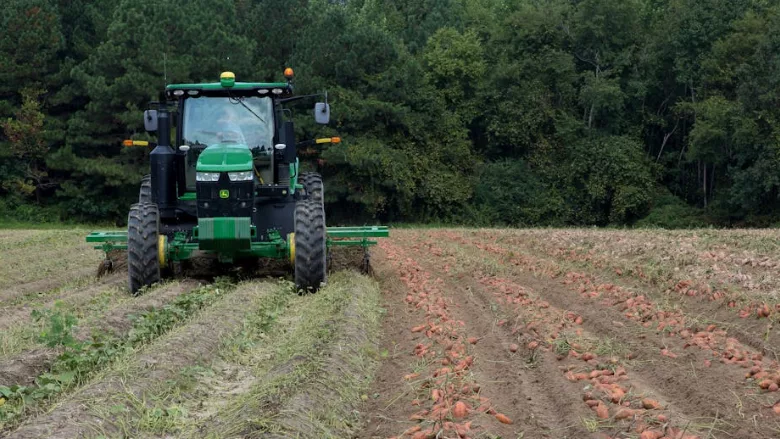
Tractor Working in Potato Field

Image credit: Mark Stebnicki via Pexels

October 29, 2024

In an effort to reduce reliance on chemical pesticides, researchers at Wageningen University and Research (WUR) are developing a tool to help farmers choose the most effective and sustainable crop protection approaches for their unique operations. The goal is to provide farmers access to an integrated crop management dashboard that will instantly display what combinations of measures they can use on their crops.

Integrated crop management involves the redesign of agricultural systems to prevent plant diseases, pests, and weeds with the most minimal use of chemicals as is possible. The strategy pieces together and optimizes measures like crop rotation sequencing, the selection of resistant crop varieties, and determining when and where to spray—the use of which can evolve over time. This method is in line with the European Farm-to-Fork strategy, which calls for a 50 percent reduction in the application of chemical crop protection agents.

WUR researchers believe such a reduction is possible, but not without growers practicing flexibility in their strategy and being willing to accept less stable yields. Hilfred Huiting, WUR crop protection researcher, shared that their trials so far have shown that integrated crop management will affect which crops are financially viable for growers in certain regions, and that there will be consequences affecting yield, quality, labor, and costs. At the same time, their trials have shown that the frequency at which crops are sprayed with chemicals could be reduced by half while maintaining acceptable levels of plant protection—which could come with beneficial environmental and public health outcomes.

For the trials, Mr. Huiting and WUR Strategic Advisor in Plant Sciences Marleen Riemens, Ph.D. are conducting an eight-year produce crop rotation with potatoes, sugar beets, onions, carrots, corn, and barley. They are focused on crop protection prioritization specific to each crop; for example, potatoes are less susceptible to weeds than other crops, and therefore weedkilling can take a backseat, but insect damage is a risk.

In the case of potatoes, aphids are controllable by introducing natural enemies, but the Colorado potato beetle is a challenge. To address a pest like the Colorado potato beetle, the researchers are testing the efficacy of a preventive approach targeting the beetles during the winters to affect their populations in the following season. The use of cameras could also be useful to identify hotspots for targeted spraying rather than indiscriminate spraying of entire fields.

Looking for quick answers on food safety topics?
Try Ask FSM, our new smart AI search tool.
Ask FSM →


KEYWORDS: pest control Wageningen University

Share This Story

Fsm purple logo 200x200

The Food Safety Magazine editorial team comprises Bailee Henderson, Digital Editor ✉; Adrienne Blume, M.A., Editorial Director; and Stacy Atchison, Publisher.

Recommended Content

JOIN TODAY
to unlock your recommendations.

Already have an account? Sign In

  • people holding baby chicks

    Serovar Differences Matter: Utility of Deep Serotyping in Broiler Production and Processing

    This article discusses the significance of Salmonella in...
    Microbiological
    By: Nikki Shariat Ph.D.
  • woman washing hands

    Building a Culture of Hygiene in the Food Processing Plant

    Everyone entering a food processing facility needs to...
    Food Prep/Handling
    By: Richard F. Stier, M.S.
  • graphical representation of earth over dirt

    Climate Change and Emerging Risks to Food Safety: Building Climate Resilience

    This article examines the multifaceted threats to food...
    Management
    By: Maria Cristina Tirado Ph.D., D.V.M. and Shamini Albert Raj M.A.
Manage My Account
  • eMagazine Subscription
  • Subscribe to eNewsletter
  • Manage My Preferences
  • Website Registration
  • Subscription Customer Service

More Videos

Sponsored Content

Sponsored Content is a special paid section where industry companies provide high quality, objective, non-commercial content around topics of interest to the Food Safety Magazine audience. All Sponsored Content is supplied by the advertising company and any opinions expressed in this article are those of the author and not necessarily reflect the views of Food Safety Magazine or its parent company, BNP Media. Interested in participating in our Sponsored Content section? Contact your local rep!

close
  • Salmonella bacteria
    Sponsored byThermoFisher

    Food Microbiology Testing Methods: Salmonella species

  • a diagram explaining indicator organisms
    Sponsored byHygiena

    How Proactive Listeria Testing Helps Prevent Six- and Seven-Figure Recalls

  • woman grocery shopping
    Sponsored byCorbion

    Designing Safety Into Every Bite: Proactive Risk Mitigation for Refrigerated Foods

Popular Stories

NRTE breaded stuffed chicken

USDA Indefinitely Delays Enforcement of Salmonella as Adulterant in Raw Breaded, Stuffed Chicken

non-conforming product

How to Handle Non-Conforming Product

spoonfuls of food ingredients

FDA’s Developing Rule to Tighten GRAS Oversight Moves to White House

Events

December 11, 2025

How to Develop and Implement an Effective Food Defense Strategy

Live: December 11, 2025 at 2:00 pm EDT: From this webinar, attendees will learn common areas where companies encounter challenges in their food defense strategies and how to address them.

May 11, 2026

The Food Safety Summit

Stay informed on the latest food safety trends, innovations, emerging challenges, and expert analysis. Leave the Summit with actionable insights ready to drive measurable improvements in your organization. Do not miss this opportunity to learn from experts about contamination control, food safety culture, regulations, sanitation, supply chain traceability, and so much more.

View All

Products

Global Food Safety Microbial Interventions and Molecular Advancements

Global Food Safety Microbial Interventions and Molecular Advancements

See More Products

Related Articles

  • lettuce field

    Researchers Developing Tool to Help Leafy Greens Growers Mitigate REP E. coli Strain

    See More
  • FDA's EDT

    FDA Releases Decision Tree Tool to Rank Risk of Chemicals in Food for Systematic Safety Evaluation

    See More
  • Hand of a person inspecting a crop in the field

    Wilbur-Ellis, Talam Biotech to Collaborate on U.S. Food Crop Solution for Heavy Metals

    See More

Related Products

See More Products
  • 9781138070912.jpg

    Trends in Food Safety and Protection

  • 9781498762878.jpg

    Food Safety and Protection

  • 9781032369990 (1).webp

    Food Safety Quality Control and Management

See More Products

Related Directories

  • Aptar Food + Beverage - Food Protection

    Aptar Food Protection manufactures premium active packaging systems and processing equipment, applying its unique material science expertise to develop advanced packaging systems that help extend freshness and enhance safety for fresh-cut fruits, vegetables and seafood. The company’s newest groundbreaking technology, InvisiShield™, offers an antimicrobial packaging solution that seamlessly integrates into sealed packages to protect fresh-cut produce and other food products from bacteria, fungi and viruses. Other offerings include trays, pouches, containers, slicing equipment, lidding film, and tray sealing technology.
  • Eagle Protect PBC

    Eagle Protect, the world's first B Corp certified disposable glove and clothing specialist, supplies high-quality, ethically sourced products, via a transparent and traceable supply chain, unique to the PPE industry. Eagle Protect’s proprietary Delta Zero glove quality testing program ensures a range of Eagle gloves adhere to the highest level of consistent glove safety and performance. Eagle's premium quality gloves enable customers to reduce overall glove cost while increasing overall efficiency and sustainability.
  • OneVision Corp.

    We develop, manufacture, sell and support can seam inspection and weighing systems to food and beverage canners, can makers, and specialty manufacturers (oil filter, aerosol cans, composite cans). Founded in 1994, we've installed and support more than 350 can seam inspection systems around the world.
×

Never miss the latest news and trends driving the food safety industry

eNewsletter | Website | eMagazine

JOIN TODAY!
  • RESOURCES
    • Advertise
    • Contact Us
    • Directories
    • Store
    • Want More
  • SIGN UP TODAY
    • Create Account
    • eMagazine
    • eNewsletter
    • Customer Service
    • Manage Preferences
  • SERVICES
    • Marketing Services
    • Reprints
    • Market Research
    • List Rental
    • Survey/Respondent Access
  • STAY CONNECTED
    • LinkedIn
    • Facebook
    • Instagram
    • X (Twitter)
  • PRIVACY
    • PRIVACY POLICY
    • TERMS & CONDITIONS
    • DO NOT SELL MY PERSONAL INFORMATION
    • PRIVACY REQUEST
    • ACCESSIBILITY

Copyright ©2025. All Rights Reserved BNP Media.

Design, CMS, Hosting & Web Development :: ePublishing