Food Safety
search
Ask Food Safety AI
cart
facebook twitter linkedin instagram youtube
  • Sign In
  • Create Account
  • Sign Out
  • My Account
Food Safety
  • NEWS
    • Latest News
    • White Papers
  • PRODUCTS
  • TOPICS
    • Contamination Control
    • Food Types
    • Management
    • Process Control
    • Regulatory
    • Sanitation
    • Supply Chain
    • Testing and Analysis
  • PODCAST
  • EXCLUSIVES
    • Food Safety Five Newsreel
    • eBooks
    • FSM Distinguished Service Award
    • Interactive Product Spotlights
    • Videos
  • BUYER'S GUIDE
  • MORE
    • NEWSLETTERS >
      • Archive Issues
      • Subscribe to eNews
    • Store
    • Sponsor Insights
    • ASK FSM AI
  • WEBINARS
  • FOOD SAFETY SUMMIT
  • EMAG
    • eMagazine
    • Archive Issues
    • Editorial Advisory Board
    • Contact
    • Advertise
  • SIGN UP!
NewsContamination ControlFood TypeChemicalReady-to-eat

Baby Food Company First in U.S. to Set EU-Aligned Safety Standards, Share Test Results for Contaminants

By Bailee Henderson
baby food jars

Image credit: Freepik

September 25, 2024

Marking the first time a U.S. baby food producer has made such a promise, company Little Spoon has launched a new transparency initiative called “Little Spoon, Big Change,” which commits the company to strict, EU-aligned food safety standards for toxic heavy metals, pesticides, and plasticizers. The company says it will never sell product that exceeds strict limits for more than 500 chemical contaminants of concern, and that testing results for its products will be made publicly available on its website.

Little Spoon states that it is the only company in the U.S. baby food sector to voluntarily set and verify such rigorous, transparent safety standards, and has called upon the rest of the industry to follow suit. "We won't see large-scale changes until companies like Little Spoon take action," said Bruce Lanphear, M.D., M.P.H., a researcher of childhood exposure to toxins who serves as a scientific advisor to Little Spoon. “Companies don't need to wait for regulations—they can lead the charge.”

Little Spoon, Big Change Transparency Initiative

Little Spoon launched its new transparency initiative in light of the lacking regulation of chemical contaminants in baby foods in the U.S., and in response to national consumer mistrust of and concern around baby food safety. In collaboration with Talker Research, Little Spoon conducted a survey of 2,000 parents across the country to assess their attitudes about baby food safety, finding that 95 percent of parents believe baby food brands should be doing more to address baby food safety concerns—and that only 9 percent report a “high degree” of trust in baby food companies.

In response to this mistrust, and in alignment with its stated belief that it is a “fundamental responsibility for industry” to ensure the highest standards of baby food safety, Little Spoon will begin testing and sharing results for every batch of baby food for more than 500 contaminants, including heavy metals, pesticides, and plasticizers. With no current federal regulations set to limit the levels of chemical contaminants in baby food in the U.S., the company has aligned its testing standards for heavy metals with those mandated in the EU.

Consumers will be able to view exact testing limits for each contaminant in all Little Spoon Babyblend products through a dashboard on www.littlespoon.com, alongside detailed ingredient sourcing information, with plans to roll out additional transparency measures for its product portfolio in the upcoming months. The company will also launch an AI-powered chatbot on its site to provide education for parents and answer questions about baby food safety.

U.S. Regulation of Chemical Contaminants in Baby Foods

At present, no explicit, legally enforceable limits for the vast majority of toxic heavy metals and chemical contaminants in baby foods exist in the U.S. At most, the U.S. Food and Drug Administration (FDA’s) Closer to Zero initiative—which aims to reduce dietary exposure to metals like arsenic, cadmium, mercury, and lead—has resulted in the agency setting an action level of 10 parts per billion (ppb) for inorganic arsenic in apple juice.

FDA has proposed or is considering other action levels for lead, arsenic, cadmium, and mercury for foods intended for babies and young children, but these levels have yet to be finalized. Action levels reflect levels at which FDA may regard a food as “adulterated” under the Federal Food, Drug, and Cosmetic Act; however, action levels are only a non-binding regulatory tool that the agency may consider, in addition to other information, when deciding whether to bring enforcement action (e.g., working with a manufacturer to remove a food from the market) against a product determined to be unsafe.

Looking for quick answers on food safety topics?
Try Ask FSM, our new smart AI search tool.
Ask FSM →

“The standards for children’s food in the U.S. are maddeningly low. Parents deserve better, and we are doing our part to finally deliver what they deserve,” said Ben Lewis, Little Spoon co-founder and CEO.

An article published in the August/September 2023 issue of Food Safety Magazine, which can be read here, discusses the evolving landscape of heavy metals regulation in the U.S., driven by growing consumer concern.

A History of Consumer Concern and Baby Food Safety Incidents in the U.S.

In 2023, in support of FDA’s Closer to Zero Initiative, a Michigan State University study found that children aged 6–24 months and 24–60 months are the U.S. populations most highly exposed to cadmium, with concerning levels of exposure when compared to guidelines set by regulatory agencies. This study is not an isolated piece of research, with high-profile watchdog groups conducting their own testing projects that have heightened public concern about toxic heavy metals and other chemicals in foods regularly consumed by children and babies:

  • Consumer Reports found that, from 2018 to 2023, the overall health risk to babies from metals in baby foods has not meaningfully reduced, with declines in certain heavy metals in some foods being offset by increases in others
  • In 2024, Consumer Reports raised alarm bells over the presence of perchlorate—a chemical used in rocket fuel, missiles, explosives, airbags, and some plastics—in children’s foods
  • In a 2023 analysis, the Environmental Working Group commissioned an independent, accredited laboratory to conduct tests on 14 oat-based products popularly eaten by young children, and found unsafe levels of pesticide chlormequat in many of the foods.

Testing results aside, recent food safety incidents affecting U.S. public health have validated worries about baby food safety. As discussed in the cover story from the August/September 2024 issue of Food Safety Magazine, cinnamon applesauce pouches contaminated with exceptionally high levels of lead poisoned hundreds of children across the U.S. in late 2023, pointing to vulnerabilities in the processes ensuring national food safety.


KEYWORDS: baby food pesticide residues toxic heavy metals

Share This Story

Baileehendersonmay23

Bailee Henderson is the Digital Editor of Food Safety Magazine, where she covers industry-relevant current events, regulatory affairs, and scientific developments. She also produces the Food Safety Five Newsreel. Notably, Bailee's coverage for Food Safety Magazine has been featured in national televised news segments including CBS Sunday Morning and MSNBC's Rachel Maddow Show. She can be reached at hendersonb@bnpmedia.com.

Recommended Content

JOIN TODAY
to unlock your recommendations.

Already have an account? Sign In

  • people holding baby chicks

    Serovar Differences Matter: Utility of Deep Serotyping in Broiler Production and Processing

    This article discusses the significance of Salmonella in...
    Contamination Control
    By: Nikki Shariat Ph.D.
  • woman washing hands

    Building a Culture of Hygiene in the Food Processing Plant

    Everyone entering a food processing facility needs to...
    Training
    By: Richard F. Stier, M.S.
  • graphical representation of earth over dirt

    Climate Change and Emerging Risks to Food Safety: Building Climate Resilience

    This article examines the multifaceted threats to food...
    Management
    By: Maria Cristina Tirado Ph.D., D.V.M. and Shamini Albert Raj M.A.
Manage My Account
  • eMagazine Subscription
  • Subscribe to Newsletters
  • Manage My Preferences
  • Website Registration
  • Subscription Customer Service

More Videos

Sponsored Content

Sponsored Content is a special paid section where industry companies provide high quality, objective, non-commercial content around topics of interest to the Food Safety Magazine audience. All Sponsored Content is supplied by the advertising company and any opinions expressed in this article are those of the author and not necessarily reflect the views of Food Safety Magazine or its parent company, BNP Media. Interested in participating in our Sponsored Content section? Contact your local rep!

close
  • This image displays a multi-stage water filtration system designed to remove contaminants from drinking water.
    Sponsored byWaterdrop Filter

    The 4.0 ppt Era: Future-Proofing Your Food Supply Chain Against "Forever Chemicals"

  • The image displays a bottling plant production line, commonly used in the beverage industry for filling and packaging soft drinks.
    Sponsored byBIOIONIX

    Sustainability with ROI: A Beverage Producer Case Study in Water Savings

  • factory
    Sponsored byIFC

    A Clean Break to Reset the Environment with Chlorine Dioxide

Popular Stories

workers and inspector in processing facility

Gearing Up for an FDA Inspection

woman looking at box of packaged food in grocery store seeming pensive

RFK Jr. Says Federal Ultra-Processed Foods Definition is Coming in April

magnifying glass hovering over question mark on yellow background

FDA Redacts All Key Details in Summary of Fatal Listeriosis Outbreak Linked to Produce

Events

March 26, 2026

Continuous Pathogen Control: Enhancing Sanitation and Environmental Monitoring in Food Processing

Live: March 26, 2026, at 2:00 pm EST: This session explores the role of continuous airborne pathogen control technology in supporting sanitation and environmental monitoring programs within food processing environments.

March 31, 2026

Regulatory Risk, Ingredient Safety, and GRAS: What Companies Need to Act on Now

Live: March 31, 2026, at 11:00 am EDT: From this webinar, attendees will recognize patterns in food policy affecting dietary guidelines, UPFs, state legislative actions, and expected GRAS reform.

April 8, 2026

Foreign Material Contamination: Why In-Line Reinspection Isn't Enough

Live: April 8, 2026, at 11:00 am EDT: From this webinar, attendees will learn why re-inspecting with in-line equipment is not sufficient when it comes to potential foreign material contamination.

View All

Products

Global Food Safety Microbial Interventions and Molecular Advancements

Global Food Safety Microbial Interventions and Molecular Advancements

See More Products

Related Articles

  • baby being spoon-fed jarred baby food

    Second U.S. Baby Food Producer Promises to Publish Product Test Results Guided by EU Standards

    See More
  • grocery shopper picking up cucumber

    Report Raises Concerns About U.S. Food Recall Timeliness, Transparency in 2025

    See More
  • coal power plant emissions next to water body

    EPA Rolls Back Mercury Emissions Standards with Implications for Fish Contamination

    See More

Related Products

See More Products
  • food safety.jpg

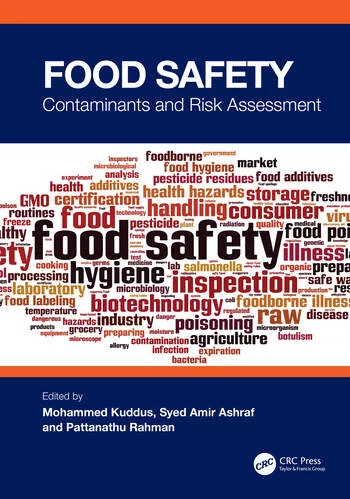
    Food Safety Contaminants and Risk Assessment

  • 1119053595.jpg

    Food Safety for the 21st Century: Managing HACCP and Food Safety throughout the Global Supply Chain, 2E

  • 1119160553.jpg

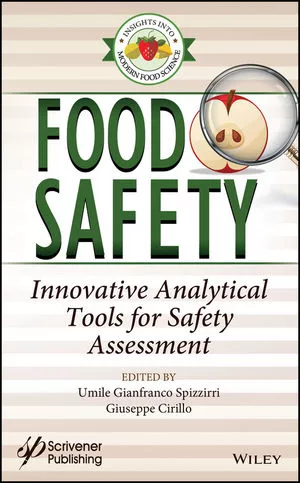
    Food Safety: Innovative Analytical Tools for Safety Assessment

See More Products

Related Directories

  • Share-ify

    Share-ify is the industry leading cloud platform for corporate compliance, food safety, and quality assurance. The Share-ify system offers customers a robust enterprise solution for data sharing, auditing, food safety, traceability, and product inspections between supply partners.
×

Never miss the latest news and trends driving the food safety industry

Newsletters | Website | eMagazine

JOIN TODAY!
  • RESOURCES
    • Advertise
    • Contact Us
    • Directories
    • Store
    • Want More
  • SIGN UP TODAY
    • Create Account
    • eMagazine
    • Newsletters
    • Customer Service
    • Manage Preferences
  • SERVICES
    • Marketing Services
    • Reprints
    • Market Research
    • List Rental
    • Survey/Respondent Access
  • STAY CONNECTED
    • LinkedIn
    • Facebook
    • Instagram
    • X (Twitter)
  • PRIVACY
    • PRIVACY POLICY
    • TERMS & CONDITIONS
    • DO NOT SELL MY PERSONAL INFORMATION
    • PRIVACY REQUEST
    • ACCESSIBILITY

Copyright ©2026. All Rights Reserved BNP Media.

Design, CMS, Hosting & Web Development :: ePublishing