Food Safety
search
Ask Food Safety AI
cart
facebook twitter linkedin instagram youtube
  • Sign In
  • Create Account
  • Sign Out
  • My Account
Food Safety
  • NEWS
    • Latest News
    • White Papers
  • PRODUCTS
  • TOPICS
    • Contamination Control
    • Food Types
    • Management
    • Process Control
    • Regulatory
    • Sanitation
    • Supply Chain
    • Testing and Analysis
  • PODCAST
  • EXCLUSIVES
    • Food Safety Five Newsreel
    • eBooks
    • FSM Distinguished Service Award
    • Interactive Product Spotlights
    • Videos
  • BUYER'S GUIDE
  • MORE
    • NEWSLETTERS >
      • Archive Issues
      • Subscribe to eNews
    • Store
    • Sponsor Insights
    • ASK FSM AI
  • WEBINARS
  • FOOD SAFETY SUMMIT
  • EMAG
    • eMagazine
    • Archive Issues
    • Editorial Advisory Board
    • Contact
    • Advertise
  • SIGN UP!
NewsContamination ControlTesting & AnalysisChemicalChemical

EFSA Publishes Annual Report on Pesticide Residue Levels in Food
By Bailee Henderson
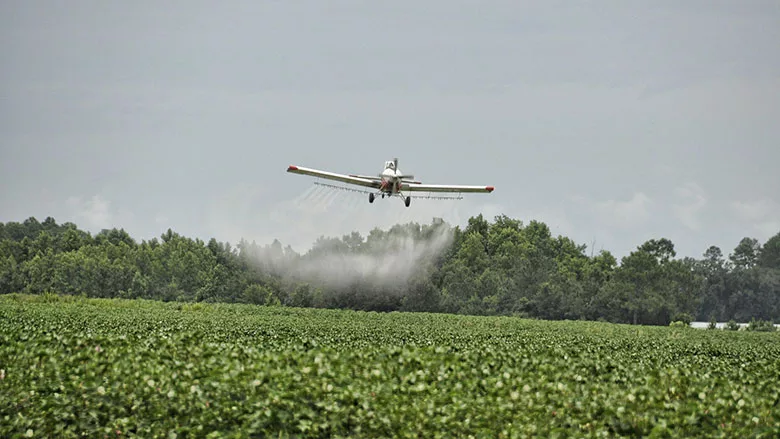
Cropdust
April 5, 2022

The European Food Safety Authority (EFSA) has published its 2020 EU report on pesticide residue levels in food, which is conducted annually and is carried out across EU Member States, Iceland, and Norway. The report summarizes the results of the EU-coordinated multiannual control program (EU MACP) and national control programs (MANCP). The latest report covers over 88,000 food samples collected in the EU in 2020. The results show that 94.9 percent of samples fell within legally permitted levels. 

EFSA also provides accessible charts and graphs that represent the data in its report.

EU MACP includes most food products consumed by EU citizens as indicated in the EU MACP Regulation (EU) 2019/533; the same food products are sampled randomly every three years (data from the 2020 report on pesticide residue levels in food can be compared with data from 2017 and 2014). For the 2020 EU MACP, 12 food products were tested: carrots, cauliflowers, kiwi fruits (green, red, yellow), onions, oranges, pears, potatoes, dried beans, brown rice, rye grain, bovine liver, and poultry fat. Of the 12,077 samples analyzed as part of EU MACP: 

  • 98.2 percent fell within legal limits for levels of pesticide residues
  • 68.5 percent did not show quantifiable levels of pesticide residues
  • 29.7 percent showed quantifiable level of pesticide residues that fell within legal limits
  • 1.7 percent exceeded maximum residue levels (MRLs), 0.9 percent of which were found to be non-compliant after consideration of the measurement uncertainty; consideration of the uncertainty of analytical measurements is required before sanctions are imposed on food business operators for infringement of the MRL legislation.

Of the samples analyzed by the reporting nations, on average, 60 percent were domestic products, 22 percent were products from other EU countries, 14 percent were products from third-party countries, and 4 percent were products of unknown origin. Some nations were unable to meet EU MACP sampling targets due to the COVID-19 pandemic.

In addition to data collected under EU MACP, EFSA’s annual report also includes data collected from official control activities carried out by individual EU Member States, Norway, and Iceland. Official control activities are conducted by authorities in EU nations to verify business compliance with agri-food chain legislation. MANCP are risk-based, targeting products based on previous legal infringements or increased likelihood of containing pesticide residues, and therefore do not necessarily represent the whole picture of residue levels in food sold across Europe. 

A total of 88,141 samples and 659 pesticides were analyzed, with an average of 264 pesticides per sample. Of the total quantity of analyzed samples:

  • 94.9 percent fell within legal limits for levels of pesticide residues
  • 54.6 percent did not show quantifiable levels of pesticide residues
  • 40.3 percent showed quantifiable level of pesticide residues that fell within legal limits
  • 5.1 percent exceeded MRLs, 3.6 percent of which were found to be non-compliant based on the measurement uncertainty.

The results of EU MACP and MANCP were used to estimate dietary exposure of EU consumers to pesticide residues. EFSA’s dietary risk assessment determined that food commodities analyzed in 2020 are unlikely to pose a concern for consumer health. EFSA still recommended several actions based on its findings, including taking corrective measures against EU non-approved pesticides, enacting import controls, and expanding or continuing monitoring of certain foods.


Looking for quick answers on food safety topics?
Try Ask FSM, our new smart AI search tool.
Ask FSM →


KEYWORDS: EFSA EU pesticide residues

Share This Story

Baileehendersonmay23

Bailee Henderson is the Digital Editor of Food Safety Magazine, where she covers industry-relevant current events, regulatory affairs, and scientific developments. She also produces the Food Safety Five Newsreel. Notably, Bailee's coverage for Food Safety Magazine has been featured in national televised news segments including CBS Sunday Morning and MSNBC's Rachel Maddow Show. She can be reached at hendersonb@bnpmedia.com.

Recommended Content

JOIN TODAY
to unlock your recommendations.

Already have an account? Sign In

  • people holding baby chicks

    Serovar Differences Matter: Utility of Deep Serotyping in Broiler Production and Processing

    This article discusses the significance of Salmonella in...
    Testing & Analysis
    By: Nikki Shariat Ph.D.
  • woman washing hands

    Building a Culture of Hygiene in the Food Processing Plant

    Everyone entering a food processing facility needs to...
    Food Prep/Handling
    By: Richard F. Stier, M.S.
  • graphical representation of earth over dirt

    Climate Change and Emerging Risks to Food Safety: Building Climate Resilience

    This article examines the multifaceted threats to food...
    International
    By: Maria Cristina Tirado Ph.D., D.V.M. and Shamini Albert Raj M.A.
Manage My Account
  • eMagazine Subscription
  • Subscribe to Newsletters
  • Manage My Preferences
  • Website Registration
  • Subscription Customer Service

More Videos

Sponsored Content

Sponsored Content is a special paid section where industry companies provide high quality, objective, non-commercial content around topics of interest to the Food Safety Magazine audience. All Sponsored Content is supplied by the advertising company and any opinions expressed in this article are those of the author and not necessarily reflect the views of Food Safety Magazine or its parent company, BNP Media. Interested in participating in our Sponsored Content section? Contact your local rep!

close
  • This image displays a multi-stage water filtration system designed to remove contaminants from drinking water.
    Sponsored byWaterdrop Filter

    The 4.0 ppt Era: Future-Proofing Your Food Supply Chain Against "Forever Chemicals"

  • The image displays a bottling plant production line, commonly used in the beverage industry for filling and packaging soft drinks.
    Sponsored byBIOIONIX

    Sustainability with ROI: A Beverage Producer Case Study in Water Savings

  • factory
    Sponsored byIFC

    A Clean Break to Reset the Environment with Chlorine Dioxide

Popular Stories

workers and inspector in processing facility

Gearing Up for an FDA Inspection

woman looking at box of packaged food in grocery store seeming pensive

RFK Jr. Says Federal Ultra-Processed Foods Definition is Coming in April

magnifying glass hovering over question mark on yellow background

FDA Redacts All Key Details in Summary of Fatal Listeriosis Outbreak Linked to Produce

Events

March 26, 2026

Continuous Pathogen Control: Enhancing Sanitation and Environmental Monitoring in Food Processing

Live: March 26, 2026, at 2:00 pm EST: This session explores the role of continuous airborne pathogen control technology in supporting sanitation and environmental monitoring programs within food processing environments.

March 31, 2026

Regulatory Risk, Ingredient Safety, and GRAS: What Companies Need to Act on Now

Live: March 31, 2026, at 11:00 am EDT: From this webinar, attendees will recognize patterns in food policy affecting dietary guidelines, UPFs, state legislative actions, and expected GRAS reform.

April 8, 2026

Foreign Material Contamination: Why In-Line Reinspection Isn't Enough

Live: April 8, 2026, at 11:00 am EDT: From this webinar, attendees will learn why re-inspecting with in-line equipment is not sufficient when it comes to potential foreign material contamination.

View All

Products

Global Food Safety Microbial Interventions and Molecular Advancements

Global Food Safety Microbial Interventions and Molecular Advancements

See More Products

Related Articles

  • baby taking a bottle

    EFSA to Advise on Cereulide Levels in Infant Formula Following Global Recall

    See More
  • sliced loaf of white bread

    Florida’s Latest Food Contaminant Testing Report Focuses on Glyphosate in Bread

    See More
  • brand new newborn drinking bottle

    Florida Launches Food Contaminant Testing Program with Report on Metals in Infant Formula

    See More

Related Products

See More Products
  • 9781138070912.jpg

    Trends in Food Safety and Protection

  • 1119237963.jpg

    Food Safety in China: Science, Technology, Management and Regulation

  • 9781498721776.jpg

    Handbook of Food Processing: Food Safety, Quality, and Manufacturing Processes

See More Products

Related Directories

  • North American Chemical Residue Workshop

    NACRW) formerly the Florida Pesticide Residue Workshop conducts an annual meeting for scientists particularly interested in trace level analysis of pesticides, veterinary drug residues, and other chemicals in food, animal feed, and environmental samples. The purpose of the meeting is to provide training, develop and improve technical knowledge, facilitate development and distribution of new analysis methods and techniques, and establish networking to promote professional cooperation between scientists of these interests.
  • OneVision Corp.

    We develop, manufacture, sell and support can seam inspection and weighing systems to food and beverage canners, can makers, and specialty manufacturers (oil filter, aerosol cans, composite cans). Founded in 1994, we've installed and support more than 350 can seam inspection systems around the world.
×

Never miss the latest news and trends driving the food safety industry

Newsletters | Website | eMagazine

JOIN TODAY!
  • RESOURCES
    • Advertise
    • Contact Us
    • Directories
    • Store
    • Want More
  • SIGN UP TODAY
    • Create Account
    • eMagazine
    • Newsletters
    • Customer Service
    • Manage Preferences
  • SERVICES
    • Marketing Services
    • Reprints
    • Market Research
    • List Rental
    • Survey/Respondent Access
  • STAY CONNECTED
    • LinkedIn
    • Facebook
    • Instagram
    • X (Twitter)
  • PRIVACY
    • PRIVACY POLICY
    • TERMS & CONDITIONS
    • DO NOT SELL MY PERSONAL INFORMATION
    • PRIVACY REQUEST
    • ACCESSIBILITY

Copyright ©2026. All Rights Reserved BNP Media.

Design, CMS, Hosting & Web Development :: ePublishing