Food Safety
search
Ask Food Safety AI
cart
facebook twitter linkedin instagram youtube
  • Sign In
  • Create Account
  • Sign Out
  • My Account
Food Safety
  • NEWS
    • Latest News
    • White Papers
  • PRODUCTS
  • TOPICS
    • Contamination Control
    • Food Types
    • Management
    • Process Control
    • Regulatory
    • Sanitation
    • Supply Chain
    • Testing and Analysis
  • PODCAST
  • EXCLUSIVES
    • Food Safety Five Newsreel
    • eBooks
    • FSM Distinguished Service Award
    • Interactive Product Spotlights
    • Videos
  • BUYER'S GUIDE
  • MORE
    • NEWSLETTERS >
      • Archive Issues
      • Subscribe to eNews
    • Store
    • Sponsor Insights
    • ASK FSM AI
  • WEBINARS
  • FOOD SAFETY SUMMIT
  • EMAG
    • eMagazine
    • Archive Issues
    • Editorial Advisory Board
    • Contact
    • Advertise
  • SIGN UP!
NewsManagementRisk Assessment

Researchers Urge Moving Away From ‘Zero-Risk’ Food Safety Mentality, Toward Consideration of Sustainability Trade-Offs
By Food Safety Magazine Editorial Team
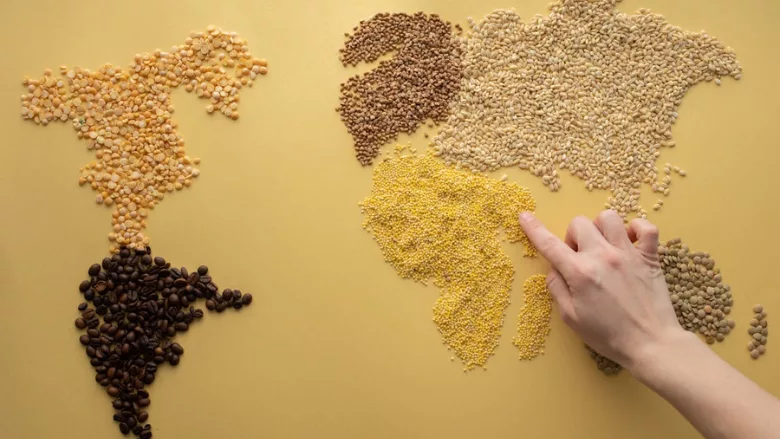
world map made of beans and grains with a person's hand touching the African continent
Image credit: Monstera Production via Pexels
March 19, 2026

A new peer-reviewed article published in Frontiers in Science argued that achieving “zero risk” in food safety is neither feasible nor desirable, and that overly stringent controls focused on single outcomes may introduce unintended environmental and economic consequences.

The paper, titled, “Balancing Food Safety and Sustainability: Trade-Off Risk Assessments and Predictive Modeling,” was published in Frontiers in Science. Led by Martin Wiedmann, Ph.D., D.V.M. of Cornell University, the paper was authored by a global team of researchers.

The authors emphasized that food safety must be evaluated within the broader context of sustainability and food security, within the “One Health” context, which recognizes the interconnected nature of human, animal, and environmental health. At the international level, food safety is already tied to broader public health and sustainability goals within the United Nations Sustainable Development Goals (UN SDGs) and the World Health Organization’s (WHO’s) Global Strategy for Food Safety. Despite this global recognition, the practical implementation of the One Health concept for decision-making throughout food systems remains limited.

Zero-Risk Approach May Lead to Unintended Consequences

The authors stated that advances in detection technologies have increased the ability to identify hazards at very low levels, including those unlikely to pose meaningful public health risks. However, responding to these detections with black-and-white, hazard-based actions, such as product disposal or recalls, may divert resources from higher-risk issues and contribute to food waste, increased costs, and environmental impacts.

Examples of such consequences outlined by the authors include the excessive disposal of food due to low-level microbiological contamination, increased energy use from stringent cold-chain requirements, and ecological impacts from interventions such as wildlife exclusion or water-intensive sanitation practices.

The study reiterated that all foods inherently carry some level of risk, and that food safety systems should aim for “sufficiently safe” food rather than the impossible goal of absolute safety.

Shift Toward Risk-Based Decision-Making

The researchers contrasted hazard-based approaches, which treat any detection of a pathogen as a trigger for action, with risk-based approaches that consider the likelihood and severity of illness based on exposure.

Looking for quick answers on food safety topics?
Try Ask FSM, our new smart AI search tool.
Ask FSM →

They noted that risk-based frameworks enable more targeted interventions, such as prioritizing controls for high-risk foods or processing steps, and establishing performance criteria, including pathogen reduction targets aligned with acceptable risk levels.

However, defining “acceptable” or “tolerable” risk remains a challenge, as it involves scientific, economic, and societal considerations.

Modeling and AI Tools Support Trade-Off Assessments

The study highlighted the growing role of quantitative microbial risk assessments (QMRAs), Monte Carlo simulations, and emerging tools—including geographic information system models, agent-based models, and artificial intelligence (AI)—in evaluating food safety risks.

These tools have been used to model contamination pathways, assess intervention effectiveness, and estimate public health outcomes, such as cases of illness or disability-adjusted life years (DALYs).

According to the authors, such tools can also support more comprehensive “trade-off risk assessments” that account not only for food safety outcomes, but also for economic costs, environmental impacts, and social factors.

Integrating Sustainability into Food Safety Decisions

The study emphasized that food safety interventions can have both benefits and trade-offs across multiple domains. For example, measures that reduce pathogen risk may increase emissions or food costs.

To address this complexity, the authors called for integrated frameworks that evaluate both risks and benefits within the same assessment, rather than treating them separately.

They also pointed to existing approaches, such as combining risk assessments with life-cycle assessments, to better capture environmental and public health impacts.

Risk Negotiation and Future Directions

The researchers also identified “risk negotiation” as an emerging approach to food safety decision-making, involving structured, evidence-based processes that incorporate stakeholder input and balance competing priorities.

They suggested that AI could support these processes by analyzing large datasets, simulating outcomes, and facilitating decision-making across stakeholders.

However, the authors noted that broader adoption of these approaches will require improved data availability, standardized methodologies, and greater alignment between scientific, regulatory, and societal expectations.

Implications for Industry and Regulators

The study concluded that food safety systems must evolve to address increasingly complex and systems-wide challenges, including climate change, resource constraints, and globalized food supply chains.

By adopting risk-based, trade-off-informed approaches, policymakers and industry stakeholders may be better positioned to develop food safety strategies that protect public health while supporting sustainability and food system resilience.

References

  1. Weidmann, M., et al. “Balancing food safety and sustainability: trade-off risk assessments and predictive modeling.” Frontiers in Science, 4:1720772 (March 2026). https://doi.org/10.3389/fsci.2026.1720772
  2. Allende, A. and Bover-Cid, S. “Beyond the zero-risk illusion: negotiating food safety in a One Health era.” Frontiers in Science, 4:1822369 (March 2026). https://doi.org/10.3389/fsci.2026.1822369
  3. Weidmann, M. and Sunil, S. “How Safe is Too Safe When it Comes to Our Food?” Frontiers for Young Minds, 14:1799945 (March 2026). https://doi.org/10.3389/frym.2026.1799945.
KEYWORDS: one health study sustainability

Share This Story

Fsm purple logo 200x200

The Food Safety Magazine editorial team comprises Bailee Henderson, Digital Editor ✉ and Adrienne Blume, M.A., Editorial Director.

Recommended Content

JOIN TODAY
to unlock your recommendations.

Already have an account? Sign In

  • people holding baby chicks

    Serovar Differences Matter: Utility of Deep Serotyping in Broiler Production and Processing

    This article discusses the significance of Salmonella in...
    Testing & Analysis
    By: Nikki Shariat Ph.D.
  • woman washing hands

    Building a Culture of Hygiene in the Food Processing Plant

    Everyone entering a food processing facility needs to...
    Management
    By: Richard F. Stier, M.S.
  • graphical representation of earth over dirt

    Climate Change and Emerging Risks to Food Safety: Building Climate Resilience

    This article examines the multifaceted threats to food...
    Best Practices
    By: Maria Cristina Tirado Ph.D., D.V.M. and Shamini Albert Raj M.A.
Manage My Account
  • eMagazine Subscription
  • Subscribe to Newsletters
  • Manage My Preferences
  • Website Registration
  • Subscription Customer Service

More Videos

Sponsored Content

Sponsored Content is a special paid section where industry companies provide high quality, objective, non-commercial content around topics of interest to the Food Safety Magazine audience. All Sponsored Content is supplied by the advertising company and any opinions expressed in this article are those of the author and not necessarily reflect the views of Food Safety Magazine or its parent company, BNP Media. Interested in participating in our Sponsored Content section? Contact your local rep!

close
  • The image shows a variety of fresh produce packaged in plastic trays and wrap.
    Sponsored byWaters Corporation

    PFAS-Free Food Packaging by August 2026

  • This image displays a multi-stage water filtration system designed to remove contaminants from drinking water.
    Sponsored byWaterdrop Filter

    The 4.0 ppt Era: Future-Proofing Your Food Supply Chain Against "Forever Chemicals"

  • The image displays a bottling plant production line, commonly used in the beverage industry for filling and packaging soft drinks.
    Sponsored byBIOIONIX

    Sustainability with ROI: A Beverage Producer Case Study in Water Savings

Popular Stories

recalled Pâté en Croûte products from France

Fatal Listeriosis Outbreak in France Linked to RTE Meats

ensuring ready-to-eat food safety eBook

eBook | Ensuring Ready-to-Eat Food Safety from Processing to Retail

RAW FARM-brand raw cheddar cheese product

Multistate E. coli Outbreak Likely Caused by Raw Cheese, but Manufacturer Refuses to Recall

Events

March 26, 2026

Continuous Pathogen Control: Enhancing Sanitation and Environmental Monitoring in Food Processing

Live: March 26, 2026, at 2:00 pm EST: This session explores the role of continuous airborne pathogen control technology in supporting sanitation and environmental monitoring programs within food processing environments.

March 31, 2026

Regulatory Risk, Ingredient Safety, and GRAS: What Companies Need to Act on Now

Live: March 31, 2026, at 11:00 am EDT: From this webinar, attendees will recognize patterns in food policy affecting dietary guidelines, UPFs, state legislative actions, and expected GRAS reform.

April 8, 2026

Foreign Material Contamination: Why In-Line Reinspection Isn't Enough

Live: April 8, 2026, at 11:00 am EDT: From this webinar, attendees will learn why reinspecting with in-line equipment is not sufficient when it comes to potential foreign material contamination.

View All

Products

Global Food Safety Microbial Interventions and Molecular Advancements

Global Food Safety Microbial Interventions and Molecular Advancements

See More Products

Related Articles

  • digital illustration of a globe growing off a branch like fruit

    FAO Illustrates Approach to Ensuring Food Safety While Moving Toward Circular Agri-Food Systems

    See More
  • Del Monte Moving Away from BPA, GMOs

    See More
  • round pieces of colorful bubble gum

    Titanium Dioxide Removed From California Food Safety Act; Four Chemicals Still Under Consideration for Ban

    See More

Related Products

See More Products
  • food safety.jpg

    Food Safety Contaminants and Risk Assessment

  • 1119071127.jpg

    Food Safety, Risk Intelligence and Benchmarking

  • food-safety-making.jpg

    Food Safety: Making Foods Safe and Free From Pathogens

See More Products

Events

View AllSubmit An Event
  • August 7, 2025

    Achieve Active Managerial Control of Major Risk Factors Using a Food Safety Management System

    On Demand: From this webinar, attendees will learn about changes to the FDA Food Code, which now includes a requirement for FSMS. 
View AllSubmit An Event

Related Directories

  • Institute of Food Technologists

    Since 1939, the Institute of Food Technologists (IFT) has served as the voice of the global food science community. IFT advocates for science, technology, and research to address the world’s greatest food challenges, guiding our community of more than 200,000. IFT convenes professionals from around the world – from producers and product developers to innovators and researchers across food, nutrition, and public health – with a shared mission to help create a global food supply that is sustainable, safe, nutritious, and accessible to all. IFT provides its growing community spanning academia, industry, and government with the resources, connections, and opportunities necessary to stay ahead of a rapidly evolving food system as IFT helps feed the minds that feed the world. For more information, please visit ift.org.
  • Spoiler Alert Food Safety

    Spoiler Alert! Food Safety is the premier cloud based digital food safety platform for iOS. This powerful yet simple to app allows you to; track food rotation, generate easy to read smart labels, track product life cycle and alert all of your mobile devices along the way. Our exclusive eco-friendly wash away labels rinse safely down the drain. Starting at just $9.99/mo. Start your 30 day FREE trial today. https://www.spoileralertfoodsafety.com Download in the App Store - Spoiler Alert Food Safety Developed in the U.S.A. by restaurant professionals, for restaurant professionals.
×

Never miss the latest news and trends driving the food safety industry

Newsletters | Website | eMagazine

JOIN TODAY!
  • RESOURCES
    • Advertise
    • Contact Us
    • Directories
    • Store
    • Want More
  • SIGN UP TODAY
    • Create Account
    • eMagazine
    • Newsletters
    • Customer Service
    • Manage Preferences
  • SERVICES
    • Marketing Services
    • Reprints
    • Market Research
    • List Rental
    • Survey/Respondent Access
  • STAY CONNECTED
    • LinkedIn
    • Facebook
    • Instagram
    • X (Twitter)
  • PRIVACY
    • PRIVACY POLICY
    • TERMS & CONDITIONS
    • DO NOT SELL MY PERSONAL INFORMATION
    • PRIVACY REQUEST
    • ACCESSIBILITY

Copyright ©2026. All Rights Reserved BNP Media, Inc. and BNP Media II, LLC.

Design, CMS, Hosting & Web Development :: ePublishing