Food Safety
search
Ask Food Safety AI
cart
facebook twitter linkedin instagram youtube
  • Sign In
  • Create Account
  • Sign Out
  • My Account
Food Safety
  • NEWS
    • Latest News
    • White Papers
  • PRODUCTS
  • TOPICS
    • Contamination Control
    • Food Types
    • Management
    • Process Control
    • Regulatory
    • Sanitation
    • Supply Chain
    • Testing and Analysis
  • PODCAST
  • EXCLUSIVES
    • Food Safety Five Newsreel
    • eBooks
    • FSM Distinguished Service Award
    • Interactive Product Spotlights
    • Videos
  • BUYER'S GUIDE
  • MORE
    • NEWSLETTERS >
      • Archive Issues
      • Subscribe to eNews
    • Store
    • Sponsor Insights
    • ASK FSM AI
  • WEBINARS
  • FOOD SAFETY SUMMIT
  • EMAG
    • eMagazine
    • Archive Issues
    • Editorial Advisory Board
    • Contact
    • Advertise
  • SIGN UP!
NewsFood TypeProcess ControlRegulatorySupply ChainPackagingProduce

California Legislation Tightens Produce Industry Requirements for Categorical Exclusion from EPR Program
By Food Safety Magazine Editorial Team
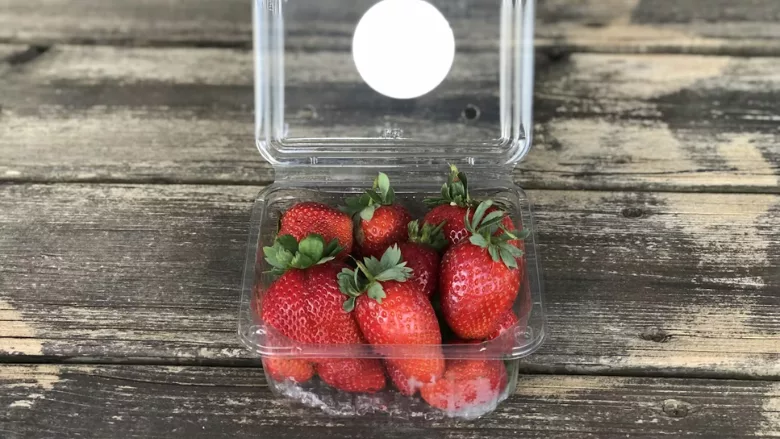
strawberries in a plastic carton that is open on a wooden table
Image credit: Boaz Yahav via Unsplash
February 6, 2026

CalRecycle has issued a final draft of Senate Bill 54 (SB 54), the Plastic Pollution Prevention and Packaging Producer Responsibility Act, which establishes an extended producer responsibility (EPR) program to manage packaging and single-use plastic, including food packaging and food contact materials (FCMs). Updates included in the new, final draft may impact the fresh produce industry’s ability to qualify for categorical exclusion.

The state EPR program would require all single-use packaging of any material to be 100 percent recyclable or compostable by 2032. Plastic single-use packaging would be required to reach 65 percent recycling rate by 2032 and 30 percent by 2028. The weight and number of plastic components would be permanently capped at a producer’s 2023 baseline and would be reduced by 25 percent by 2032, without provisions accommodating for business growth.

To qualify for categorical exclusion, fresh produce producers would be required to prove that:

  • No alternative packaging exists that is compliant with U.S. Food and Drug Administration (FDA) Food Safety Modernization Act (FSMA) food contact requirements and California law
  • Conflicts cannot be resolved through liners, coatings, or closures
  • A full package redesign would fail safety or legal requirements.

Producers would be expected to provide a formal notice to CalRecycle with FDA/FSMA citations and detailed documentation as to why packaging alternatives fail food safety goals.

Western Growers believes that new language in the draft act would “effectively eliminate” the categorical exclusion pathway that allowed fresh produce packaging to comply while meeting food safety requirements. Additionally, distributors selling into the state of California would be treated as “producers.”

Penalties for violation could reach $50,000 per day, and ongoing noncompliance may result in packaging bans.

Stakeholders can submit comments on the final draft act until February 13.

Looking for quick answers on food safety topics?
Try Ask FSM, our new smart AI search tool.
Ask FSM →


KEYWORDS: California Extended Producer Responsibility legislation Western Growers

Share This Story

Fsm purple logo 200x200

The Food Safety Magazine editorial team comprises Bailee Henderson, Digital Editor ✉ and Adrienne Blume, M.A., Editorial Director.

Recommended Content

JOIN TODAY
to unlock your recommendations.

Already have an account? Sign In

  • people holding baby chicks

    Serovar Differences Matter: Utility of Deep Serotyping in Broiler Production and Processing

    This article discusses the significance of Salmonella in...
    Meat/Poultry
    By: Nikki Shariat Ph.D.
  • woman washing hands

    Building a Culture of Hygiene in the Food Processing Plant

    Everyone entering a food processing facility needs to...
    Food Prep/Handling
    By: Richard F. Stier, M.S.
  • graphical representation of earth over dirt

    Climate Change and Emerging Risks to Food Safety: Building Climate Resilience

    This article examines the multifaceted threats to food...
    International
    By: Maria Cristina Tirado Ph.D., D.V.M. and Shamini Albert Raj M.A.
Manage My Account
  • eMagazine Subscription
  • Subscribe to Newsletters
  • Manage My Preferences
  • Website Registration
  • Subscription Customer Service

More Videos

Sponsored Content

Sponsored Content is a special paid section where industry companies provide high quality, objective, non-commercial content around topics of interest to the Food Safety Magazine audience. All Sponsored Content is supplied by the advertising company and any opinions expressed in this article are those of the author and not necessarily reflect the views of Food Safety Magazine or its parent company, BNP Media. Interested in participating in our Sponsored Content section? Contact your local rep!

close
  • The image shows a variety of fresh produce packaged in plastic trays and wrap.
    Sponsored byWaters Corporation

    PFAS-Free Food Packaging by August 2026

  • This image displays a multi-stage water filtration system designed to remove contaminants from drinking water.
    Sponsored byWaterdrop Filter

    The 4.0 ppt Era: Future-Proofing Your Food Supply Chain Against 'Forever Chemicals'

  • The image displays a bottling plant production line, commonly used in the beverage industry for filling and packaging soft drinks.
    Sponsored byBIOIONIX

    Sustainability with ROI: A Beverage Producer Case Study in Water Savings

Popular Stories

half shredded block of cheddar cheese and pile of cheese shreds on wooden cutting board

Patient Count in Raw Farm E. coli Outbreak Grows, Majority are Young Children

RAW FARM-brand raw cheddar cheese shreds

Amid E. coli Outbreak, Congress Urges FDA to Mandate Raw Cheese Recall

smiling employee in bottling factory looking at camera with arms crossed in front of production line

GFSI Unveils Updated Food Safety Culture Framework

foreign material webinar


Events

April 8, 2026

Foreign Material Contamination: Why In-Line Reinspection Isn't Enough

Live: April 8, 2026, at 11:00 am EDT: From this webinar, attendees will learn why reinspecting with in-line equipment is not sufficient when it comes to potential foreign material contamination.

April 16, 2026

Recordkeeping and Document Management for Food Safety Compliance

Live: April 16, 2026, at 2:00 pm EDT: From this webinar, attendees will learn why recordkeeping and document control are essential to food safety and business management.

May 11, 2026

The Food Safety Summit

Stay informed on the latest food safety trends, innovations, emerging challenges, and expert analysis. Leave the Summit with actionable insights ready to drive measurable improvements in your organization. Do not miss this opportunity to learn from experts about contamination control, food safety culture, regulations, sanitation, supply chain traceability, and so much more.

View All

Products

Global Food Safety Microbial Interventions and Molecular Advancements

Global Food Safety Microbial Interventions and Molecular Advancements

See More Products

Related Articles

  • compostable products

    California Tightens Requirements for Labeling Products as 'Compostable'

    See More
  • PMA launches Essentials of Produce Safety, an online training program uniquely designed for produce industry mid-level professionals

    PMA launches Essentials of Produce Safety, an online training program uniquely designed for produce industry mid-level professionals

    See More
  • researchers looking at CEA crops

    Actionable Takeaways for Industry From the Center for Produce Safety 2025 Research Symposium

    See More

Related Products

See More Products
  • food-safety-making.jpg

    Food Safety: Making Foods Safe and Free From Pathogens

  • 1118396308.jpg

    High Throughput Analysis for Food Safety

  • 1119053595.jpg

    Food Safety for the 21st Century: Managing HACCP and Food Safety throughout the Global Supply Chain, 2E

See More Products

Related Directories

  • Fayette Industrial

    At Fayette, we understand that cleanliness in your meat, poultry, pork, or ready-to-eat facility isn't just about passing inspections—it's about protecting your entire business. Our specialized contract sanitation services are tailored to your specific processing environment with rigorous pathogen prevention protocols and audit preparation that exceed regulatory standards.
  • Cannabis Safety & Quality (CSQ)

    CSQ is a safety-driven company setting reliable cannabis industry standards to help companies minimize risk, protect their brand, and provide the best product for their consumers. CSQ is the first accredited cannabis certification program, and it was built in 2020 to meet ISO requirements and regulatory cannabis requirements from seed-to-sale.
×

Never miss the latest news and trends driving the food safety industry

Newsletters | Website | eMagazine

JOIN TODAY!
  • RESOURCES
    • Advertise
    • Contact Us
    • Directories
    • Store
    • Want More
  • SIGN UP TODAY
    • Create Account
    • eMagazine
    • Newsletters
    • Customer Service
    • Manage Preferences
  • SERVICES
    • Marketing Services
    • Reprints
    • Market Research
    • List Rental
    • Survey/Respondent Access
  • STAY CONNECTED
    • LinkedIn
    • Facebook
    • Instagram
    • X (Twitter)
  • PRIVACY
    • PRIVACY POLICY
    • TERMS & CONDITIONS
    • DO NOT SELL MY PERSONAL INFORMATION
    • PRIVACY REQUEST
    • ACCESSIBILITY

Copyright ©2026. All Rights Reserved BNP Media, Inc. and BNP Media II, LLC.

Design, CMS, Hosting & Web Development :: ePublishing