Food Safety and Regulatory Aspects of State EPR Programs
State-level Extended Producer Responsibility (EPR) can push a circular economy, move the overall recycling effort forward, and lead to an increase in the use of recycled material
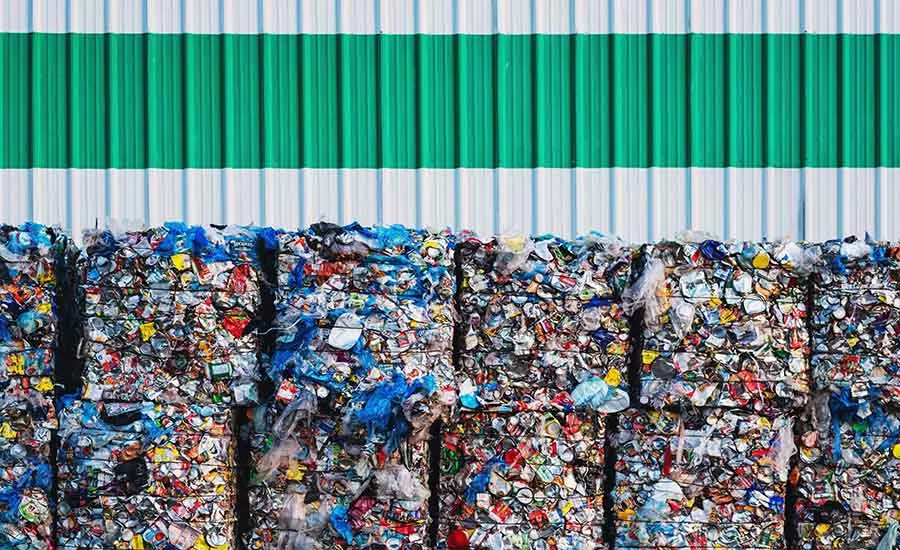
How likely are you to try some of the more unique new product mashups lining the aisles of the grocery store—such as mac 'n cheese ice cream, Worcester potato chips, or watermelon beef jerky? How about detergent-flavored protein bars? You might draw the line there, but such an unsavory combination could be an unintended consequence of attempts to fix our nation's ailing recycling system.
Several legislative and regulatory experiments underway across the country are likely to see positive results. However, how the technical terms related to recycling are defined and harmonized, as well as how industry is permitted to recycle, are things that legislators should keep in mind when considering policies affecting packaging of all shapes and sizes. This is key to developing a circular economy for plastic packaging.
Another, slightly more scientific question might be: How much of the plastic we use in the U.S. is recycled? Is it 50 percent? Twenty-five? The answer is that only nine percent of plastic waste is recycled.1 If this number surprises you, then you might be equally surprised to learn why. In the U.S., thousands of municipalities manage their own waste and recycling systems, creating a patchwork of programs where the rules of waste management are different based on something as basic as a ZIP code. Lack of consistent standards for the end-of-life management of materials, particularly for flexible plastic packaging (which tends to be one of the least recycled materials in our systems1), is a primary reason that the recycling system in the U.S. is broken.
One potential policy fix to our nation's recycling challenges is Extended Producer Responsibility (EPR), a policy approach that moves the management and funding of recycling systems from local governments to centralized organizations that are funded by the companies selling packaged products, which are labeled as "producers." EPR programs are primarily managed by public/private entities called Producer Responsibility Organizations (PRO), whereby government regulators work to advance the objectives of EPR policy in partnership with the producers who foot the bill. This allows the producers to also contribute their private sector expertise and capabilities to the management of these programs. The intended result is an increase in recycling rates—which improves the circularity of packaging—and a reduction in the use of virgin plastic.
We are seeing significant strides on increasing plastic recycling rates in Europe, where packaging EPR has been in place for decades. For example, Fost Plus, the Belgian packaging PRO, has helped the country achieve one of the highest plastic recycling rates in Europe, increasing dramatically from 29 percent in 2002 to 54 percent in 2022.2 When well-designed, and with the end goal of circularity in mind, good EPR can go a long way in supporting a badly needed increase in recycling rates.
California, Colorado, Maine, Minnesota, and Oregon have passed EPR laws, each of them unique, with different recycling targets and mandates to incentivize the circularity of packaging, paper, and foodservice materials. Oregon is the first state to come online with EPR, with the reporting requirements set at the end of March 2025. With a few exceptions, any company with global (not just Oregon) sales over $5 million will be required to register with the PRO and report the amount of paper and packaging sold in the state. That includes materials used for shipping, such as boxes, envelopes, labels, bubble wrap, packing peanuts, the plastic wrap holding the boxes together on a pallet, as well as owner's manuals, catalogs, promotional materials, and so on.
The only paper and packaging PRO approved in the U.S. so far is the Circular Action Alliance (CAA), an organization formed by 20 companies in the consumer goods industry. The CAA funded its creation in 2022 by pre-paying fees that will eventually be charged for packaging. CAA and state regulators will determine how much companies will be required to pay to fund their state's recycling system, which CAA will partner with the Oregon Department of Environmental Quality to run. Those fees begin in July 2025. Annual reporting, coupled with progress in the development of responsible end-markets, will determine updated fees each year. We will see similar policies unfold in other states over the coming months and years. One caveat: Maine's EPR is unique in that it has adopted a "full municipal reimbursement" model, under which local governments will continue to manage waste collection and recycling systems funded by producer fees. However, other state EPRs are similar at their cores.
Looking for quick answers on food safety topics?
Try Ask FSM, our new smart AI search tool.
Ask FSM →
The policy that has been established and that is developing in state houses goes further than paying fees into the same system that is currently producing such low recycling rates. Policymakers are adding in other requirements, including mandates on reducing the amount of material used for a product's packaging, thereby reducing the total amount of packaging used in the state by weight. They are also limiting the number of single-use packaging components, thereby increasing the amount of recycled content in packaging and, in California, even leading to the formation of a state Plastic Pollution Mitigation Fund. Producers and their suppliers will start footing the $500-million annual bill in California starting in 2027. Unfortunately, banning or severely limiting the development of types of recycling technologies are being lumped into EPR policies, as well (more on that later). As policymakers in more states consider their own EPR programs with a multitude of unique regulations, one might ask if there is an opportunity for federal harmonization.
Where are the Feds?
A national EPR program would be nearly impossible in the U.S., given the unique complexities of each state's recycling and waste systems. As assessments of packaging end-of-life management systems across multiple states have shown, there are fundamental differences in basic infrastructure, a lack of harmonized definitions or regulatory guidance, and varying economic drivers for managing waste vs. the prioritization of recycling in each state. These differences cannot be reconciled by national mandates. The notion of a national EPR program garnered just one very opaque paragraph in the 64-page National Strategy to Prevent Plastic Pollution released by the Environmental Protection Agency (EPA) in November 2024.3 A lack of direction from the federal government is nothing new, and stagnation on national recycling policy over the years has naturally inspired action at the state level across the country.
Where the federal government could help is by reforming and standardizing some of the most basic building blocks of recycling policy simply through national recycling definitions. This would help reduce the confusion caused by a patchwork system across the country, where regulations currently being written lack clarity on the most basic of terms that would improve harmonization of concepts. These terms include "recyclable," "compostable," and "refillable." In the absence of critical definitional guidance, many producers are left without clarity in adhering to various state regulations for which they will be held liable.
Many industries, including consumer packaged goods, have taken steps to reduce their plastic packaging and have set voluntary goals to not only maintain their efforts, but also move toward further reducing plastic usage. Alignment at the federal level would help companies further close the gap on these efforts and give Americans confidence that the packaging and products they are putting in their recycling will not end up in an incinerator. It is clear that consumers want to recycle, but they often end up "wish-cycling," because the country simply lacks the resources to do more. We need to create an overall circular economy—one that keeps products and materials in use and regenerates natural systems.
State-level EPR is a system that can push a circular economy, move the overall recycling effort forward, and lead to an increase in the use of recycled material—if it is designed to improve recycling access, collection rates, and overall materials circularity.
For this to happen, several factors would need to be in place:
- Standardized recycling programs across a state, region, or on a national scale
- Improvement in the underlying recycling system to deliver strong environmental outcomes
- A needs assessment with clear financial and performance targets over a specified period that is based on accurate data and science
- A role for an industry-funded, industry-run PRO to assess fees on packaging and determine where/how those funds are spent, and manage the system
- New funds raised for recycling improvements dedicated solely to recycling
- Development of a system with measured input from a wide array of stakeholders, including local, state, and federal government; packaging suppliers; the consumer packaged goods industry; and the waste and recycling industry
- More than one source of funding, which should be additive and target specific challenges in the recycling value chain; no single funding source should replace or supplant other funding sources
- Application to and account for a range of material types in the waste stream.
Improving Recycling Accountability and Accessibility
Two pieces of federal legislation introduced last year would provide the push the nation needs to move toward a more streamlined recycling process and provide a national blueprint for processes: the Recycling and Composting Accountability Act and the Recycling Infrastructure and Accessibility Program. Last year, the legislation, supported by a broad coalition of public and private sector groups, passed in the U.S. Senate but stalled in the House.4
The Recycling and Composting Accountability Act calls for the creation of a pilot program to improve recycling infrastructure in rural and underserved communities. Grant-funded programs would work toward increasing transfer stations and curbside recycling programs, and bringing down associated costs through public-private partnerships.
The Recycling Infrastructure and Accessibility Program would provide businesses with crucial data needed for innovation, inform investments in recycling infrastructure, and create a space for the federal government to play an important role in the value chain. The data would inform and strengthen important next steps, such as a "needs assessment" conducted by the EPA to inform infrastructure developments.
Together, the developments provided for across the two bills would empower Americans to take advantage of the economic and environmental benefits of recycling.
How Molecular Recycling Can Play a Part
Another piece of the puzzle hampering U.S. recycling rates lies in the reality that we are almost completely beholden to mechanical recycling. This process breaks down plastics, then separates, cleans and recombine them into plastic content. The issue with this process on its own, however, is that it fails to recover materials like low-density plastics—think flexible and firm packaging—and colored polyethylene terephthalate (PET). Making matters worse, mechanical recycling also struggles to recover some types of plastic as recycled content at a high enough quality to meet strict safety and quality standards set by the U.S. Food and Drug Administration (FDA).5
Plastic packaging remains the most reliable and adaptable solution for ensuring a national food supply with an extended shelf life. A major consideration in the safe use of recycled plastics for food contact applications is the potential for chemical contaminants in the recycled material to migrate into the food it contacts. Few of us would be interested in eating those protein bars from packaging material that came from a recycled detergent bottle if we were not sure the contaminants had been removed.
This is where molecular recycling comes in. It creates more space for a broader range of plastic materials to be recycled, including typically harder-to-recycle materials like films, flexibles, and colored plastics. While sometimes called advanced or chemical recycling, molecular recycling encompasses recycling technologies that purify or deconstruct plastic waste to create like-new building blocks for plastic products. Molecular recycling can take on a wider range of post-consumer plastic materials and divert them from landfills, thereby purifying and transforming them at the molecular level.
There are three classifications of molecular recycling technologies: purification, depolymerization, and conversion technologies.6
- Purification technology is a physical process that uses solvents to isolate the plastic polymers, removing additives and contaminants from the recycled content. Unlike other molecular recycling methods, purification does not break down the polymer bonds of the plastic's molecular structure. Since the molecular structure of the recovered plastic polymers remains unchanged, purification processes recover the same types of plastic materials that are input into the system.
- Depolymerization breaks down the plastic bonds at the molecular level. Depolymerization can occur through:
- Heat.
- A catalyst (e.g., a biological enzyme).
- A variety of other chemicals to break down the plastic's polymer bonds. Once these bonds are broken, depolymerization recovers selected plastic components in the form of monomers (single molecules) or oligomers (chains of partial bonds) and separates them from contaminants. This process recovers plastic building blocks that are then recombined to create recycled plastic with virgin plastic quality. An example is colored PET, which cannot be recovered through mechanical recycling.
- Conversion technology includes the well-known form of molecular recycling called pyrolysis. Like in depolymerization, conversion technologies break down the plastic's polymer bonds. However, conversion produces a wider variety of plastics by typically generating a hydrocarbon liquid. This hydrocarbon liquid can be used to make many types of plastic, including flexibles and films. It is important to note that both conversion and depolymerization do not occur in the presence of oxygen, distinguishing them from incineration.
Since it can include a wider berth of materials, molecular recycling offers a technology that supports food safety. Some mechanically recycled plastics cannot be used in product packaging that comes in direct contact with food, which will make it tougher to meet post-consumer resin (PCR) requirements that have been lumped in with EPR bills across the country (as well as established law in California, New Jersey, and Washington).
At present, FDA does not approve post-consumer resins directly. Instead, the Agency issues a Letter of Non-Objection (LNO), certifying that the collection, cleaning, and processing of post-consumer materials meet their standards for food-safe plastics. To obtain an LNO, recyclers must describe their recycling process, provide surrogate contaminant testing results, and explain the intended use of the recycled plastic. Increasingly, companies seeking an LNO for food contact packaging are utilizing molecular recycling. Incorporating molecular recycling is an integral step in boosting recycling rates, and achievement of true circularity cannot exist without it.
So, when will "90 percent" actually be the answer to the question, "How much of the plastic we use in the U.S. is recycled?" It will take a suite of policies mentioned above, taken into careful consideration separately from EPR, including avoiding the pitfalls of banning molecular recycling or labeling such facilities as hazardous waste sites. If we support advanced recycling technologies, then we can improve the path to a circular packaging economy and avoid detergent-flavored protein bars.
References
- U.S. Environmental Protection Agency (EPA). "Plastics: Material-Specific Data." https://www.epa.gov/facts-and-figures-about-materials-waste-and-recycling/plastics-material-specific-data.
- Statbel. "80% of Packaging Waste is Recycled in Belgium." November 27, 2024. https://statbel.fgov.be/en/news/80-packaging-waste-recycled-belgium.
- EPA. "National Strategy to Prevent Plastics Pollution." November 2024. https://www.epa.gov/system/files/documents/2024-11/final_national_strategy_to_prevent_plastic_pollution.pdf.
- U.S. Senate Committee on Environment & Public Works. "What They Are Saying: Broad Support for Recycling and Composting Legislation." March 18, 2024. https://www.epw.senate.gov/public/index.cfm/2024/3/what-they-are-saying-broad-support-for-recycling-and-composting-legislation.
- U.S. Food and Drug Administration (FDA). "Recycled Plastics in Food Packaging." Current as of October 5, 2020. https://www.fda.gov/food/packaging-food-contact-substances-fcs/recycled-plastics-food-packaging.
- Closed Loop Partners. "What Is Chemical Recycling, Why Does It Have So Many Different Names, and Why Does It Matter?" August 15, 2023. https://www.closedlooppartners.com/what-is-chemical-recycling/.
Mark Bescher, M.Sc. is the founder of Legacy Public Policy, a packaging consultancy. Most recently, he was the head of U.S. Government Affairs at Mondelez International. In that role, he developed and advocated for policy positions with local, state, and federal policymakers in coordination with critical industry associations and partners. Mark has served on the Board of Directors of AMERIPEN, the EPR Leadership Forum, and the Circular Action Alliance (CAA). Prior to joining Mondelez, Mark was Government Relations Manager for Unilever and before that served as the Manager of Government Relations for the Global Alliance for Improved Nutrition (GAIN). He began his government relations career in regulatory affairs at Bombardier and in advocacy at the National Association of Manufacturers. Mark holds a B.A. degree from the University of Notre Dame and an M.Sc. degree in Public Policy from the University of Oxford.