Food Safety
search
Ask Food Safety AI
cart
facebook twitter linkedin instagram youtube
  • Sign In
  • Create Account
  • Sign Out
  • My Account
Food Safety
  • NEWS
    • Latest News
    • Sponsored Insights
    • Sponsored White Papers
  • PRODUCTS
  • TOPICS
    • Contamination Control
    • Food Types
    • Management
    • Process Control
    • Regulatory
    • Sanitation
    • Supply Chain
    • Testing and Analysis
  • PODCAST
  • EXCLUSIVES
    • Food Safety Five Newsreel
    • eBooks
    • FSM Distinguished Service Award
    • Interactive Product Spotlights
    • Videos
  • BUYER'S GUIDE
  • MORE
    • NEWSLETTERS >
      • Archive Issues
      • Subscribe to eNews
    • Store
    • ASK FSM AI
  • WEBINARS
  • FOOD SAFETY SUMMIT
  • EMAG
    • eMagazine
    • Archive Issues
    • Editorial Advisory Board
    • Contact
    • Advertise
  • SIGN UP!
NewsRegulatoryFDAInspection

Senators Question FDA About Reduced Funding for State, Local Food Safety Programs

By Food Safety Magazine Editorial Team
$100 bill under magnifying glass

Image credit: 8photo via Freepik

January 9, 2025

A letter signed by four U.S. senators was recently sent to Jim Jones, the U.S. Food and Drug Administration’s (FDA’s) Deputy Commissioner for Human Foods, about the agency’s plans for reduced funding for state and local food safety programs. The letter was signed by Senators Richard Blumenthal (D-Connecticut), Tina Smith (D-Minnesota), Cory Booker (D-New Jersey), and Dick Durbin (D-Illinois).

FDA’s Budgetary Constraints for State and Local Food Safety Activities

Mr. Jones has addressed this budgetary challenge in previous stakeholder engagement meetings. In an April 2024 webinar hosted by the Alliance for a Stronger FDA, Mr. Jones explained that, over the past five years, FDA has given states approximately $119 million annually for their food safety initiatives—$36 million more than the agency actually accounted for in its yearly budgets ($83 million), because FDA was pulling from surplus money in the budget that was otherwise going unused. Fiscal Year (FY) 2025 is the first year in five years that the states are not receiving this extra funding. This will result in what is effectively a 30 percent reduction in funds from FDA given to its state partners for food safety functions.

During another webinar in October, Mr. Jones shared that FDA and state public health agencies are currently in discussions about how their limited funds could best be spent to ensure priority work is carried out. However, he also recognized that the challenge is regrettable, and shared that, although FDA is talking to appropriators and looking inside the agency for resources, he is “not optimistic” about the outcomes of either of those two strategies.

According to the Senators’ letter, FDA has also significantly reallocated funding meant for the Office of Inspections and Investigation (OII), formerly known as the Office of Regulatory Affairs’ Office of Training, Education, and Development (ORA’s OTED) by about 65 percent or $10 million. This department is responsible for training of investigators and inspections at the federal, state, and local levels.

Senators Press FDA for Answers

In the Senators’ letter to FDA, they cited that state and local agencies perform the majority of food inspections, including 50 percent of food processing facility inspections, 90 percent of produce safety inspections, and 100 percent of retail food inspections. In this context, the Senators underline that the U.S. House and Senate included language in their FY 2025 draft appropriations bills directing FDA to maintain funding for state and local programs.

“While we appreciate that you may need to occasionally reallocate resources based on programmatic needs, we are concerned that the full impact of the proposed cuts to state and local programs has not been taken into account and that the agency has failed to fully consider alternative options,” the letter stated. The senators went on to ask FDA to answer five questions, requesting a response by February 16, 2025:

  1. Where have the funds intended for OII been reallocated?
  2. With the proposed $34 million reduction to state and local programs, has OII and the Human Foods Program (HFP) determined which state-led food safety initiatives will no longer be funded and how these activities will be handled by current OII/Human Foods Program (HFP) staff?
  3. What activities has the agency undertaken to revise processes, reduce bureaucracy, and improve efficiency during the implementation of the new HFP that now includes OII?
  4. What are the specific number and cost of OII investigator positions for domestic and foreign inspections, as well as the number of supervisory staff and their pay history?
  5. Has the agency cross-referenced the functions and responsibilities of HFP with OII to determine what programs are no longer necessary, and has the agency determined what programs can be cut with minimal public health impacts?

Data shows that FDA has been falling short of its inspection targets for years. In a January 2025 report published by the U.S. Government Accountability Office (GAO), it was revealed that the agency has not met its Food Safety Modernization Act (FSMA)-mandated inspection goals since 2018. FDA officials told GAO that the agency needs more inspectors to meet its targets.

Looking for quick answers on food safety topics?
Try Ask FSM, our new smart AI search tool.
Ask FSM →


KEYWORDS: budgets Congress

Share This Story

Fsm purple logo 200x200

The Food Safety Magazine editorial team comprises Bailee Henderson, Director of Content Strategy and news editor ✉, and Adrienne Blume, M.A., Director of Editorial and Industry Engagement.

Recommended Content

JOIN TODAY
to unlock your recommendations.

Already have an account? Sign In

  • people holding baby chicks

    Serovar Differences Matter: Utility of Deep Serotyping in Broiler Production and Processing

    This article discusses the significance of Salmonella in...
    Methods
    By: Nikki Shariat Ph.D.
  • woman washing hands

    Building a Culture of Hygiene in the Food Processing Plant

    Everyone entering a food processing facility needs to...
    Personal Hygiene/Handwashing
    By: Richard F. Stier, M.S.
  • graphical representation of earth over dirt

    Climate Change and Emerging Risks to Food Safety: Building Climate Resilience

    This article examines the multifaceted threats to food...
    Risk Assessment
    By: Shamini Albert Raj M.A. and Maria Cristina Tirado Ph.D., D.V.M.
Manage My Account
  • eMagazine Subscription
  • Subscribe to Newsletters
  • Manage My Preferences
  • Website Registration
  • Subscription Customer Service

More Videos

Sponsored Content

Sponsored Content is a special paid section where industry companies provide high quality, objective, non-commercial content around topics of interest to the Food Safety Magazine audience. All Sponsored Content is supplied by the advertising company and any opinions expressed in this article are those of the author and not necessarily reflect the views of Food Safety Magazine or its parent company, BNP Media. Interested in participating in our Sponsored Content section? Contact your local rep!

close
  • an automated industrial production line used in a modern food factory
    Sponsored byIFC

    A Formula for Food Processing Pest Management

  • fly
    Sponsored byOrkin Commercial

    Fly Control in Food Processing Facilities: Managing Seasonal Food Safety Risks

  • Darkling Beetle
    Sponsored byElanco Animal Health

    Integrated Pest Management: Protecting Poultry Operations as Seasons Change

Popular Stories

taco bell storefront

FDA Says a Taco Bell Iceberg Lettuce Supplier is Source of Five-State Cyclosporiasis Outbreak

Cyclospora cayetanensis oocyst

Cyclospora Cases Climb, But Actual Number Unclear as CDC Reporting Lags Behind States

UN building in geneva

Codex Publishes Strategic Plan for 2026–2031

building a skilled workforce ebook

Events

July 21, 2026

Using AI Responsibly in Food Safety Management Systems

Live: July 21, 2026 at 2:00 pm EDT: This webinar will provide participants with guidance on how to effectively use generative artificial intelligence (AI) tools to develop key components of a food safety management system (FSMS).

August 6, 2026

Beyond Sanitation: Understanding the Hidden System Conditions That Allow Pathogens to Persist

Live: August 6, 2026 at 2:00 pm EDT: Attend this webinar to learn strategies for strengthening environmental control programs through a layered approach to pathogen management.

August 11, 2026

Beyond Sanitization: Reducing Contamination Risk Without Raising Operating Cost

Live: August 11, 2026 at 2:00 pm EDT: Attend this webinar to learn why ambient air is the largest and most overlooked contamination zone in food processing, and what it costs you between scheduled cleans.

View All

Products

Global Food Safety Microbial Interventions and Molecular Advancements

Global Food Safety Microbial Interventions and Molecular Advancements

See More Products

Related Articles

  • NEHA Awarded FDA Food Safety Cooperative Agreement to Build Capacity for State and Local Regulatory Agencies

    See More
  • white coat doctor holding clipboard

    Study: CDC Funding for State-Level Programs Improves Foodborne Illness Outbreak Detection

    See More
  • amy klobuchar official portriat

    Senator Klobuchar Urges CDC, FDA to Restore Food Safety Programs Amid Cyclosporiasis Outbreak

    See More

Related Products

See More Products
  • 9781138198463.jpg

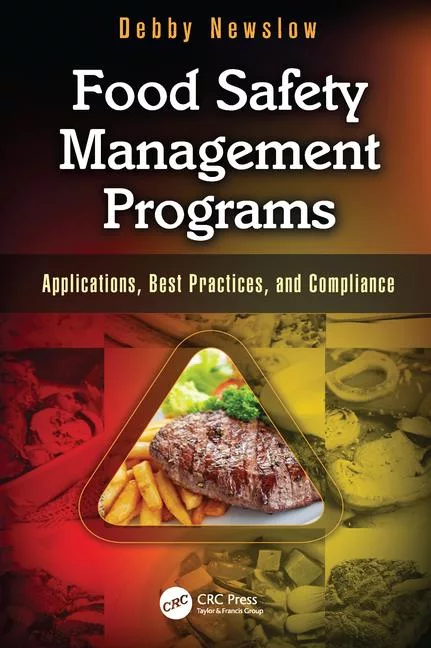
    Food Safety Management Programs: Applications, Best Practices, and Compliance

  • 1119053595.jpg

    Food Safety for the 21st Century: Managing HACCP and Food Safety throughout the Global Supply Chain, 2E

  • 1119160553.jpg

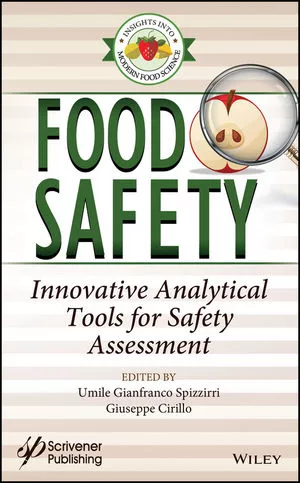
    Food Safety: Innovative Analytical Tools for Safety Assessment

See More Products

Related Directories

  • Michigan State University Online Food Safety Program

    The MSU Online Food Safety program offers a master’s degree and a graduate certificate, both fully online and grounded in a science driven curriculum. Designed for working professionals, the program provides flexible learning while equipping students with practical knowledge to address evolving food safety and public health challenges with confidence.
  • Active Food Safety

    Active Food Safety consists of an experienced team of food safety professionals who are thought-leaders in the food industry, and have each led enterprise level food safety management programs in several of the most well-known and respected brands in the food industry. We continuously help our clients ensure food safety based on proven business best practices designed specifically to the brand - to maximize risk reduction to prevent foodborne disease illnesses and outbreaks, to meet all government regulatory requirements, and to improve sales and brand reputation.
  • Institute for Food Safety and Health (IFSH) - Illinois Tech

    IFSH is a one-of-a-kind applied food science research consortium comprised of the Illinois Tech, the U.S. FDA, and the food industry. In collaboration with the FDA, we provide stakeholders with the opportunity to develop and exchange knowledge, experience, and expertise in the areas of food safety, food defense, and nutrition.
×

Never miss the latest news and trends driving the food safety industry

Newsletters | Website | eMagazine

JOIN TODAY!
  • RESOURCES
    • Advertise
    • Contact Us
    • Directories
    • Store
    • Want More
  • SIGN UP TODAY
    • Create Account
    • eMagazine
    • Newsletters
    • Customer Service
    • Manage Preferences
  • SERVICES
    • Marketing Services
    • Reprints
    • Market Research
    • List Rental
    • Survey/Respondent Access
  • STAY CONNECTED
    • LinkedIn
    • Facebook
    • Instagram
    • X (Twitter)
  • PRIVACY
    • PRIVACY POLICY
    • TERMS & CONDITIONS
    • DO NOT SELL MY PERSONAL INFORMATION
    • PRIVACY REQUEST
    • ACCESSIBILITY

Copyright ©2026. All Rights Reserved BNP Media, Inc. and BNP Media II, LLC.

Design, CMS, Hosting & Web Development :: ePublishing