EFSA Evaluates Safety of Naturally Derived Blue Food Colorant

The European Food Safety Authority’s Panel on Food Additives and Flavorings (EFSA’s FAF Panel) recently published a scientific opinion on the safety of jagua (genipin-glycine) blue as a new food additive, which is derived from the Genipa americana L. fruit. No safety concern was identified by the FAF Panel for jagua (genipin-glycine) blue at the proposed use levels, and an acceptable daily intake (ADI) of 34 milligrams (mg) jagua blue per kilogram (kg) of bodyweight (BW) per day was established.
The risk assessment and scientific opinion were conducted as part of the EU authorization procedure for a new food additive application in accordance with Regulation (EC) No. 1331/2008.
Jagua (genipin-glycine) blue is already allowed in the U.S. for use (exempt from federal certification requirements as it is deemed unnecessary to protect public health) in a range of dairy and frozen dessert products, cereals and chips, candies and gum, beverages, and other products, as long as it does not exceed levels consistent with Good Manufacturing Practices (GMPs); the colorant was permanently listed in the Code of Federal Regulations in 2023. Moreover, in 2020, the 89th meeting of the Joint Food and Agriculture Organization of the United Nations (FAO)/World Health Organization (WHO) Expert Committee on Food Additives (JECFA) set an ADI of 0–11 mg/kg BW/day for jagua (genipin-glycine) blue.
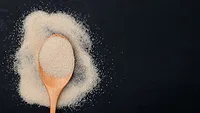
According to the EU applicant, the food colorant is produced by water extraction of the ground pulp of the peeled, unripe fruits of Genipa americana L., followed by a reaction between an iridoid compound (genipin) and added glycine (E 640), forming a final product that comprises blue-colored polymer (20–40 percent) and minor coloring components (greater than 0.4 percent), as well as carbohydrates and proteins. It is commercialized as a deep blue powder, containing a carrier (e.g., maltodextrin or modified starch). Residual genipin was below the limit of quantification (LOQ) of 10 parts-per-million (ppm).
EFSA’s FAF Panel recommended that the applicant’s proposed specification limits should be lowered due to the potential risk from toxic heavy metal contaminants, especially inorganic arsenic.
Additionally, among the available scientific literature on jagua (genipin-glycine) blue was an in vitro Caco-2 cell permeability test that demonstrated a low permeability of the colorant; however, repeated dose toxicity studies in dogs and rats showed organs discoloration and green-colored urine, demonstrating some absorption.
Toxicological data—comprising comprised acute, sub-chronic toxicity, genotoxicity studies, and a 12-month toxicity study in rats including in utero exposure—suggested that jagua (genipin-glycine) blue was not genotoxic, and no adverse effects were observed in the repeated dose toxicity studies up to the highest doses tested.
Looking for quick answers on food safety topics?
Try Ask FSM, our new smart AI search tool.
Ask FSM →
Based on a no observed adverse effect level (NOAEL) of 3,385 mg/kg bw per day, the highest dose tested (from the 12-month toxicity study), EFSA’s FAF Panel derived an ADI of 34 mg jagua (genipin-glycine) blue/kg BW per day (or 12 mg blue polymer/kg BW per day assuming 36.4 percent blue polymer content).
Estimated dietary exposure to jagua (genipin-glycine) blue did not exceed the ADI in all population groups, even at the proposed maximum use levels (up to 5,000 mg/kg food). The highest exposure levels were observed in toddlers (i.e., approximately 9 mg/kg bw per day mean and 27 mg/kg bw per day at the 95th percentile). The same was true for the exposure to the blue polymer assuming a 40 percent content in jagua (genipin-glycine) blue. Major contributors to total exposure included flavored fermented milk products, breakfast cereals, and edible ices.
Overall, EFSA concluded there is no safety concern for jagua (genipin-glycine) blue as a food additive at the proposed uses and use levels.