FDA Uses FSMA Authority to Stop Radioactive Food Imports From Indonesia
After discovering radioactive isotope Cesium-137 (Cs-137) in shipments of shrimp and spices from Indonesia, the U.S. Food and Drug Administration (FDA) is exercising for the first time a Congressional authorized power to require import certification for those commodities from certain regions of the country.
Specifically, Import Alert #99-52 requires certification for:
- Shrimp from the Island of Java and Lampung Province on the Island of Sumatra in Indonesia
- Spices from the Island of Java and Lampung Province on the Island of Sumatra in Indonesia.
Import Alert #99-52 creates a tiered approach with different certification requirements based on contamination risk levels.
Congress provided FDA the authority to require certification or other assurance that imported foods meet U.S. food safety requirements in Section 801(q) of the Food Safety Modernization Act (FSMA). Use of this tool will allow FDA to address ongoing food safety problems while maintaining the flow of trade for products that meet certification requirements.
FDA may use the authority granted in FSMA 801(q) to address ongoing and repeated food safety problems through additional oversight before shipment. This approach works alongside current tools to cover large volumes of trade while maintaining safety oversight. Import certification supports foreign firms’ abilities to bring compliant products to U.S. markets while keeping potentially contaminated products out of the U.S.
FDA is taking this action to require import certification after U.S. Customs and Border Protection (CBP) detected high levels of Cs-137 in multiple shipments of shrimp and in a sample of cloves from certain regions of Indonesia. FDA's laboratory confirmed radioactive contamination in food samples and reviewed other evidence and information about the imported products’ origins and production.
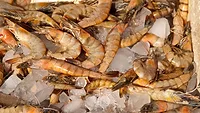
In August, CBP alerted FDA to potential radioactivity in a shipment of shrimp processed by Indonesian firm PT. Bahari Makmur Sejati (doing business as BMS Foods), which were sold at Walmart stores across the U.S. Further FDA sampling and testing of BMS Foods shipments detected Cs-137 in a single shipment at 68 becquerel per kilogram (Bq/kg). The recall was later expanded beyond Walmart, with additional distributors, brands, and retailers (including Kroger) included.
In September, due to heightened screening for Cs-137 prompted by the detection of the isotope in shrimp, CBP detected Cs-137 in a shipment of imported cloves from Indonesian firm PT Natural Java Spice that did not enter U.S. commerce. FDA conducted radionuclide analysis and confirmed the presence of Cs-137 in one sample of cloves at 732.43 Bq/kg.
Looking for quick answers on food safety topics?
Try Ask FSM, our new smart AI search tool.
Ask FSM →
Cs-137 is human-made through nuclear reactions, and because it is widespread worldwide, trace amounts of Cs-137 can be found in the environment, including soil, food, and air. FDA’s Derived Intervention Level for Cs-137 is 1,200 Bq/kg; however, repeated exposure to the isotope at levels below 1,200 Bq/kg could pose a potential human health risk.
Update, October 6, 2025: Reports out of Indonesia suggest the source of Cs-137 contamination found in shrimp is environmental. The cause of cloves contamination is still under investigation.