Indonesian Officials Find Cause of Cs-137 Contamination Behind Radioactive Shrimp
Since August, the U.S. Food and Drug Administration (FDA) has alerted the public to detections of radioactive isotope Cesium-137 (Cs-137) in shipments of shrimp sold at Walmart and other major retailers, and clove spices that did not enter commerce, imported from Indonesia. These detections led FDA to exercise for the first time a Congressional authorized power to require import certification for those commodities from certain regions of the country.
Reports are now emerging out of Indonesia suggesting the cause of the Cs-137 contamination in shrimp is environmental, and may also originate from shipping containers used for export. The source of the spices contamination is still under investigation.
The Indonesian government has cordoned off Cikande, an industrial town approximately 40 miles west of Jakarta, for Cs-137 cleanup, according to Indonesia’s Coordinating Ministry for Food. Cleanup is being coordinated with the U.S. government and the International Atomic Energy Agency.
The contamination was allegedly caused by steel manufacturer Peter Metal Technology, which uses imported scrap metal as its primary raw material. It is likely that the cesium was incorporated into the firm’s waste stream and then processed, releasing Cs-137 particles into the air, which may have spread to nearby shrimp packaging facility PT Bahari Makmur Sejati (doing business as BMS Foods), located approximately two kilometers away.
The shrimp import flagged by U.S. Customs and Border Protection (CBP) and FDA for the presence of Cs-137 was processed by BMS Foods.
The American Nuclear Society explained that the Cs-137 contamination likely began as cesium chloride, which, once smelted, would rise above its boiling point and enter the atmosphere in gaseous form, exposing BMS Foods' facility to the radioactive isotope.
Additionally, the Indonesian government discovered 14 containers of scraps from the Philippines, which are contaminated by Cs-137, in Tanjung Priok Port, North Jakarta. This finding suggests that the radioactive contamination may also originate to containers used in export, as well as from the Cikande environment.
Looking for quick answers on food safety topics?
Try Ask FSM, our new smart AI search tool.
Ask FSM →
The Indonesian government has not yet pinpointed the source of Cs-137 contamination discovered by CBP and FDA in a shipment of cloves, however. The exporter of the cloves, Natural Java Spice, is located in a different part of Indonesia than BMS Foods.
Indonesian Environment Minister Hanif Faisol Nurofiq told news source Anatra that no radioactive contamination was found at the clove processing plant of Natural Java Spice, nor in samples of cloves from the facility. However, the government will test re-imported shipments from the U.S.
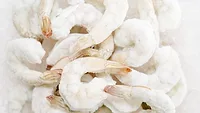
The investigation into possible sources of Cs-137 contamination was launched after FDA alerted Indonesian authorities about potential radioactivity in a shipment of shrimp processed by BMS Foods in August. FDA sampling and testing of BMS Foods shipments detected Cs-137 in a single shipment at 68 becquerel per kilogram (Bq/kg). Recalls were issued for shrimp sold at Walmart, including Kroger, and other retailers.
In September, due to heightened screening for Cs-137 prompted by the detection of the isotope in shrimp, CBP detected Cs-137 in a shipment of imported cloves from Natural Java Spice that did not enter U.S. commerce. FDA conducted radionuclide analysis and confirmed the presence of Cs-137 in one sample of cloves at 732.43 Bq/kg.
In October, FDA leveraged an authority granted in section 801(q) of the Food Safety Modernization Act (FSMA) to require certification or other assurance that imported foods meet U.S. food safety standards.
FDA’s Derived Intervention Level for Cs-137 is 1,200 Bq/kg; however, repeated exposure to the isotope at levels below 1,200 Bq/kg could pose a potential human health risk.