Study Suggests Onion Day Length Variety May Affect Pathogen Growth, Spoilage
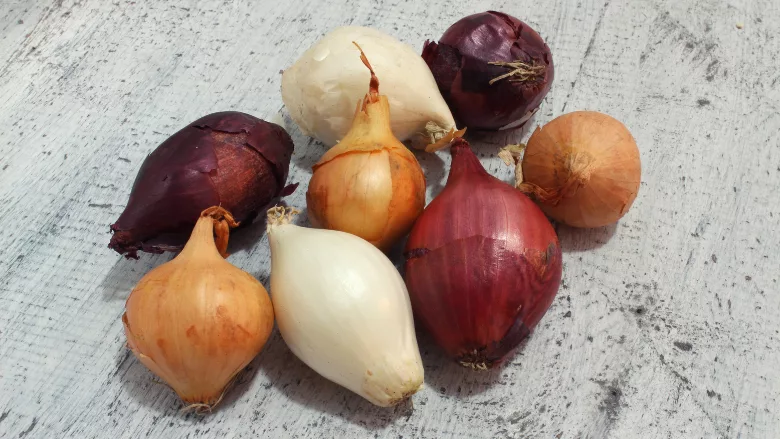
A Center for Produce Safety (CPS)-funded study is investigating the microbial food safety risks associated with the production of short- and intermediate-day bulb onion varieties. Because not all onion varieties and uses are created equal, the project’s findings are intended to help industry evaluate and manage risks.
Day length refers to the number of daylight hours needed to initiate onion bulb formation. At present, the majority of research looking at microbial contamination of bulb onions during production has been conducted on long-day varieties.
To fill this knowledge gap, Abigail Snyder, Ph.D., Associate Professor of Microbial Food Safety at Cornell University, is conducting a multi-faceted research project that examines how onion defects, varietal attributes and handling affect Salmonella on whole-bulb and ready-to-eat (RTE) chopped onions. She also eventually plans to include Escherichia coli in her ongoing research.
The results are intended to help growers, processors, and retailers pinpoint potential pathogen risks in their operations and target those areas with mitigation plans.
Dr. Snyder is collaborating with produce industry partners in California, Texas, Georgia, and New York to conduct her study.
The first set of experiments involved the inoculation of whole onions with a three-strain Salmonella cocktail along with the soft rot bacterium Pantoea. The researchers then stored the onions at 54 °F and 68 °F. Each day, they cut onions in half to examine for signs of spoilage. They also measured Salmonella growth or die-off.
At 68 °F, spoilage significantly enhanced Salmonella growth in onions of both varieties. However, if the onion had only minimal surface damage, then Salmonella concentrations were significantly higher in short-day onions than in long-day onions. At 54 °F, no tissue decay was observed, and Salmonella levels declined on onions with damaged surfaces. However, the die-off rate was more rapid in long-day onions than in short-day onions.
Looking for quick answers on food safety topics?
Try Ask FSM, our new smart AI search tool.
Ask FSM →
In a second, ongoing experiment, Dr. Snyder and her team inoculated diced onions with Salmonella and stored them for 14 days at 42–50 °F. They pulled samples daily to measure for pathogen growth or die-off, as well as changes in physiochemical properties, such as pH and Brix. They have also conducted a similar experiment using E. coli.
Future experiments will investigate the impacts of heading and tailing (i.e., a step where the roots and tops are clipped) on pathogen survival and growth under varying temperatures during harvest, processing, and retail handling of the day-length varieties. She also will determine how different curing and handling intervals affect Salmonella survival on the surfaces of short- and intermediate-day onions.
On November 18, Dr. Snyder will be speaking on a panel of experts during a Food Safety Magazine webinar, titled, “Dry Sanitation and Cleaning Techniques for Facilities and Equipment.” The free event will explore the science, industry guidance, and practice of dry sanitation and equipment cleaning. Registration for the webinar will open soon; check food-safety.com for updates.