Study Suggests Popular Zero-Calorie Sweetener Erythritol May Increase Stroke Risk
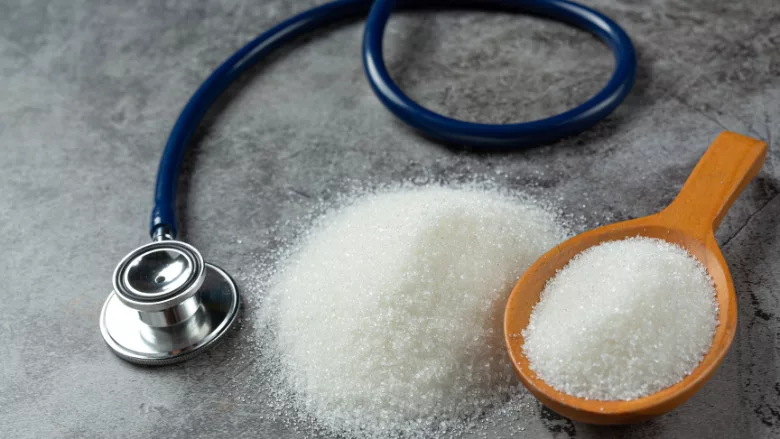
Image credit: jcomp via Freepik
A new study conducted by University of Colorado Boulder (CU Boulder) researchers suggests that erythritol, a zero-calorie sweetener commonly used in “sugar-free” snacks and beverages, may constrict the brain’s blood vessels and lower the body’s ability to dissolve blood clots, increasing the risk of stroke.
Erythritol is a sugar alcohol made from fermented corn that was approved for use in food by the U.S. Food and Drug Administration (FDA) in 2001. Although the non-nutritive sweetener’s near-zero calorie content and negligible impact on insulin levels has led to its widespread use as a sugar substitute in snacks and beverages, some research has begun to emerge suggesting that the additive may not be risk-free.
In light of a 2023 Cleveland Clinic study of 4,000 adults that reported an association between circulating levels of erythritol in the body and an increased risk of heart attack or stroke, as well as other literature raising concerns about the potential adverse vascular effects of the sweetener, the CU Boulder researchers sought to better understand the drivers behind erythritol’s effects on cardiovascular and cerebrovascular health. The researchers also cited an experiment conducted as a follow-up to the Cleveland Clinic study that observed a significant increase in platelet reactivity—increasing the risk for blood clots—induced by 30 grams (g) of erythritol, which is the typical amount contained in an artificially sweetened beverage.
To investigate these phenomena, in vitro, the scientists exposed human cerebral microvascular endothelial cells—which exist in human brain blood vessels—to 30 g of erythritol.
The findings showed that erythritol increases oxidative stress, reduces nitric oxide bioavailability, promotes endothelin-1 production, and impairs fibrinolytic capacity in brain blood vessel cells in vitro. All of these factors are central characteristics of cerebral vascular endothelial dysfunction and are causative agents in the development, severity, and outcome of ischemic stroke.
Specifically, nitric oxide helps widen blood vessels, while endothelin-1 is a protein that constricts blood vessels. Inhibited fibrinolytic capacity, which is the ability to break up blood clots, was determined in the study by the reduced cellular production of clot-dissolving compound t-PA.
Moreover, the cells exposed to erythritol produced more reactive oxygen species (ROS), also known as “free radicals,” which are metabolic byproducts that can age and damage cells and cause tissue inflammation.
Looking for quick answers on food safety topics?
Try Ask FSM, our new smart AI search tool.
Ask FSM →
Although further studies examining the effects of erythritol in people on a large scale are needed, the researchers believe their results warrant caution when consuming the non-nutritive sweetener. They warn that, as they observed adverse effects in cells exposed to just a single serving of erythritol, the effects could be worsened in those who consume multiple “sugar-free” products per day.
The study, which can be read in the Journal of Applied Physiology, was led by Christopher DeSouza, Ph.D., Professor of Integrative Physiology and Director of the Integrative Vascular Biology Lab at CU Boulder. Graduate student Auburn Berry is the study’s first author.