Food Safety
search
Ask Food Safety AI
cart
facebook twitter linkedin
  • Sign In
  • Create Account
  • Sign Out
  • My Account
Food Safety
  • NEWS
    • Latest News
    • White Papers
  • PRODUCTS
  • TOPICS
    • Contamination Control
    • Food Types
    • Management
    • Process Control
    • Regulatory
    • Sanitation
    • Supply Chain
    • Testing and Analysis
  • PODCAST
  • EXCLUSIVES
    • Food Safety Five Newsreel
    • eBooks
    • FSM Distinguished Service Award
    • Interactive Product Spotlights
    • Videos
  • BUYER'S GUIDE
  • MORE
    • ENEWSLETTER >
      • Archive Issues
      • Subscribe to eNews
    • Store
    • Sponsor Insights
    • ASK FSM AI
  • WEBINARS
  • FOOD SAFETY SUMMIT
  • EMAG
    • eMagazine
    • Archive Issues
    • Editorial Advisory Board
    • Contact
    • Advertise
  • SIGN UP!
ProductsFood TypeProduce

BIZTRACKS

Center for Produce Safety Defines 2026 Research Priorities, Opens Call for Proposals

By Food Safety Magazine Editorial Team
array of fresh fruit and veg
Image credit: Freepik
September 4, 2025

The Center for Produce Safety (CPS) has announced its 2026 Research Priorities and opened a call for research proposals that align with the priorities.

CPS’ Research Priorities are developed in collaboration with industry and scientific experts to target critical knowledge gaps. Priorities are presented conceptually rather than prescriptively, and are designed to provide guidance while allowing flexibility in objectives and technical design.

“Industry stakeholders have shared their top food safety questions, and the Center for Produce Safety is committed to funding research that delivers clear, practical outcomes that ensure consumer confidence in the food that nourishes our families and communities,” said Suresh DeCosta, M.S., CPS Technical Committee Chair and Director of Food Safety at Lipman Family Farms. “We invite scientists to partner with us in advancing solutions that would continue to reduce food safety risk.”

The Research Priorities comprise four themes and 18 priority areas, specifically:

Theme 1—Foundational Knowledge:

  1. Crop production soil as a non-host reservoir of contamination: Systems-approach to minimizing rotational sources, persistence, and transference
  2. Comprehensive systems approach to foodborne contaminant dispersal and persistence
  3. Predictive modeling of dynamic interactions in diverse packing and packaging on pathogen survival and infectivity/virulence during pre-transport holding through post-distribution detection
  4. Determine and partition the comparative impact during storage, distribution, point-of-purchase (POP)/point-of-sale (POS), and in- home resuscitation (from non-detect physiological condition) and subsequent growth of bacterial pathogens on diverse products.

Theme 2—Enabling Technologies and Industry-Adaptive Methodology

  1. Develop an individual, combination, or suite of functionally validated indicators, surrogates, or analytes for on-site (on-farm and in-house) verification and/or routine monitoring
  2. Apply artificial intelligence (AI) -based analytics to identify outbreak-significant and predictive sequence targets among diverse Salmonella found in waters used for crop management
  3. Develop cost-acceptable and scientifically valid industry-adaptive test methods to predict and track human-specific fecal pollution of water, soil, and product
  4. Proof-of-concept project to assess the performance of rotational or sequential application of non-chlorine based antimicrobial treatments with commercially available lytic phage to reduce risk of bacterial pathogens in recirculated hydroponic and nutrient-film irrigation systems

Theme 3—Critical Data for Standards, Metrics, and Practices

  1. Develop a pilot “rapid response” network system for time-sensitive research on industry-host offered field site(s)
  2. Develop a systems-based reassessment of plausible risk factors and interventions at preharvest, harvest, curing, holding, post-harvest, processing, and distribution for bulb onions
  3. South Texas regional opportunity: Determine the potential for internalized contamination of onions—prioritized to Escherichia coli O157:H7 or other non-O157 Enterohemorrhagic E. coli (EHEC)—as a result of significant rain events during harvest, and the implications of the post-harvest heat curing process and storage on food safety
  4. Develop a systems-based reassessment of plausible risk factors and interventions at preharvest, harvest, post-harvest, packing, and distribution for cucumbers or other non-leafy commodities
  5. Determine post-harvest wash water constituent and conditions for peracetic acid (PAA) and chlorine dioxide (ClO2) which result in sub-lethally injured cells; “real-world” simulations and on-site factorial conditions under which they resuscitate, grow, exceed the baseline dose threshold risk, and do not/cannot grow but become more infectious; and associated corollary interventions to prevent these outcomes.

Theme 4—Translational “Demonstration” Research for Accelerated Adoption

  1. Grower/handler-friendly, onsite, data-informed predictive tools to set environmental monitoring program (EMP) best practices for harvest equipment and packing facilities.
  2. Reassess the impact of post-harvest water temperature, constituent complexity, antimicrobial dose, and contact time on product surface risk reduction.
  3. Determine the effectiveness and limitations of varying wash and cooling water agitation designs and practices on removal of attached microbes.
  4. Assess the potential for trace levels of Salmonella in post-processed manure pellets to amplify under commercial-equivalent field conditions following surface application, preplant incorporation, and side-dressing applications in response to direct spray application to soil and seedbeds and fertigation with other biofertilizers and biostimulants.
  5. Develop best practice optimization for detection of integrity breaches and microbiological/biofilm risk in subsurface agricultural water conveyance and distribution systems (of different scales) during agricultural water quality assessments; and assess detection, correction, and prevention best practices across sub-surface distribution conveyance nodes and whole-system risk associated with bio-fertigation and flood events

Additionally, CPS identified secondary priority topics, which are to:

  • Identify opportunities and systems to better ensure effective cleaning, sanitation, and handing of harvest totes/bins with an emphasis on commodity-variable practical frequencies
  • Expand the practical database for best practices in hygienic design, cleaning, and sanitation
  • Frequency in sanitation standard operation procedure (SSOP) systems for wax application and polishing brushes and immediately contiguous food contact surfaces
  • Resolve the anecdotal and empirical evidence, by historical and contemporary data analytics, as well as under science-based experimental design objectives, that the first onset of outbreaks cases associated with cucurbit crops is predominantly associated with the first harvest of a lot.

Researchers interested in submitting a proposal are encouraged to engage with CPS in advance to better understand industry needs and ensure alignment. Confidential pre-submission discussions have proven invaluable for successful proposals, per CPS.

Looking for quick answers on food safety topics?
Try Ask FSM, our new smart AI search tool.
Ask FSM →

CPS will also consider proposals outside the stated priorities if they present credible, “game-changing” approaches; however, such projects should have clear applicability to current or foreseeable industry practices, and researchers proposing such projects are strongly encouraged to consult CPS.

The full CPS Research Priorities document can be accessed here. The 2026 Request for Proposals can be accessed here.


KEYWORDS: Center for Produce Safety

Share This Story

Fsm purple logo 200x200

The Food Safety Magazine editorial team comprises Bailee Henderson, Digital Editor ✉; Adrienne Blume, M.A., Editorial Director; and Stacy Atchison, Publisher.

Recommended Content

JOIN TODAY
to unlock your recommendations.

Already have an account? Sign In

  • people holding baby chicks

    Serovar Differences Matter: Utility of Deep Serotyping in Broiler Production and Processing

    This article discusses the significance of Salmonella in...
    Methods
    By: Nikki Shariat Ph.D.
  • woman washing hands

    Building a Culture of Hygiene in the Food Processing Plant

    Everyone entering a food processing facility needs to...
    Facilities
    By: Richard F. Stier, M.S.
  • graphical representation of earth over dirt

    Climate Change and Emerging Risks to Food Safety: Building Climate Resilience

    This article examines the multifaceted threats to food...
    Management
    By: Maria Cristina Tirado Ph.D., D.V.M. and Shamini Albert Raj M.A.
Manage My Account
  • eMagazine Subscription
  • Subscribe to eNewsletter
  • Manage My Preferences
  • Website Registration
  • Subscription Customer Service

More Videos

Sponsored Content

Sponsored Content is a special paid section where industry companies provide high quality, objective, non-commercial content around topics of interest to the Food Safety Magazine audience. All Sponsored Content is supplied by the advertising company and any opinions expressed in this article are those of the author and not necessarily reflect the views of Food Safety Magazine or its parent company, BNP Media. Interested in participating in our Sponsored Content section? Contact your local rep!

close
  • Salmonella bacteria
    Sponsored byThermoFisher

    Food Microbiology Testing Methods: Salmonella species

  • a diagram explaining indicator organisms
    Sponsored byHygiena

    How Proactive Listeria Testing Helps Prevent Six- and Seven-Figure Recalls

  • woman grocery shopping
    Sponsored byCorbion

    Designing Safety Into Every Bite: Proactive Risk Mitigation for Refrigerated Foods

Popular Stories

NRTE breaded stuffed chicken

USDA Indefinitely Delays Enforcement of Salmonella as Adulterant in Raw Breaded, Stuffed Chicken

non-conforming product

How to Handle Non-Conforming Product

spoonfuls of food ingredients

FDA’s Developing Rule to Tighten GRAS Oversight Moves to White House

Events

December 11, 2025

How to Develop and Implement an Effective Food Defense Strategy

Live: December 11, 2025 at 2:00 pm EDT: From this webinar, attendees will learn common areas where companies encounter challenges in their food defense strategies and how to address them.

May 11, 2026

The Food Safety Summit

Stay informed on the latest food safety trends, innovations, emerging challenges, and expert analysis. Leave the Summit with actionable insights ready to drive measurable improvements in your organization. Do not miss this opportunity to learn from experts about contamination control, food safety culture, regulations, sanitation, supply chain traceability, and so much more.

View All

Products

Global Food Safety Microbial Interventions and Molecular Advancements

Global Food Safety Microbial Interventions and Molecular Advancements

See More Products

Related Articles

  • researchers looking at CEA crops

    Actionable Takeaways for Industry From the Center for Produce Safety 2025 Research Symposium

    See More
  • Industry Leaders Expand Produce Safety Research

    Center for Produce Safety to Hold Three Free Webinars on Recent Research Projects

    See More
  • Center for Produce Safety logo

    Exclusive interview: Center for Produce Safety on food safety research

    See More

Related Products

See More Products
  • 1119053595.jpg

    Food Safety for the 21st Century: Managing HACCP and Food Safety throughout the Global Supply Chain, 2E

  • 1119160553.jpg

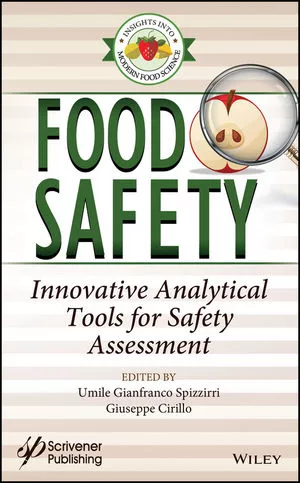
    Food Safety: Innovative Analytical Tools for Safety Assessment

  • 1118396308.jpg

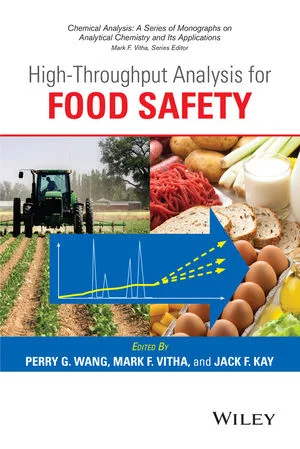
    High Throughput Analysis for Food Safety

See More Products

Events

View AllSubmit An Event
  • March 11, 2025

    Change Management of Food Safety Culture: Effective Strategies for Achieving Greatness

    On Demand: During this webinar, attendees will gain practical knowledge on successful food safety culture change programs and transformation journeys from real-world experiences, enabling attendees to navigate challenges and achieve lasting improvements in their FSC initiatives.
  • May 14, 2025

    Leveraging AI for a Safer Today and Tomorrow

    On Demand: This session will highlight some of the early and visible benefits of using AI for data-informed decision making.
View AllSubmit An Event

Related Directories

  • Nestle Quality Assurance Center Dublin

    The Nestle Quality Assurance Center (NQAC) Dublin provides the analytical testing businesses need to ensure product safety for consumers. We have supported the food industry world-wide for over three decades and offer an expansive portfolio of over 200 methods to meet your food safety testing needs.
×

Never miss the latest news and trends driving the food safety industry

eNewsletter | Website | eMagazine

JOIN TODAY!
  • RESOURCES
    • Advertise
    • Contact Us
    • Directories
    • Store
    • Want More
  • SIGN UP TODAY
    • Create Account
    • eMagazine
    • eNewsletter
    • Customer Service
    • Manage Preferences
  • SERVICES
    • Marketing Services
    • Reprints
    • Market Research
    • List Rental
    • Survey/Respondent Access
  • STAY CONNECTED
    • LinkedIn
    • Facebook
    • Instagram
    • X (Twitter)
  • PRIVACY
    • PRIVACY POLICY
    • TERMS & CONDITIONS
    • DO NOT SELL MY PERSONAL INFORMATION
    • PRIVACY REQUEST
    • ACCESSIBILITY

Copyright ©2025. All Rights Reserved BNP Media.

Design, CMS, Hosting & Web Development :: ePublishing