FAO Report Characterizes Indoor Farming Food Safety Considerations
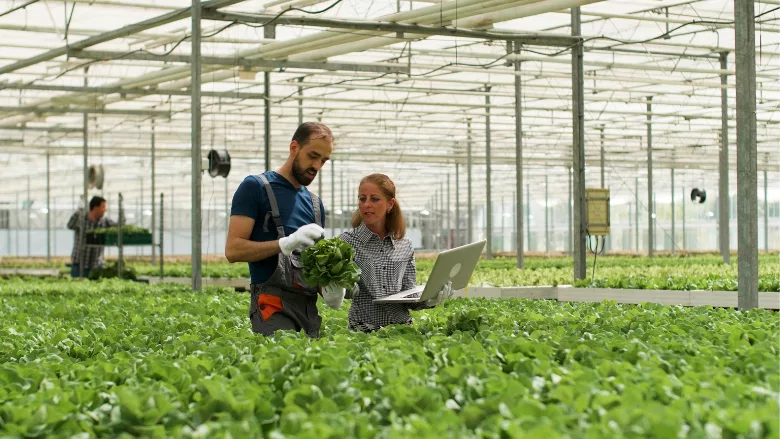
The Food and Agriculture Organization of the United Nations (FAO) has released a report that provides the first comprehensive global review of the food safety hazards, controls, and regulatory considerations associated with modern indoor farming.
Perceived benefits of indoor farming, or controlled environment agriculture (CEA), include sustainability, adaptability to climate change, and improving food security. In the present day, CEA production of short-term crops such as microgreens and baby leaf, along with mature leafy greens that are traditionally cultivated outdoors, has become commercially viable.
Although it is often assumed that CEA offers more easily managed food safety risks than traditional farming, the publication emphasizes that food safety issues linked to indoor-farmed crops are generally similar to those found in conventional outdoor agriculture. Specifically, microbial hazards exist related to seeds, growth substrates, and water, as well as operations that share features with sprouted seed production. While the hazards are comparable to those in conventional farming, differences in production systems create complexity for risk assessment and management.
While indoor farming eliminates some of the uncontrollable routes of contamination inherent to outdoor farming, outdoor environments also promote some natural pathogen die-off through microbial competition, fluctuating temperatures, and desiccation. The stable conditions in CEA may enable longer pathogen persistence, but indoor systems may also often offer more opportunities for proactive control over inputs such as seeds, water, growth substrates, and fertilizers.
Interestingly, recent research suggests that introducing dynamic environmental conditions within indoor farms may optimize energy use and plant productivity, and potentially reduce pathogen persistence.
Microbial hazards are especially relevant to CEA due to the high-humidity, water-based systems that are commonly used. Although microbiological risks associated with CEA are much more well documented than chemical hazards, the report also notes chemical issues such as environmental contamination and contamination from equipment-related materials.
Additionally, the report proposes that, due to the exclusion of wildlife and the ability for enhanced hygienic practices in CEA, indoor farming may more closely resemble sprout production than conventional field agriculture. Despite this, regulatory frameworks have yet to reflect this similarity.
Looking for quick answers on food safety topics?
Try Ask FSM, our new smart AI search tool.
Ask FSM →
Like sprouted seed production, CEA benefits from tailored interventions, including seed disinfection, irrigation water testing, and hygienic practices to try and promote a beneficial microflora. Additional control points specific to indoor systems may involve the growth substrate, fertilizers, and production environment, which require targeted management to reduce contamination risks.
The report outlines research and knowledge gaps that exist regarding CEA food safety. A critical challenge lies in the heterogeneity of indoor farming systems, which differ in design, input materials, environmental control levels, and operational practices. This diversity complicates the ability to generalize food safety risks and hinders the development of universal risk management strategies. To address this, the authors suggest comprehensive risk assessments to compare food safety risks across various indoor systems, potentially facilitated by global expert consultations. Additionally, artificial intelligence (AI) and predictive modeling offer potential utility for risk characterization, given that quality, standardize data can be collected.
Priority research areas for future work underlined in the report include, but are not limited to: contamination sources in seed production, the prevalence of human pathogens in indoor farming inputs (i.e., seeds, fertilizers, substrates, and pesticides), the behavior of pathogens in CEA systems, input contamination and pre- and postharvest intervention strategies, postharvest pathogen reduction techniques, and strengthening food safety culture.